Global Currency Wars: Dollar Surges—Baht Retreats, Yet Thailand Holds Its Balance. From Hormuz to Bangkok, the Dollar Strengthens Worldwide While the Baht Weakens Temporarily but Remains in Equilibrium
Last updated: 21 Mar 2026
1627 Views
Here’s the full English version of your article, polished for clarity and impact while keeping the analytical and professional tone intact:
Global Currency Wars: Dollar Strengthens—Baht Weakens, Yet Thailand Holds Its Balance
Market Analysis | March 21, 2026 | By SO OK TRADING
Introduction
March 2026 has become a month closely watched by global financial markets as the U.S. dollar surged significantly. Meanwhile, the Thai baht weakened to 32.85–32.90 per dollar in less than a month, down from 31.14 at the beginning of March. This movement reflects the combined pressures of Middle East conflict, U.S. monetary policy, and Thailand’s structural economic vulnerabilities.
Key Drivers Behind Dollar Strength and Baht Weakness
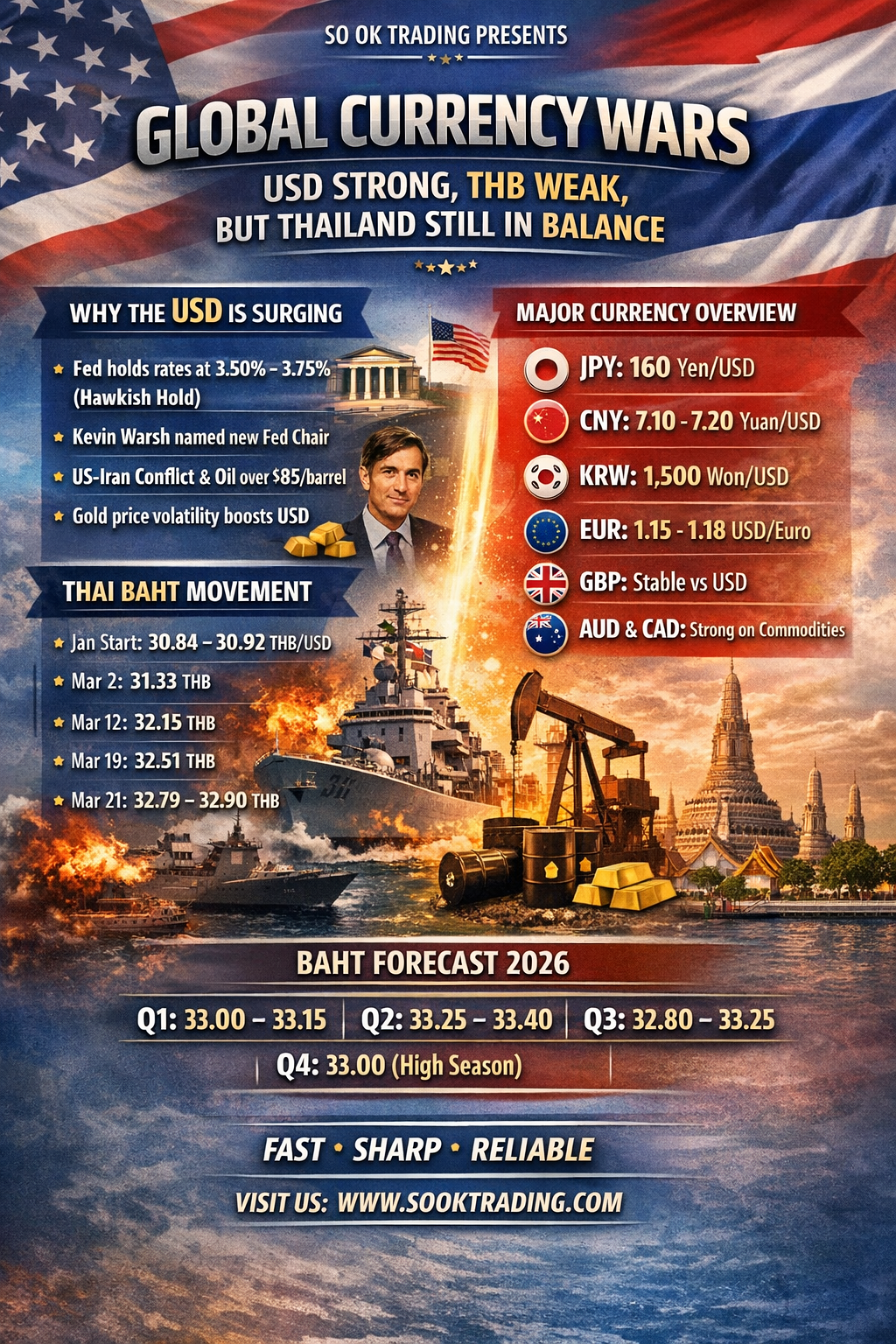
Federal Reserve Policy: Rates held at 3.50%–3.75% with a hawkish stance, signaling slower-than-expected rate cuts.
Leadership Change: Appointment of Kevin Warsh as the new Fed Chair raised expectations of continued monetary tightening.
U.S.–Iran Conflict: Escalation in the Middle East, including attacks on warships and energy facilities in the Strait of Hormuz, boosted demand for the dollar as a safe haven.
Oil Prices: Crude oil surged above $85 per barrel, reigniting inflation concerns and attracting capital into U.S. Treasuries.
Gold Volatility: Sharp swings in gold prices increased demand for dollar settlements, adding pressure on the baht.
Thai Baht Performance (Year-to-Date)
Late January: 30.84 – 30.92
March 2: 31.33
March 12: 32.15
March 19: 32.51
March 21: 32.79 – 32.92
Capital outflows and safe-haven dollar buying were the main drivers. The Bank of Thailand is expected to intervene if the baht weakens too rapidly.
Global Currency Overview
JPY (Japanese Yen): Near 160 per dollar, with speculation of Bank of Japan intervention.
CNY (Chinese Yuan): Managed within 7.10–7.20 per dollar by PBoC to support exports.
KRW (Korean Won): Weakened to 1,500 per dollar amid risk-off sentiment and tech stock sell-offs.
SGD (Singapore Dollar): More resilient due to MAS’s inflation-control policies.
AUD (Australian Dollar): Supported by commodity prices and prolonged high interest rates, showing rebound potential.
EUR (Euro): Trading within 1.15–1.18 per dollar, supported by ECB’s cautious stance on rate cuts.
GBP (British Pound): Stable, buoyed by signs of economic recovery in the UK.
CAD (Canadian Dollar): Strengthened by high oil prices, outperforming Asian currencies.
CHF (Swiss Franc): Safe-haven currency, though overshadowed by stronger dollar demand.
Thai Baht Quarterly Forecast (as of March 21, 2026)
Q1 (Current): Supported by tourism and gold demand but pressured by war; expected to close at 33.00–33.15.
Q2 (Apr–Jun): Seasonal weakness from dividend payments and higher dollar demand; 33.25–33.40.
Q3 (Jul–Sep): Potential rebound to 32.80–33.25 as U.S. rates enter a clear downtrend and the dollar index weakens.
Q4 (Oct–Dec): Continued strength, averaging 33.00, supported by tourism high season and foreign capital inflows.
Q1/2026 Strategic Summary
Importers: Gradually purchase USD near 32.80.
Exporters: Lock in profits with forward contracts at 32.90–33.00.
Investors/Travelers: Exchange gradually; avoid rushing decisions amid volatility.
✨ This analysis highlights that while the dollar is strengthening due to war and monetary policy, the baht’s weakness is temporary. A rebound is likely in the second half of the year. Strategic planning and close monitoring of global developments remain essential for businesses and investors.
SO OK TRADING: Your Business Partner
FAST • SHARP • RELIABLE
www.sooktrading.com
sooktrading@outlook.com
Global Currency Wars: Dollar Strengthens—Baht Weakens, Yet Thailand Holds Its Balance
Market Analysis | March 21, 2026 | By SO OK TRADING
Introduction
March 2026 has become a month closely watched by global financial markets as the U.S. dollar surged significantly. Meanwhile, the Thai baht weakened to 32.85–32.90 per dollar in less than a month, down from 31.14 at the beginning of March. This movement reflects the combined pressures of Middle East conflict, U.S. monetary policy, and Thailand’s structural economic vulnerabilities.
Key Drivers Behind Dollar Strength and Baht Weakness
Federal Reserve Policy: Rates held at 3.50%–3.75% with a hawkish stance, signaling slower-than-expected rate cuts.
Leadership Change: Appointment of Kevin Warsh as the new Fed Chair raised expectations of continued monetary tightening.
U.S.–Iran Conflict: Escalation in the Middle East, including attacks on warships and energy facilities in the Strait of Hormuz, boosted demand for the dollar as a safe haven.
Oil Prices: Crude oil surged above $85 per barrel, reigniting inflation concerns and attracting capital into U.S. Treasuries.
Gold Volatility: Sharp swings in gold prices increased demand for dollar settlements, adding pressure on the baht.
Thai Baht Performance (Year-to-Date)
Late January: 30.84 – 30.92
March 2: 31.33
March 12: 32.15
March 19: 32.51
March 21: 32.79 – 32.92
Capital outflows and safe-haven dollar buying were the main drivers. The Bank of Thailand is expected to intervene if the baht weakens too rapidly.
Global Currency Overview
JPY (Japanese Yen): Near 160 per dollar, with speculation of Bank of Japan intervention.
CNY (Chinese Yuan): Managed within 7.10–7.20 per dollar by PBoC to support exports.
KRW (Korean Won): Weakened to 1,500 per dollar amid risk-off sentiment and tech stock sell-offs.
SGD (Singapore Dollar): More resilient due to MAS’s inflation-control policies.
AUD (Australian Dollar): Supported by commodity prices and prolonged high interest rates, showing rebound potential.
EUR (Euro): Trading within 1.15–1.18 per dollar, supported by ECB’s cautious stance on rate cuts.
GBP (British Pound): Stable, buoyed by signs of economic recovery in the UK.
CAD (Canadian Dollar): Strengthened by high oil prices, outperforming Asian currencies.
CHF (Swiss Franc): Safe-haven currency, though overshadowed by stronger dollar demand.
Thai Baht Quarterly Forecast (as of March 21, 2026)
Q1 (Current): Supported by tourism and gold demand but pressured by war; expected to close at 33.00–33.15.
Q2 (Apr–Jun): Seasonal weakness from dividend payments and higher dollar demand; 33.25–33.40.
Q3 (Jul–Sep): Potential rebound to 32.80–33.25 as U.S. rates enter a clear downtrend and the dollar index weakens.
Q4 (Oct–Dec): Continued strength, averaging 33.00, supported by tourism high season and foreign capital inflows.
Q1/2026 Strategic Summary
Importers: Gradually purchase USD near 32.80.
Exporters: Lock in profits with forward contracts at 32.90–33.00.
Investors/Travelers: Exchange gradually; avoid rushing decisions amid volatility.
✨ This analysis highlights that while the dollar is strengthening due to war and monetary policy, the baht’s weakness is temporary. A rebound is likely in the second half of the year. Strategic planning and close monitoring of global developments remain essential for businesses and investors.
SO OK TRADING: Your Business Partner
FAST • SHARP • RELIABLE
www.sooktrading.com
sooktrading@outlook.com



Related Content

China’s Role in the Global Economy & Thailand – Mid‑2026: The Crossroads of Global Shifts and New Opportunities
Article by SO OK TRADING : June 21, 2026
In the second half of 2026, the world is closely watching China’s economic transformation — from being “the world’s factory” to becoming “a hub of innovation and advanced technology.”
For the first time in three decades, China has lowered its GDP growth target below 5%, signaling a clear shift from quantity-driven growth to quality-driven development, with a strong focus on AI, clean energy, and future industries.
China’s stable slowdown does not mean stagnation, but rather a recalibration of the global economy. While facing tariff pressures from the U.S. and Europe, China is strengthening ties with ASEAN and the Global South, building new trade networks under the Belt & Road Initiative (BRI).
For Thailand, this moment represents a strategic global connection point and a golden opportunity:
Expanding premium agricultural exports
Integrating into high‑tech supply chains
Attracting Chinese investment into the Eastern Economic Corridor (EEC)
At the same time, Thailand must prepare for challenges such as the influx of low‑cost Chinese goods, currency volatility, and rising competition in advanced technologies.
China is transforming the world — Thailand must reshape its economic game to keep pace!
Read the full analysis in the complete article by SO OK TRADING.
SO OK TRADING : FAST • SHARP • RELIABLE
21 Jun 2026

“STR 20 Reshaping the Global Rubber Industry: From Cup Lump to Strategic Material Driving the EV Era
4 Jun 2026
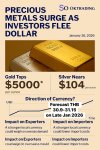
Gold Surges Past $5,000/oz, Silver Nears $105/oz
Investors flee the U.S. Dollar and turn to precious metals
Watching currency trends and their impact on exporters and importers
Market Overview (Morning of January 26, 2026)
On the morning of January 26, 2026, the Thai Baht strengthened against the U.S. Dollar, trading in the range of 31.00–31.10 THB/USD.
Key exchange rates included:
- USD/THB: 31.00–31.08
- JPY/THB: 100 yen ≈ 19.80–20.00 THB
- EUR/THB: ≈ 36.38 THB
- CNY/THB: ≈ 4.44 THB
26 Jan 2026
