“War Shakes the World, Currencies Tremble: Thai Baht Weakens, Dollar Strengthens, and the Global Financial Landscape — March 2026” Article by SO OK TRADING | March 17, 2026
Thai Baht and Major Global Currencies — March 2026: When War Shakes the World, Global Finance Trembles
Article by SO OK TRADING | March 17, 2026
Thai Baht: From Stability to Shakiness
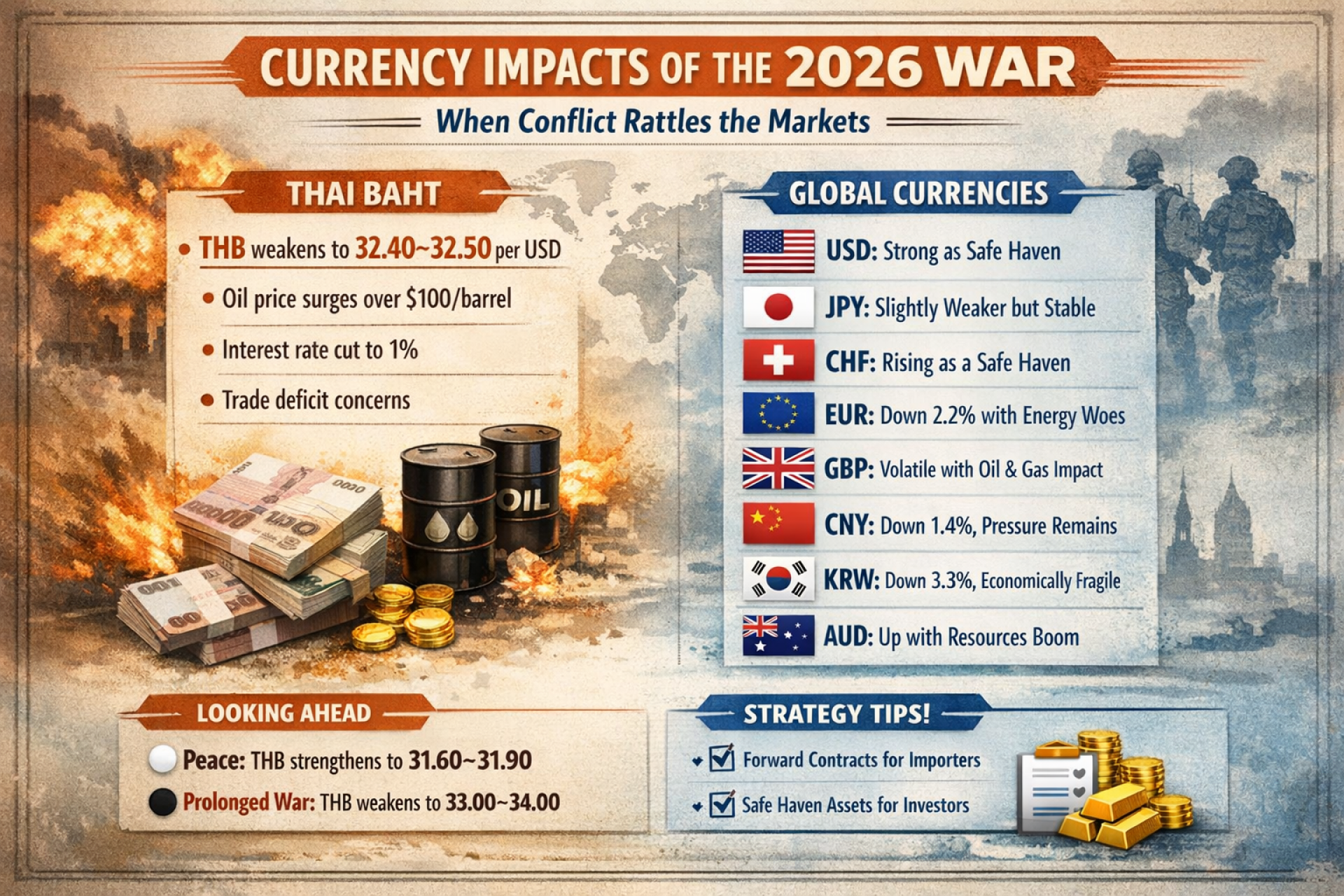
In March 2026, the Thai Baht weakened beyond 32.00 per USD, trading within the 32.20–32.50 range throughout mid-month. The main driver was global crude oil prices surging past $100 per barrel, pushing Thailand — a net energy importer — into a current account deficit. At the same time, the Bank of Thailand cut interest rates to 1.00% to stimulate the economy, which further pressured the currency.
As of March 17, 2026: the Baht trades at 32.40–32.50 per USD.
Global Currencies: Impact of the Israel–US–Iran War (since February 28, 2026)
US Dollar (USD)
Strengthened significantly as investors flocked to safe-haven assets. Capital inflows drove the Dollar Index (DXY) close to 100, marking its strongest level in half a year.
Japanese Yen (JPY)
Slightly weaker against the dollar but still supported as a safe-haven currency. Many investors paired yen holdings with gold to hedge risks.
Swiss Franc (CHF)
Strengthened naturally as a trusted safe-haven during geopolitical uncertainty.
Euro (EUR)
Weakened by about 2.2% as Europe continued to face an energy crisis, weighing on industry and the broader economy.
British Pound (GBP)
Volatile, moving with gas and oil prices. Currently flat to slightly weaker.
Chinese Yuan (CNY)
Down about 1.4%. Despite deflationary pressures, China’s large reserves and diverse energy sources helped the yuan hold up better than the baht.
South Korean Won (KRW)
Dropped sharply by 3.3% due to vulnerability to oil prices and additional pressure from US tariff measures.
Singapore Dollar (SGD)
Down slightly by 0.7%. Despite Singapore’s stable economy, regional capital outflows limited its resilience against the dollar.
Australian Dollar (AUD)
One of the few currencies to strengthen, benefiting from Australia’s role as a resource exporter.
Indian Rupee (INR)
Down about 1.4% as rising energy costs continued to weigh on India’s economy.
Strategic Outlook for Thai Businesses
Importers: At 32.40 per USD, it is advisable to begin Forward Contracts to hedge risks.
Investors: Increase allocations to safe-haven assets such as gold, and diversify into markets benefiting from higher energy prices.
Exporters: Gain from a weaker baht but must manage rising energy costs.
Looking Ahead to Q2 2026
Peace Scenario: The baht could strengthen back to 31.60–31.90, supported by Fed rate cuts and tourism recovery.
Prolonged War Scenario: The baht may weaken beyond 33.00–34.00, with risks of stagflation — recession coupled with high inflation.
Conclusion
The Thai Baht in March 2026 reflects a world of uncertainty. Every movement in oil prices and war dynamics ripples directly into the wallets of Thai people and businesses. Preparing strategies — whether through hedging or portfolio adjustments — is the key to navigating this volatility with resilience.
SO OK TRADING: Your Business Partner
SO OK TRADING: FAST SHARP RELIABLE
Visit us at: www.sooktrading.com
Would you like me to also craft a shorter