“Thai Canned Food & Smart Packaging: A New Global Kitchen Exporting Taste, Health, and Sustainability”
“Thai Canned Food & Smart Packaging: Exporting Global Kitchen with Taste and Innovation”
SO OK TRADING | March 16, 2026Thailand is not only one of the world’s leading exporters of canned food but also a pioneer in packaging solutions that meet the demands of sustainability, safety, and convenience. As the “Kitchen of the World,” Thailand continues to win the trust of global consumers.
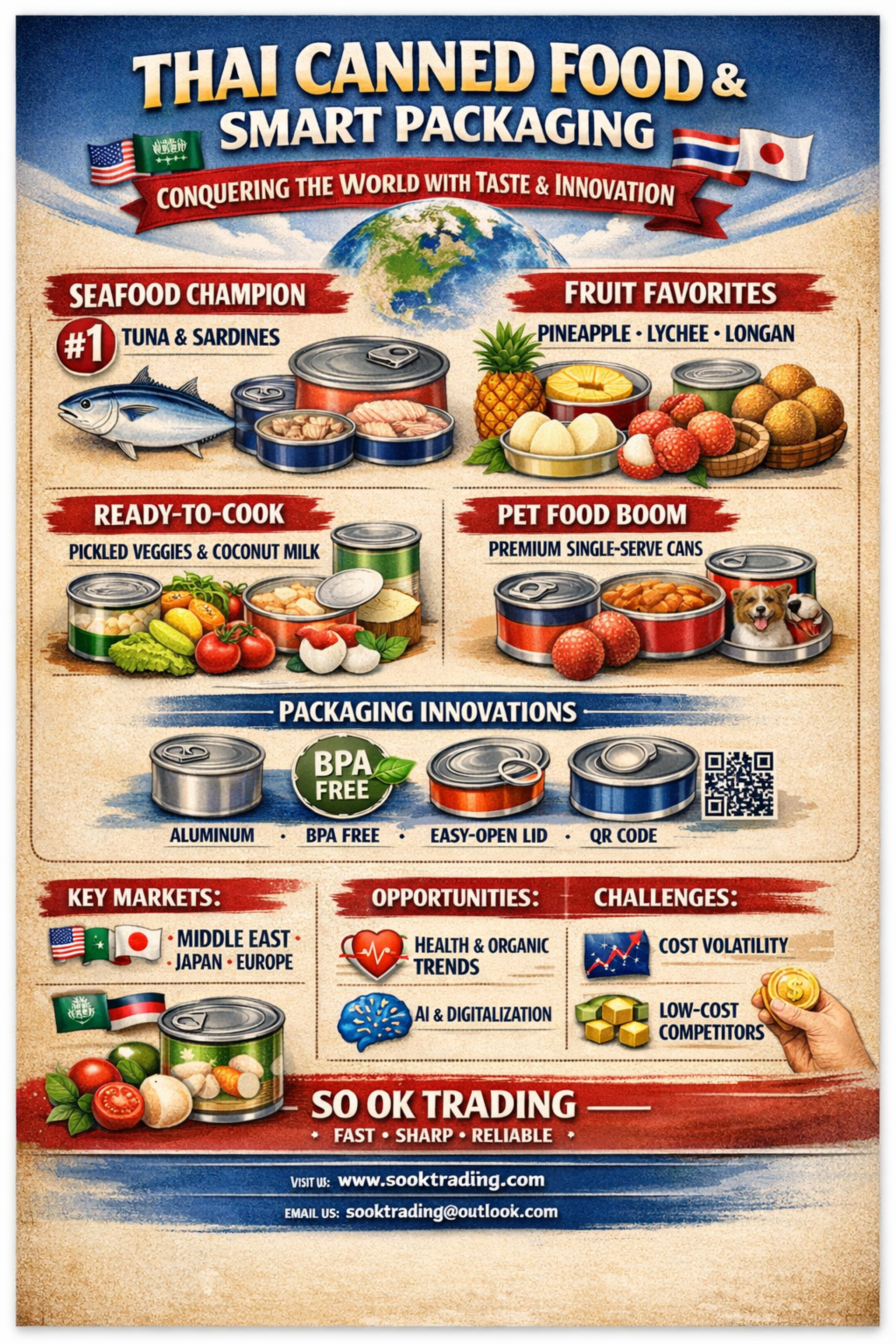
Canned Seafood: The Unchallenged Champion
Canned Tuna: Thailand ranks No.1 globally, exporting over 540,000 tons in 2024, with growth projected at 7.5% in 2025.
Sardines & Mackerel: Highly popular in Japan and the Middle East.
Strengths: High protein, long shelf life, meeting both health and convenience needs.
Canned Fruits: Sweetness That Conquers the World
Canned Pineapple: Thailand remains among the top global exporters.
Star Products: Rambutan in syrup, rambutan stuffed with pineapple, lychee, and longan.
Trend: Organic and low-sodium canned fruits are rising in health-conscious markets.
Canned Vegetables & Ingredients: Ready-to-Serve Kitchen
Pickled Vegetables and Coconut Milk are key products in ASEAN markets.
Sweet Corn & Tomato Cans fit perfectly with Europe’s health and convenience demands.
Canned Pet Food: Rising Star
Rapid growth in the U.S. and Europe, driven by the Pet Humanization trend.
Thailand designs packaging with a premium look, similar to human food, with small-size (single-serve) cans gaining popularity.
Packaging: The Game-Changer
Aluminum over Steel → 100% recyclable, lightweight, reducing transport costs.
BPA-Free → Thai factories adopt BPA-NI coatings, despite 10–15% higher costs.
Easy-Open & QR Code → Convenience plus traceability.
Automation & Digitalization → Cutting costs and boosting efficiency.
Premium Pet Food Cans → Stylish design, single-serve, booming in U.S. and China markets.
Global Markets & Key Regions
USA: Largest market, tuna cans dominate, but facing tariff risks.
Middle East: Strong growth supported by Halal certification.
Japan & Europe: Focus on quality and sustainability.
China & ASEAN: Expanding markets for processed vegetables and fruits.
Opportunities & Challenges
Opportunities
Premium pet food market
Health & organic food trends
AI and digitalization in supply chain management
Challenges
Volatile metal costs
Stricter environmental regulations
Low-cost competitors such as Vietnam and Ecuador
✨ Conclusion
Thailand remains the “Kitchen of the World,” leading both in taste and packaging innovation. With strengths in quality, sustainability, and adaptability to new trends, Thailand is set to maintain and expand its global leadership by combining innovation + sustainability + convenience.
SO OK TRADING — FAST • SHARP • RELIABLE
www.sooktrading.com
sooktrading@outlook.com
Your trusted partner in Thai canned food business.