Share

“Wood Pellets: Strategic Energy of the Future — Transforming Thailand’s Economy, From Waste Wood to Clean Energy, Creating Revenue and Carbon Credits, Unlocking New Opportunities in the Global Market”
Last updated: 12 Mar 2026
1566 Views

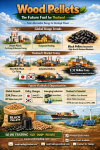
✨ Wood Pellets: The Future Energy Thailand Must Embrace
Wood pellets are rapidly becoming the strategic heart of the global clean energy transition. No longer just an alternative fuel, they are being elevated into a strategic energy source that connects economy, environment, and innovation.

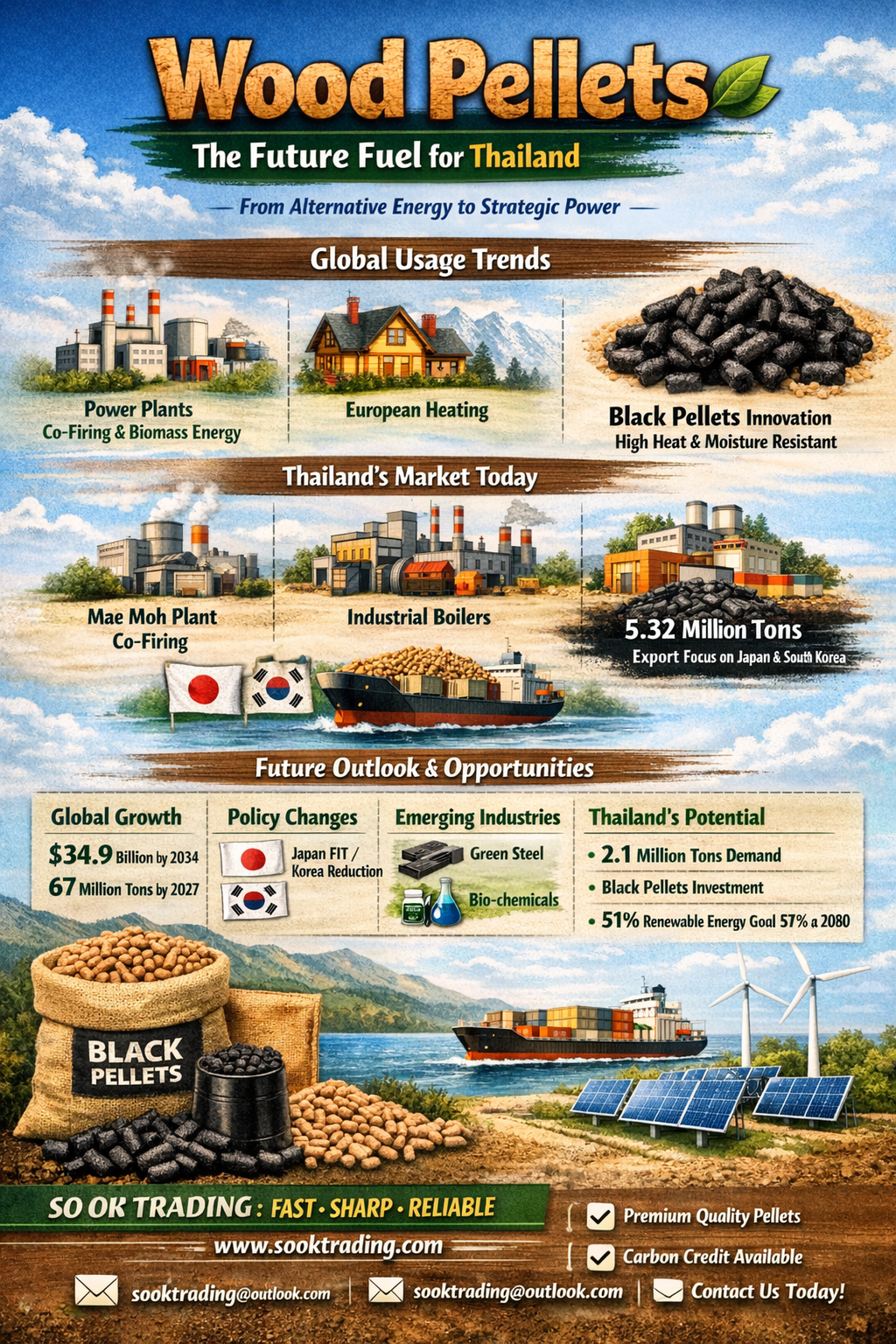
Global Usage Overview

Power Generation: Replacing coal or used in co-firing to cut carbon emissions
European Households: Widely adopted for winter heating
Japan & South Korea: Major importers; Japan enforces strict sustainability standards, while Korea is phasing out subsidies and shifting to domestic biomass
Black Pellets Innovation: Torrefaction technology delivers higher heat value and superior moisture resistance
Thailand’s Current Landscape

Electricity Sector: EGAT piloting co-firing with coal at Mae Moh power plant
Industrial Sector: Factories switching boilers to wood pellets to reduce costs and emissions
Export Potential: Thailand’s production capacity reaches 5.32 million tons/year, while domestic demand is only 0.6 million tons → Focused on exports to Japan and South Korea
Future Directions

Global Market Growth: Projected to hit USD 34.9 billion by 2034, with demand soaring to 67 million tons by 2027
Policy Shifts: Japan maintains FIT/FIP incentives with strict traceability; Korea reduces subsidies; EU to enforce deforestation-free regulation (EUDR) in 2026
New Industries (S-Curve): Green Steel production using Black Pellets; bio-chemicals and bioplastics as feedstock
Thailand’s Potential: Domestic demand forecast at 2.1 million tons by 2026, investments in Black Pellets underway, and PDP 2024 targets renewable energy share above 51% by 2080
 

Business Opportunity & Strategic Outlook

Wood pellets are entering a new era — not just an alternative, but the fuel of the future. They will power electricity, steel, and chemical industries. With production capacity far exceeding domestic demand, Thailand is poised to become a major exporter, with Japan remaining the “golden market” for Thai producers.

SO OK TRADING: Your Trusted Business Partner
FAST • SHARP • RELIABLE

Visit us: www.sooktrading.com
Contact us: sooktrading@outlook.com

We provide premium-quality wood pellets at special prices, with complete documentation, high heat value, and eligibility for Carbon Credits — ready to serve your business needs.


Related Content
Thailand Energy 2026: Game-Changer from Coal to Clean Fuels From Black to Green — Thailand’s Energy Journey Toward NET ZERO Clean Energy Thailand: RDF3, Wood Pellets, Solar Power, EV Article by SO OK TRADING
Here’s the English version of your post introduction, translated and adapted for smooth readability and professional tone: 2026 marks a pivotal turning point for Thailand’s energy system — moving away from coal toward clean energy that delivers on cost efficiency, reliability, and a green image. In this article, SO OK TRADING highlights the latest renewable energy trends in Thailand and explores the rising opportunities of RDF3, which is fast becoming the “rising star” in both the energy and cement industries. - Surging electricity demand from the private sector - Solar, RDF, and Ethanol: the emerging clean energy leaders - The decline of coal and Thailand’s Net Zero ambitions - Industry-accepted RDF3 quality standards - Strategic “location factor” that reduces RDF costs
16 Feb 2026
เกร็ดความรู้ การใช้เชื้อเพลิงชีวภาพในภาคอุตสาหกรรม  By SO OK
เกร็ดความรู้ เชื้อเพลิงชีวภาพ ในภาคอุตสาหกรรม การใช้เชื้อเพลิงชีวภาพในภาคอุตสาหกรรมช่วยลดต้นทุนและมลภาวะ โดยนำวัตถุดิบทางการเกษตร (เช่น ฟางข้าว ซังข้าวโพด) ของเสียจากโรงงาน (เช่น น้ำเสีย) และพืชพลังงาน (เช่น สาหร่าย) มาผลิตเป็นพลังงานชีวมวล (เม็ดเชื้อเพลิง) ก๊าซชีวภาพ (Biogas) ไบโอดีเซล และเอทานอล เพื่อใช้ทดแทนเชื้อเพลิงฟอสซิลในหม้อไอน้ำ โรงไฟฟ้า และยานยนต์ ซึ่งสนับสนุนเศรษฐกิจ BCG ลดการพึ่งพาพลังงานภายนอก และสร้างความมั่นคงด้านพลังงาน. ประโยชน์หลัก: ลดต้นทุนและพึ่งพาเชื้อเพลิงฟอสซิล: แทนที่ถ่านหิน น้ำมันเตา ด้วยพลังงานหมุนเวียน. ลดมลพิษ: ลดฝุ่น PM 2.5 กลิ่น และก๊าซเรือนกระจก. เพิ่มมูลค่าเกษตรกรรม: สร้างรายได้จากผลผลิตทางการเกษตรเหลือใช้ (Zero Burn). สร้างความมั่นคงทางพลังงาน: เพิ่มสัดส่วนการใช้พลังงานหมุนเวียนในประเทศ. รูปแบบการใช้งานในอุตสาหกรรม: เชื้อเพลิงชีวมวล (Biomass Fuel): นำฟางข้าว ซังข้าวโพด กากอ้อย มาอัดเป็นเม็ด (Energy Pellet) ใช้เป็นเชื้อเพลิงในหม้อเผาของโรงงาน (เช่น โรงงานปูนซีเมนต์). ก๊าซชีวภาพ (Biogas): เกิดจากการย่อยสลายสารอินทรีย์ในน้ำเสีย หรือของเสียจากโรงงานและฟาร์มสัตว์ นำมาใช้ผลิตไฟฟ้าหรือทดแทนแก๊ส LPG ได้. ไบโอดีเซล (Biodiesel) และเอทานอล (Ethanol): ผลิตจากพืชน้ำมัน (ปาล์ม) และพืชหัว (มันสำปะหลัง อ้อย) ใช้ผสมในน้ำมันดีเซลและเบนซิน (แก๊สโซฮอล์). พลังงานจากสาหร่าย (Algae Biofuel): สาหร่ายเติบโตเร็ว ดูดซับคาร์บอนได้ดี นำมาผลิตเป็นไบโอดีเซลและเชื้อเพลิงอื่นๆ. ตัวอย่างอุตสาหกรรมที่ใช้: อุตสาหกรรมปูนซีเมนต์/ก่อสร้าง: ใช้ชีวมวล (ฟางข้าว) แทนถ่านหิน. อุตสาหกรรมอาหาร: ใช้ก๊าซชีวภาพจากน้ำเสียเป็นพลังงาน. อุตสาหกรรมเคมีภัณฑ์และวัสดุชีวภาพ (Bio-based Industry): ใช้พืชผลทางการเกษตรเป็นวัตถุดิบหลักในการผลิตสารเคมี, PLA (Polylactic Acid). การพัฒนาอุตสาหกรรมเชื้อเพลิงชีวภาพเป็นส่วนสำคัญของโมเดลเศรษฐกิจ BCG (Bio-Circular-Green Economy) ของไทย เพื่อขับเคลื่อนสู่เป้าหมาย Net Zero และเพิ่มศักยภาพการแข่งขันของประเทศ. การพัฒนาเพื่อการ เชื้อเพลิงชีวภาพ มีหลากหลายประเภท ทั้งไม้สับ ไม้อัดแท่ง ไม้อัดแท่งสีดำ กะลาปาล์ม กะลามะพร้าว และเศษวัสดุทางการเกษตร ช่วยลดมลพิษ สนับสนุนเศรษฐกิจหมุนเวียน.
7 Dec 2025
Coconut Shell Charcoal Growing Demand from China and Japan BY SOOK TRADING
Uses of Coconut Shell Charcoal — Based on the Chinese and Japanese Markets Chinese Market According to market data, China is one of the largest importers of coconut shell charcoal. In 2025, import volumes increased significantly, and the average import price rose by more than 75% compared to the previous year. Demand has grown not only from Thailand but also from other major exporters such as Indonesia and Malaysia. Coconut shell charcoal is in very high demand in China, mainly for: - Clean energy industries - Production of Activated Carbon - Water treatment and air purification Japanese Market In Japan, coconut shell charcoal is widely used in both households and industries. It is especially popular in Japanese-style grilling restaurants (Yakiniku, Yakitori, BBQ), which require smokeless charcoal with consistent high heat. Japan also applies coconut shell charcoal in environmental sectors, including: - Biochar production → Contributing to carbon sequestration and reduction of greenhouse gas emissions - Activated Carbon production → Used in water treatment, air purification, and chemical industries Japan places strong emphasis on clean energy and carbon reduction, which drives high demand for high-quality imports from Thailand and Southeast Asia. Contact Information If you are interested in sourcing coconut shell charcoal from Thailand, please contact SOOK TRADING. We supply high-quality export-grade products for both the Chinese and Japanese markets.
8 Jan 2026
This website uses cookies for best user experience, to find out more you can go to our Privacy Policy and Cookies Policy
Powered By MakeWebEasy Logo MakeWebEasy