“RDF3: Turning Waste into Clean Energy, Driving the Circular Economy, and Building a Sustainable Future for Thailand and the World”
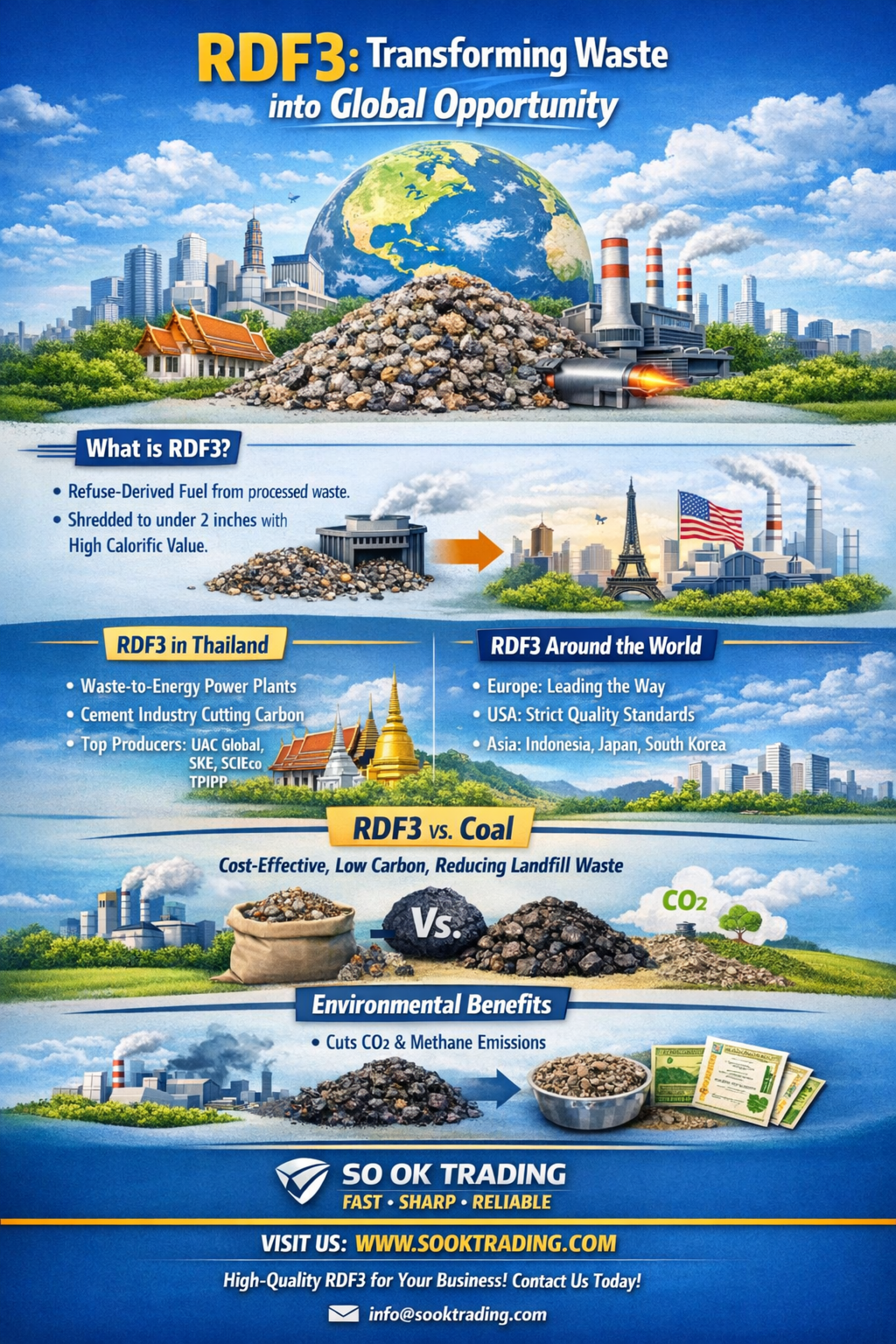
♻️ RDF3: Waste Fuel that Turns Crisis into Opportunity for Thailand and the World
What is RDF3?
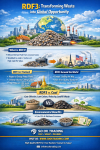
RDF3, or Fluff RDF, is a type of waste-derived fuel produced by separating out non-combustible materials such as metals, glass, stones, and hazardous waste. The remaining materials are then shredded, processed, and dried to reduce moisture, resulting in fuel pieces smaller than 2 inches. RDF3 stands out for its high calorific value suitable for large industrial furnaces, ease of transport, and lower cost compared to imported coal—making it both economically and environmentally viable.
RDF3 in Thailand
Thailand is one of the fastest-growing markets for RDF3, driven by government support and industrial demand.
Waste-to-Energy Plants: Over 61% of RDF produced is used in waste-to-energy plants, supported by government FiT rates higher than other renewable energy sources, encouraging investment.
Cement Industry: The largest consumer, using RDF3 to replace coal, reduce carbon emissions, and comply with the EU’s CBAM regulations.
Major Players: UAC Global, SKE (Sakon Energy), SCIeco (SCG), and TPIPP.
Revenue Models:
Tipping Fees from municipalities (300–600 THB per ton).
Fuel Sales to cement plants or power plants (1,000–1,500 THB per ton).
Market Growth: Expected to surpass 1.8 billion THB in 2025 and reach 14.5 billion THB by 2026, with demand rising over 16% from new waste-to-energy plants totaling 70 MW capacity.
RDF3 in the Global Market
RDF3 is not just an alternative fuel in Thailand—it is becoming a global solution for Net Zero and Circular Economy goals.
Europe: Leading in RDF and SRF adoption, with widespread use in cement plants and waste-to-energy facilities in Germany, the UK, and Italy.
United Kingdom: A major exporter of RDF due to strict waste sorting systems ensuring high-quality fuel.
United States: Applies strict ASTM standards to control calorific value, moisture, and chlorine content, ensuring safe industrial use.
Asia: Indonesia hosts RDF3 plants with Thai investment; Japan and South Korea are adopting RDF3 in industry; China is beginning pilot projects in select cities.
✅ RDF3 vs Coal
Although RDF3’s calorific value is slightly lower than coal, it is cheaper, reduces carbon emissions, and addresses urban waste problems—making it a true “Win-Win” fuel for both economy and environment.
Environmental Impact
RDF3 reduces CO₂ emissions from coal mining and methane emissions from landfills. However, combustion must be carefully controlled to prevent dioxins and acidic gases from PVC plastics. Facilities using RDF3 require dust collection systems and strict temperature control.
The Future of RDF3
RDF3 is included in Thailand’s PDP 2024–2040 plan to raise renewable energy share to 51% by 2037. Globally, the market is shifting toward RDF5 (Pellets), which are easier to transport and store, though more costly. Carbon credits are emerging as an additional revenue stream, further incentivizing adoption.
✨ SO OK TRADING: Your Business Partner
FAST SHARP RELIABLE
Visit us at: WWW.SOOKTRADING.COM
If you need high-quality RDF3 fuel, contact us directly—we are ready to supply immediately!!!!