Share

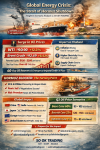
“Global Energy Crisis 2026: Strait of Hormuz at Boiling Point – The Supply Shock the World Is Watching” Scenario Analysis By SO OK TRADING
Last updated: 7 Mar 2026
629 Views

“Global Energy Crisis: When the Strait of Hormuz Is Blocked — Scenario Analysis By SO OK TRADING”

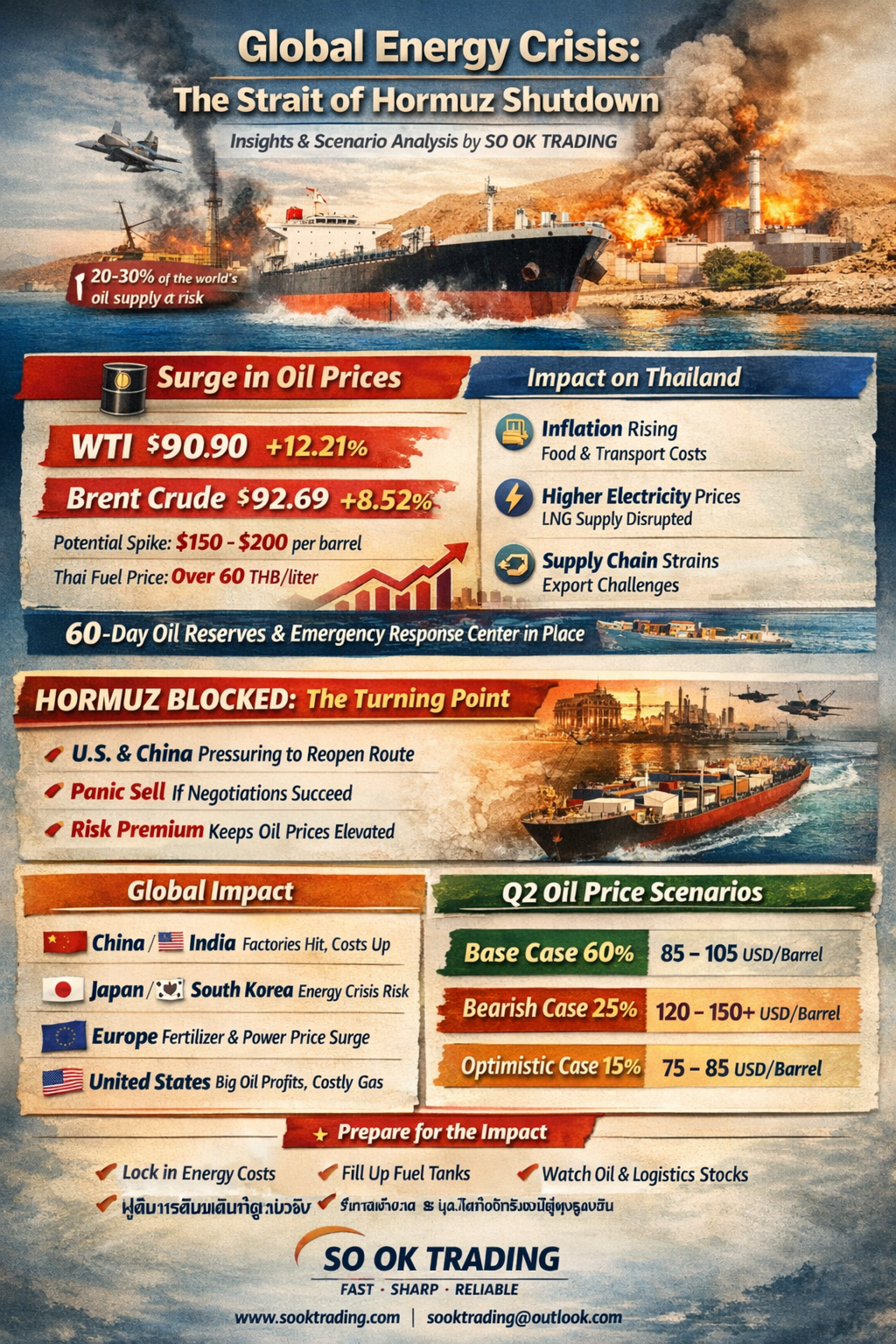
The Strait of Hormuz, a strategic route carrying 20–30% of the world’s crude oil, has become the “boiling point” of the global economy in March 2026. Iran’s announcement to close the passage in response to attacks has sent oil prices soaring and shaken every sector—from energy markets to everyday consumer goods.

⛽ Unprecedented Oil Price Surge

WTI closed at $90.90/barrel (+12.21%)
Brent Crude closed at $92.69/barrel (+8.52%)
Analysts warn: if the closure persists, prices may skyrocket to $150–200/barrel. Retail prices in Thailand could exceed 60 THB/liter, despite the government holding diesel at 29.94 THB/liter.
Impact on Thailand’s Economy

Inflation: Rising transport costs push up food and goods prices
Electricity: LNG imports disrupted, power bills likely to rise
Supply Chain: Fertilizer and export prices affected
Government: Confirms ~60 days of oil reserves, sets up a crisis monitoring center
Global Impact Overview

China/India: Manufacturing costs surge
Japan/S. Korea: 85–90% oil dependency → energy crisis risk
Europe: LNG shortage → soaring fertilizer and electricity prices
USA: Energy firms profit, consumers face high fuel costs
Oil Price Scenarios Q2/2026

Base Case (60%): $85–105/barrel (closure <1 month)
Bearish Case (25%): $120–150+/barrel (prolonged conflict, supply loss)
Optimistic Case (15%): $75–85/barrel (ceasefire or peace talks)
✨ Conclusion
The Strait of Hormuz closure marks the most severe supply shock in decades, triggering a “domino effect” across the global economy. Thailand, though buffered by reserves, must brace for rising energy and consumer prices.

Transport & Industry: Lock in energy costs, explore renewable alternatives
Consumers: Fill up tanks when possible—prices likely to rise within 1–2 weeks
Investors: Watch energy, logistics, and commodity stocks closely

SO OK TRADING – Your Business Partner
SO OK TRADING: FAST • SHARP • RELIABLE
www.sooktrading.com
sooktrading@outlook.com


Related Content
เกร็ดความรู้ COPPER CATHODE และการใช้งานในภาคอุตสาหกรรม
แคโทดทองแดง (Copper Cathode) คือแผ่นทองแดงความบริสุทธิ์สูงที่ได้จากกระบวนการกลั่นด้วยไฟฟ้า (electrolysis) มีความบริสุทธิ์ตั้งแต่ 99% ขึ้นไป และใช้ผลิตเป็นสายไฟคุณภาพสูง ผลิตภัณฑ์ไฟฟ้า หรือโลหะผสมต่างๆ กระบวนการผลิต แผ่นทองแดงที่ไม่บริสุทธิ์จะถูกใช้เป็นขั้วบวก (anode) ในเซลล์อิเล็กโทรไลต์ที่ประกอบด้วยสารละลายกรดซัลฟูริกและคอปเปอร์ซัลเฟต แผ่นทองแดงที่บริสุทธิ์จะถูกใช้เป็นขั้วลบ (cathode) เมื่อกระแสไฟฟ้าไหลผ่าน แร่ธาตุที่ไม่บริสุทธิ์จะละลายและกลายเป็นไอออนเข้าสู่สารละลาย จากนั้นไอออนทองแดงจะเคลื่อนที่ไปที่ขั้วลบและตกตะกอนลงบนแผ่นทองแดงบริสุทธิ์ สิ่งเจือปนที่มีค่าต่ำกว่าทองแดง เช่น เหล็กและสังกะสี จะละลายไปพร้อมกับทองแดง แต่สิ่งเจือปนที่มีค่าสูงกว่า เช่น ทองคำและเงิน จะตกตะกอนลงที่ก้นถัง ทำให้ได้ทองแดงบริสุทธิ์สูง คุณสมบัติและประโยชน์ ความบริสุทธิ์สูง: มีความบริสุทธิ์สูงถึง 99.99% ทำให้มีการนำไฟฟ้าได้ดีเยี่ยม นำไฟฟ้าได้ดี: ใช้เป็นตัวนำไฟฟ้าในสายไฟ สายเคเบิล และอุปกรณ์ไฟฟ้าต่างๆ ยืดหยุ่นและทนทาน: สามารถนำไปรีดเป็นเส้นลวดบางๆ หรือแผ่นฟอยล์ได้โดยไม่เปราะขาดง่าย ทนความร้อน: สามารถนำกระแสไฟฟ้าได้เต็มพิกัดโดยไม่เกิดความร้อนสูงเกินไป ใช้สร้างโลหะผสม: สามารถนำไปผสมกับโลหะอื่นเพื่อสร้างโลหะผสม เช่น ทองเหลือง (ทองแดง + สังกะสี) และทองสำริด (ทองแดง + ดีบุก) ทำผลิตภัณฑ์อื่นๆ: ใช้ผลิตเค้กทองแดง แผ่นทองแดง หรือวัสดุอื่นๆ
28 Nov 2025
“Land of Tropical Fruits: Thai Fruits Rising as Global Brands — From Orchards to Luxury Markets, Winning Hearts Worldwide with Durian, Mangosteen, and Mango, the Global Stars of 2026” Article by SO OK TRADING · March 11, 2026
Thai Fruit Trends 2025–2026 are entering an exciting new era, full of global business opportunities! SO OK TRADING presents an overview of Thailand’s rapidly growing fruit export market, both in volume and quality. Durian, mangosteen, and Nam Dok Mai mango have become the “superstars” across international markets.
11 Mar 2026
“RDF-3: Transforming Cement Plants Towards Clean Energy — The Net Zero Survival Strategy  Article by SO OK TRADING (March 15, 2026)”
RDF-3: The Waste Fuel Cement Plants Love From waste to clean energy, cement plants worldwide—including Thailand—are shifting from costly coal to RDF, cutting costs and carbon emissions in a serious way. RDF-3 (Fluff RDF) is the star of the industry: small size, fast burning, high calorific value, and zero leftover ash. Global Trends: China, Japan, and South Korea are moving toward premium SRF with advanced smart-sorting technology. Thailand is catching up fast: Major cement plants target 50–100% RDF usage, backed by “Trash-to-Cement” models and the new TIS RDF standard. RDF-3 is not just an “alternative fuel” — it’s the fuel of the future, helping cement plants truly go green.
15 Mar 2026
This website uses cookies for best user experience, to find out more you can go to our Privacy Policy and Cookies Policy
Compare product
0/4
Remove all
Compare
Powered By MakeWebEasy Logo MakeWebEasy