“Hormuz Strait Crisis: Energy Storm Shaking the World — Oil Surges, Logistics Disrupted, Global and Thailand Must Respond”
Hormuz Strait Crisis: Global Energy Shock, Challenges for the World and Thailand
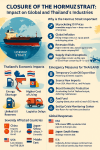
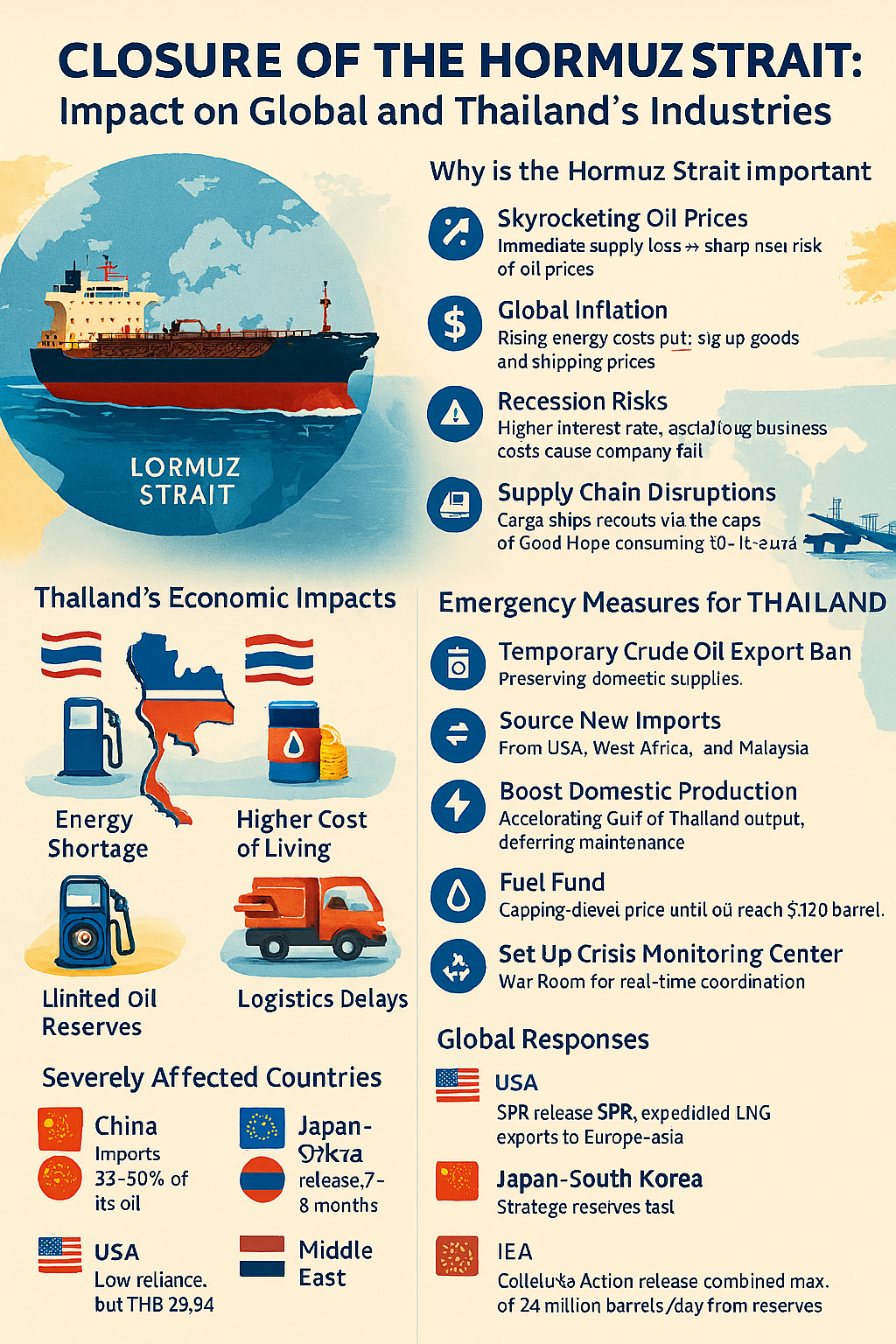
Why the Hormuz Strait Matters
The Hormuz Strait is a strategic route transporting about 20% of the world’s crude oil and 20% of LNG.
If blocked, it means the “artery” of the global economy is instantly cut off.
Impacts on the Global Economy
Oil Prices Surge: Immediate supply loss drives crude oil prices higher.
Global Inflation: Rising energy costs push up goods and transport prices.
Recession Risks: Higher interest rates and business costs threaten survival of many firms.
Supply Chain Disruptions: Ships rerouted around the Cape of Good Hope add 10–15 days to transit.
Impacts on Thailand’s Economy
Energy Shortage Risk: Over 50% of Thailand’s crude oil imports pass through Hormuz; long-term closure could cut one-third of demand.
Higher Living Costs: Fuel, electricity, and transport prices hit households immediately.
Limited Oil Reserves: Thailand’s reserves last about 38–60 days; government caps diesel at THB 29.94.
Logistics Delays: Exports and imports with the Middle East and Europe face disruption.
Countries Most Severely Affected
China: 33–50% of oil imports via Hormuz, GDP at risk.
Japan: Over 90% reliance on Middle Eastern oil, reserves cover 8 months.
EU: Gas prices may triple, impacting aviation and households.
USA: Low reliance, but domestic prices follow global market.
Middle East: Main revenue halted, pipelines only partially absorb rerouting.
Impacts on Goods and Stock Markets
Consumer Goods: Fertilizer, fresh food, plastics, and packaging prices rise.
Logistics: Longer routes increase freight and marine insurance costs.
Stock Markets:
Negative: Airlines, transport, construction materials, consumer goods.
Positive: Upstream energy, shipping, healthcare, export stocks.
Thailand’s Emergency Measures
Temporary crude oil export ban to secure domestic supply.
Source new imports from USA, West Africa, and Malaysia.
Boost domestic production by deferring Gulf of Thailand maintenance.
Use the Fuel Fund to cap diesel prices until oil exceeds $120/barrel.
Establish Energy Crisis Monitoring Center (War Room) for real-time coordination.
Accelerate renewable energy and supplement with coal/hydro power.
Global Responses
USA: Release Strategic Petroleum Reserve (SPR), expedite LNG exports to Europe and Asia.
Japan–South Korea: Release 7–8 months of reserves, negotiate imports from USA and Australia.
China: Increase shale oil/gas output, expand pipeline imports from Russia.
EU: Convene Gas Coordination Group, compete for LNG in spot market.
IEA: Collective Action to release up to 24 million barrels/day from reserves.
Summary: Impacts on Thai Industries
The closure of the Hormuz Strait is a “mega storm” shaking global energy and directly hitting Thailand’s economy — from oil prices and living costs to stock markets.
Government: Must accelerate self-reliance and diversify import sources.
Businesses: Need to adjust cost structures and supply chain strategies.
People: Must prepare for rising living expenses.
SO OK TRADING: Your Trusted Business Partner
FAST. SHARP. RELIABLE.
www.sooktrading.com