Thai Baht in March 2026: Geopolitics Shakes Global Markets — Baht Weakens, Dollar Strengthens, Oil Surges, Inflation Rises from the U.S.–Iran War
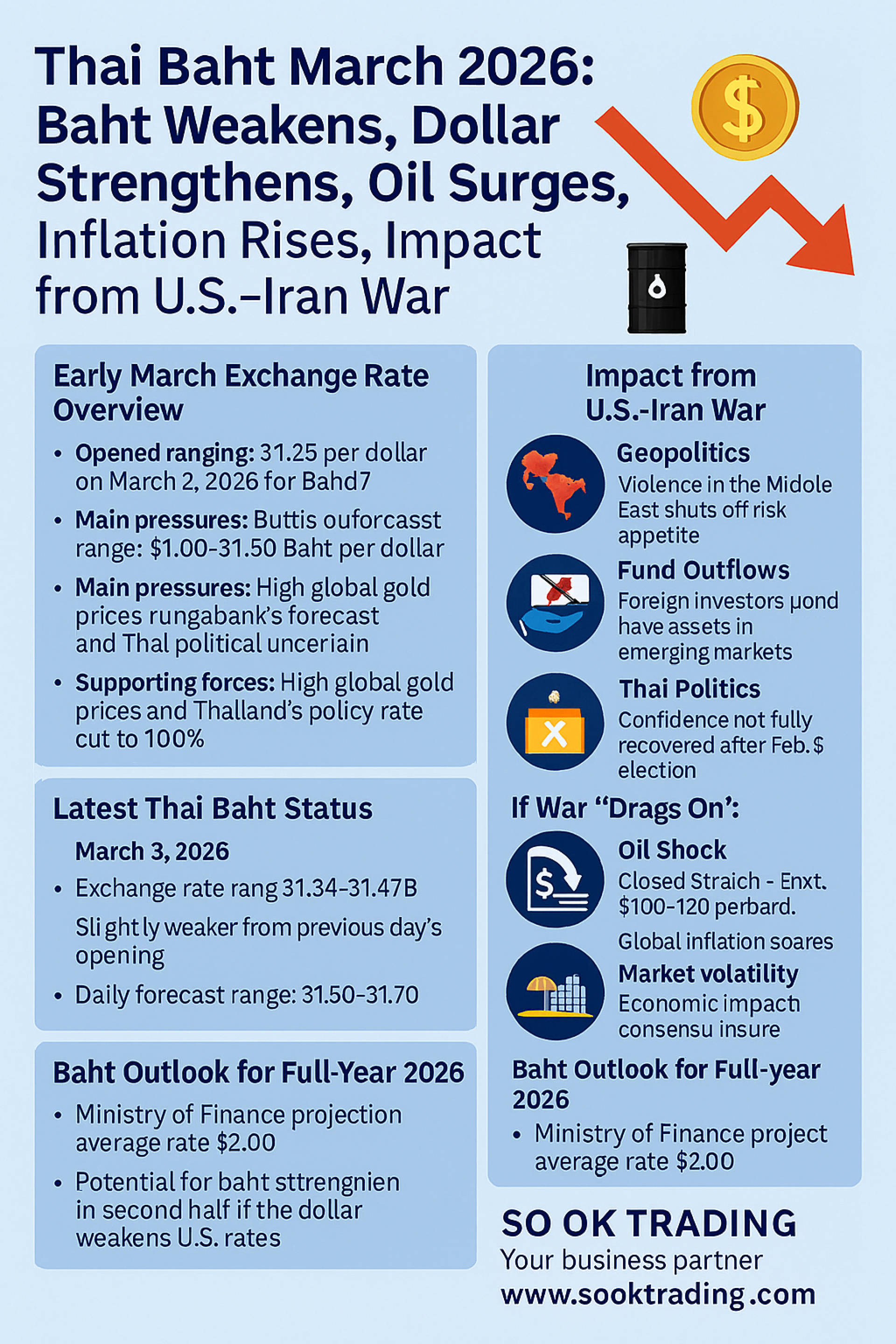
Thai Baht in March 2026 – Baht Weakens, Dollar Strengthens, Oil Prices Surge, Inflation Rises
Impact from the U.S.–Iran War
Exchange Rate Overview (Early March)
On March 2, 2026, the Thai baht opened at 31.25 per USD, weakening from late February after having been very strong at the end of 2025.
Weekly forecast range (March 2–6): Kasikornbank projects 31.00–31.80 per USD.
Key pressures: Rising tensions in the Middle East, capital outflows, and political uncertainty in Thailand.
Supporting factors: High global gold prices and Thailand’s policy rate cut to 1.00%.
Latest Baht Status (March 3, 2026)
Exchange rate: 31.34–31.47 per USD
Market status: The baht is “slightly weaker” compared to yesterday’s opening (31.25).
Daily forecast: 31.50–31.70 per USD according to financial institutions.
Pressures Driving Baht Weakness (U.S.–Iran War Impact)
Geopolitics: Escalating violence in the Middle East reduces risk appetite.
Fund flows: Foreign investors sell off assets in emerging markets.
Thai politics: Investor confidence remains fragile after the February 8 election.
Supporting Factors (Limiting Weakness)
Policy rate cut: Reduced to 1.00% to stimulate the economy and exports.
Gold prices: Staying high, supporting the baht as a safe-haven-linked asset.
If the War “Drags On”
Oil Shock: Closure of the Strait of Hormuz could push oil prices to 100–120 USD/barrel. Global inflation would surge, forcing the Fed and other central banks to raise rates again.
Market Volatility: The baht could weaken past 32–33 per USD, gold could hit new all-time highs, and the Thai stock market could face heavy foreign sell-offs.
Direct impact on Thailand’s economy: Rising costs for energy, fertilizers, and shipping; reduced purchasing power among trading partners plus soaring freight rates; declining tourism confidence even though Thailand is not a conflict zone.
Baht Outlook for 2026
Annual average: Ministry of Finance forecasts around 32.00 per USD.
Second half of the year: The baht may strengthen again if the dollar weakens in line with U.S. interest rate policy.
Key Factors to Monitor
Closely track oil and gold prices.
Diversify into safe-haven assets such as gold.
Adjust export strategies to cope with rising production and shipping costs.
Use the opportunity of low interest rates to expand investment and production.
SO OK TRADING — Your Business Partner
www.sooktrading.com