“From Negotiation to Shockwaves: The U.S.–Iran Pressure Game Shakes the Global Economy Through Energy, Capital, and Gold”
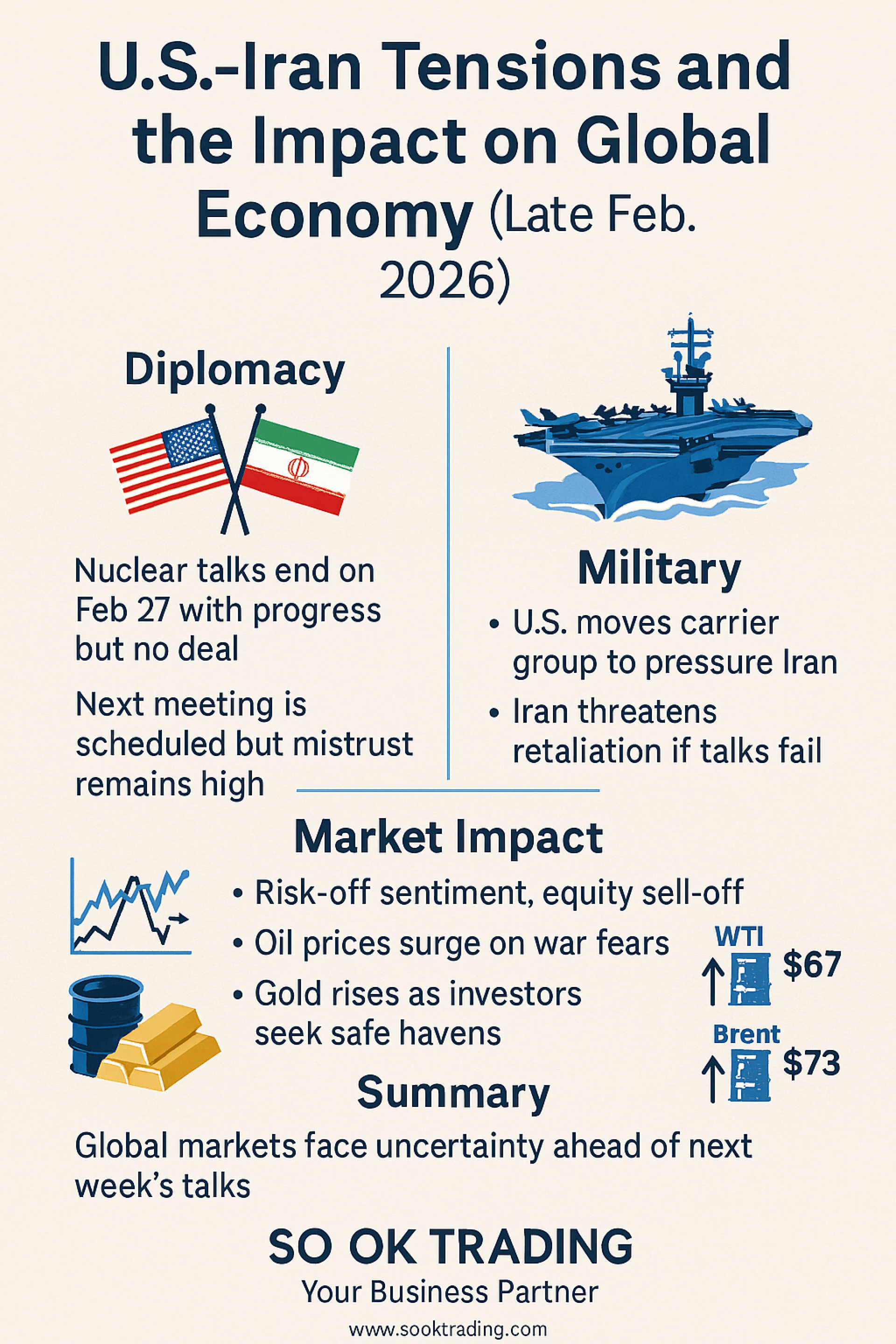
U.S.–Iran Tensions and Global Economic Impact (Late February 2026)
Article by SO OK TRADING
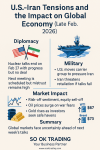
Political and Diplomatic Overview
The third round of nuclear negotiations between the United States and Iran concluded on February 27. While some progress was reported, no concrete agreement was reached. Both sides plan to meet again next week, but mistrust remains high. President Donald Trump continues to pursue a “Maximum Pressure” strategy, leveraging tariffs and military pressure to push Iran toward a new deal more favorable to the U.S.
Military Tensions
The U.S. has deployed an aircraft carrier strike group and additional forces to the region, combining diplomatic pressure with a show of military strength. Israel, backed by U.S. support, has received stealth fighter jets and advanced weaponry, preparing to strike if diplomacy fails. Iran has warned it is ready to retaliate immediately, targeting U.S. bases in the region.
Impact on Global Stock Markets
The situation has triggered a clear “Risk-off” sentiment, with investors selling off risk assets.
U.S. and European markets (S&P 500, DAX) dropped sharply due to concerns over energy costs and inflation.
Emerging markets, including Thailand, suffered heavier losses as capital flowed back into U.S. safe-haven assets.
Severely impacted sectors: airlines and transportation (fuel costs), technology, and consumer goods.
Potential outperformers: energy companies (higher oil prices), defense industries (increased orders), and safe-haven assets such as gold, U.S. Treasuries, and the U.S. dollar.
Oil Prices
Oil surged on “war risk premiums.”
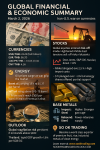
WTI closed at $67.02 per barrel (+2.8%).
Brent closed at $72.87 per barrel (+2.9%).
Concerns over potential disruption of shipments through the Strait of Hormuz and larger-than-expected declines in U.S. crude inventories added to market tightness. In Thailand, the Oil Fund increased subsidies to stabilize retail fuel prices and ease the burden on consumers.
Gold and Precious Metals
Gold prices spiked as investors sought safe havens.
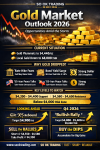
Thai gold bars: Buy at 77,400 THB / Sell at 77,600 THB.
Gold Spot: $5,100–$5,200 per ounce.
JP Morgan raised its year-end forecast to $6,300 if conflict persists. Silver rose alongside gold but remains more volatile due to its dual role as a safe-haven asset and industrial metal. Platinum and palladium face supply shock risks if transport routes are disrupted.
Base Metals
Aluminum: $3,100–$3,200 per ton. Rising energy costs and transport risks are driving prices higher.
Copper: $13,100–$13,200 per ton. Short-term support comes from defense demand and transport costs, but long-term pressure looms if global economic growth slows.
Currency Movements
Heightened tensions pushed investors toward safe-haven currencies.
U.S. Dollar (USD): DXY at 97.7–97.8, with potential for further strengthening if tensions escalate.
Chinese Yuan (CNY): 6.85–6.86 per dollar, weakening due to higher energy costs and capital outflows.
Thai Baht (THB): 31.00–31.23 per dollar, pressured by oil imports but supported by rising gold prices. Expected to fluctuate between 31.00–31.60 next week.
Summary by SO OK TRADING
The U.S.–Iran situation is at its most fragile point. If next week’s negotiations fail, the risk of limited military action will rise sharply. Global markets will face extreme volatility across equities, oil, gold, and currencies. Investors must closely monitor the upcoming OPEC+ meeting and the next round of talks, as these will determine the short- to mid-term trajectory of the global economy.
SO OK TRADING — Your Business Partner
For more information or to source products for your industry, please visit www.sooktrading.com.