“Thai Sugar Industry: From Kitchen to Global Stage” : Article BY SO OK TRADING
Thai Sugar: From Household Sweetness to Global Economic Power
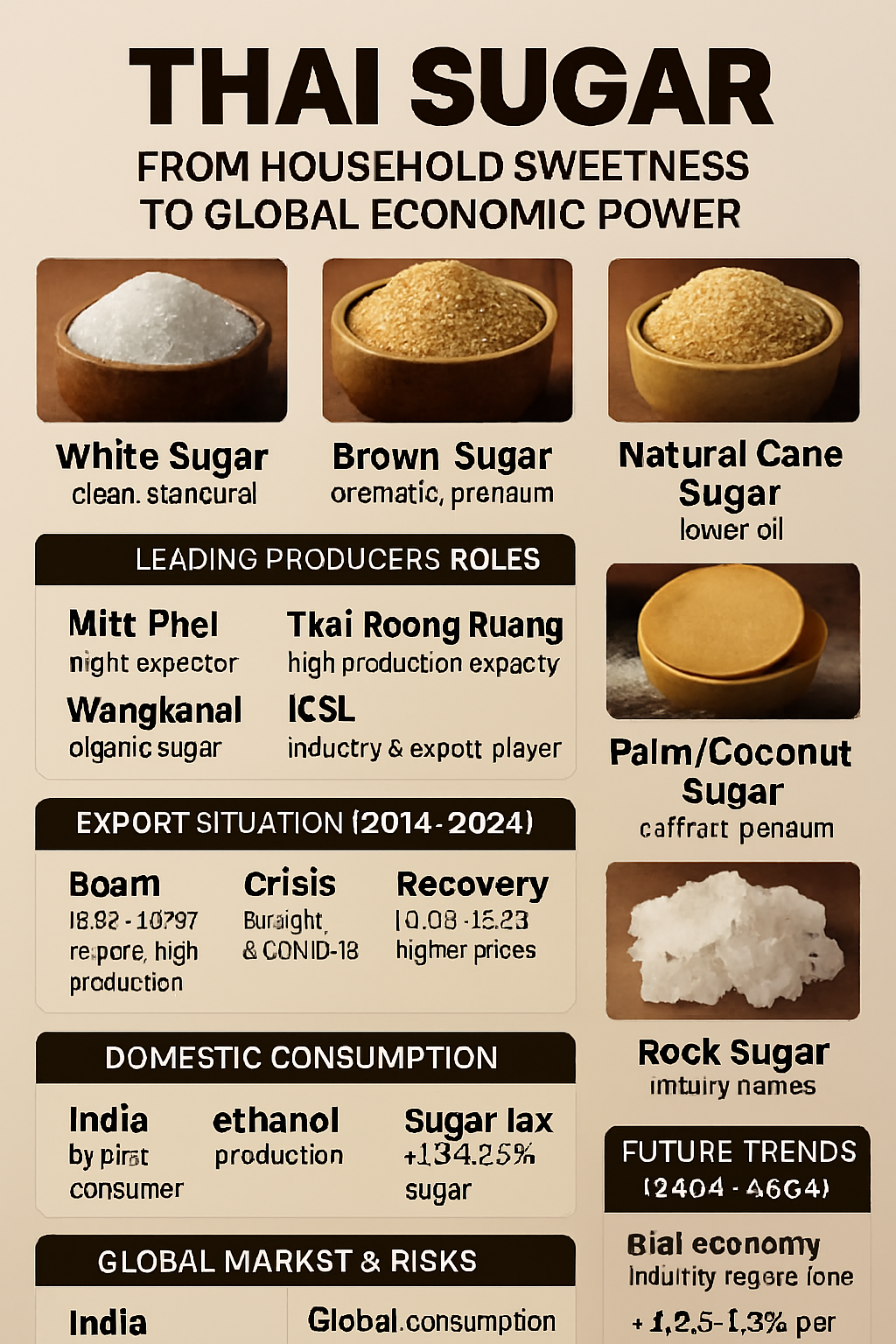
Types of Sugar & Selling Points
Refined White Sugar – Widely used in global food and beverage industries; valued for cleanliness and international standards.
Brown Sugar – Contains molasses with a distinctive aroma; ideal for bakeries and premium drinks.
Natural Cane Sugar – Lower GI, suitable for the growing health-conscious market.
Palm/Coconut Sugar – Cultural and premium product; commonly used in Thai desserts and traditional cuisine.
Rock Sugar – Targets herbal drinks and consumers who prefer mild sweetness.
Major Producers & Roles
Mitr Phol Group – Dominates both domestic and export markets; globally recognized.
Thai Roong Ruang Group – Highest production capacity in Thailand; “Lin” brand popular in bakery markets.
Wangkanai Group – Specializes in organic sugar; focuses on health markets.
KSL Group (Khon Kaen Sugar) – Plays a key role in industry and exports.
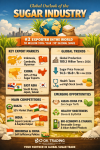
Export Situation (2014–2024)
Boom (2014–2018) – Peak in 2018 with 14 million tons produced and 10.6 million tons exported.
Crisis (2019–2021) – Severe drought and COVID-19 reduced output to the lowest in a decade.
Recovery (2022–2024) – Production fell over 20%, but higher export prices sustained revenue.
Thailand exports about 81% of total production, worth USD 3.71 billion. Key markets: Indonesia, Cambodia, South Korea, China, Malaysia.
Domestic Consumption
Average intake: 20–23 teaspoons/day, 3–4 times higher than WHO recommendations.
Over 6.5 million diabetes patients; obesity rates up 45%.
“Sugar tax” and health trends drive the Low Sugar/Zero Sugar market, valued at over THB 10 billion.
Global Market & Risk Factors
India – Largest consumer (30 million tons annually).
China & Japan – Lower per capita consumption, but rising demand for low-sugar products.
Brazil – Diverts cane to ethanol production, causing sugar price volatility linked to oil prices.
Risks – Drought, El Niño, sugar tax, environmental regulations.
Future Outlook (2026–2036)
Thailand – Transitioning to a Bio-economy, expanding bioenergy and biomaterials.
Global – Consumption to grow 1.2–1.3% annually, reaching 202.7 million tons by 2036.
Challenges – Drought, PM2.5, sugar tax, stricter environmental measures.
Opportunities – Growing Asian and African markets, value-added cane products.
Marketing Summary
Thai sugar is not just “sweetness in the kitchen” — it is a strategic global commodity linking economy, agriculture, health, and energy. By shifting toward Bio-industry, Thailand’s sugar sector will not only maintain its position among the world’s Top 3 exporters but also create new value in a rapidly changing global market.
For high-quality sugar products, whether for domestic use or export,
please contact SO OK TRADING via www.sooktrading.com (“Give Inquiry”) or email sooktrading@outlook.com.