Share

“CBAM & Carbon Credit: Transforming Global Trade — From Cost to Opportunity, Adapting Early with Carbon Footprint as the Survival Blueprint for Thai Businesses in the Green Era”
Last updated: 21 Feb 2026
246 Views

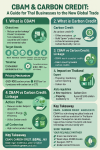
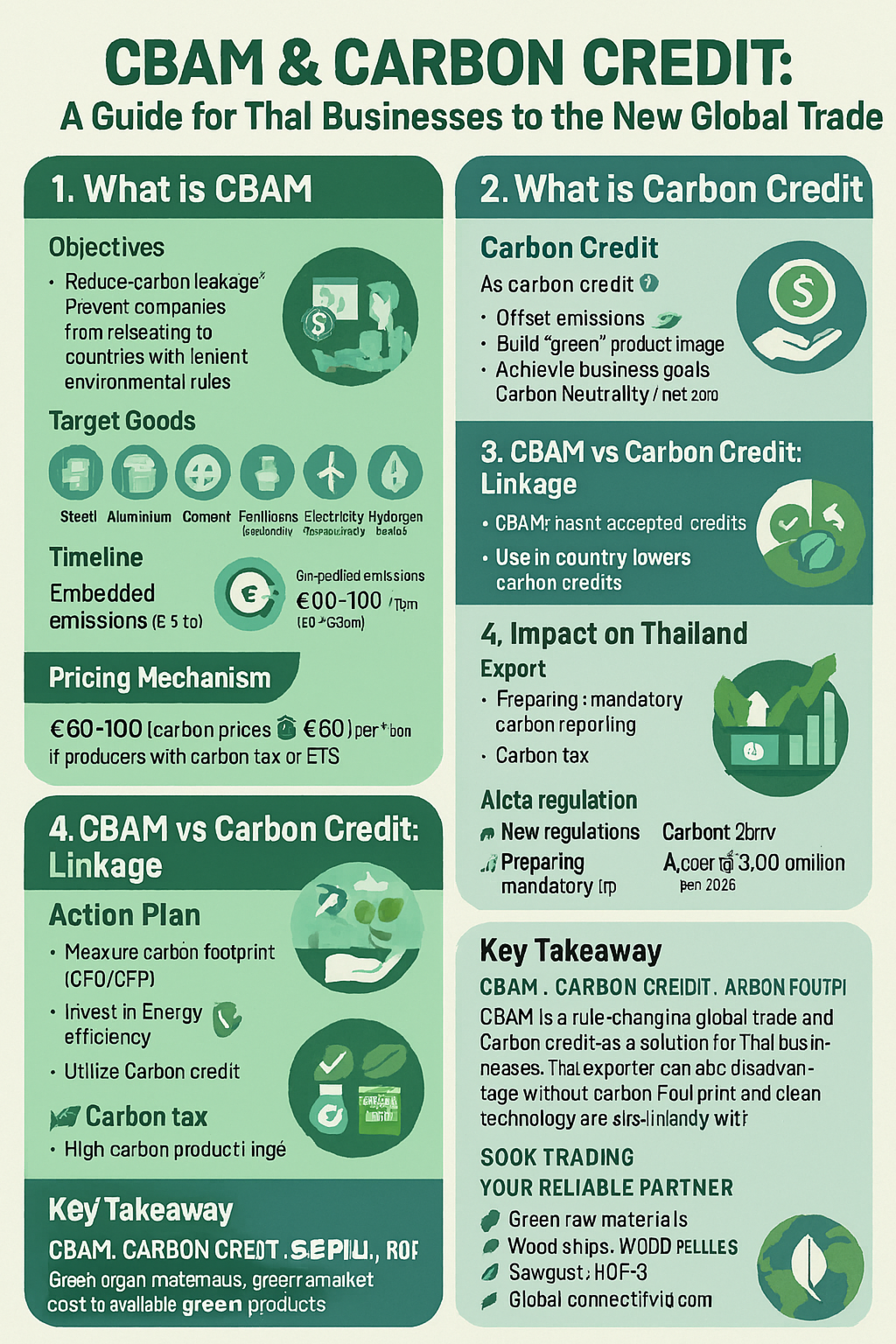
CBAM & Carbon Credit: A Guide for Thai Businesses to the New Global Trade

And “Carbon Footprint: The Blueprint for Future Business”


1. What is CBAM?
The Carbon Border Adjustment Mechanism (CBAM) is a new EU regulation that will be fully enforced starting January 1, 2026.

Objective: Reduce carbon leakage and prevent companies from relocating production to countries with weaker environmental rules.
Target Products (first 7 groups): Steel, aluminum, cement, fertilizers, electricity, hydrogen, and certain downstream products.
Timeline:
2023–2025: Quarterly reporting of embedded emissions.
2026 onwards: Importers must purchase CBAM Certificates based on EU ETS carbon prices.
Pricing Mechanism: EU ETS price (60–100 EUR/ton, approx. 2,300–3,800 THB). If the producing country has a carbon tax or ETS equivalent to EU standards, costs can be deducted.
 

2. What is Carbon Credit?
Carbon Credit = the right to reduce or sequester carbon dioxide (unit: tCO₂eq).

Examples: Forest planting, renewable energy, waste management.
Thailand’s authority: Thailand Greenhouse Gas Management Organization (TGO) → T-VER system.
Benefits:
Offset emissions.
Build a “green product” image.
Help businesses achieve Carbon Neutrality / Net Zero.
 

3. CBAM vs Carbon Credit: The Linkage

CBAM focuses on actual emission reductions, voluntary credits cannot directly offset CBAM.
Domestic carbon credit use reduces real emissions → lowers embedded emissions in CBAM reporting.
If Thailand implements a carbon tax or ETS, exporters can deduct these costs from CBAM obligations.
 

4. Impacts on Thailand

Exports: KResearch estimates ~28 billion THB impact in 2026 (3.8% of EU exports).
High-risk industries:
Steel (USD 95.1 million).
Aluminum (USD 56.7 million).
Additional costs: CBAM Certificates + MRV (Measurement, Reporting, Verification).
Domestic law: Climate Change Act to mandate carbon reporting.
Carbon Tax: Expected in 2025 at 200 THB/ton.
Market: Carbon credit market projected to grow from 64 million THB to 3 billion THB by 2026.
SMEs: Struggle due to limited funds and technology.
Supply Chain: Even non-exporters may be required to provide carbon data to larger companies.
Positive impacts: Technology upgrades, low-carbon products (e.g., Low Carbon Rice) as new global selling points.
 

5. Carbon Price Gap: Thailand vs EU

EU ETS: 60–100 EUR (2,300–3,800 THB/ton).
Thailand T-VER: 100–200 THB/ton.
→ Thai exporters will face significantly higher costs once CBAM is enforced.
 

6. Adaptation Strategies (Action Plan)

Measure carbon footprint (CFO/CFP).
Invest in energy efficiency (e.g., solar rooftop).
Use domestic carbon credits to strengthen “green product” branding.
Monitor Thailand’s carbon tax policy.
 

7. Carbon Footprint: The New Business Indicator

CFO (Organization): Scope 1, 2, 3 emissions.
CFP (Product): Life cycle assessment of product emissions.
Why it matters:
Essential for EU exports.
Cost reduction by identifying high-emission points.
Builds consumer trust.
 

8. Thailand’s Outlook (2026)

Mandatory carbon reporting.
Carbon tax enforcement.
Rising carbon credit prices, expanding market.
TGO upgrading credits for international trade.
 

Key Takeaway

CBAM is the new global trade rule. Carbon Credit is the adaptation tool. Carbon Footprint is the blueprint for future business.
Without early measurement and clean technology investment, Thai exporters risk losing competitiveness. But by turning crisis into opportunity, Thailand can create low-carbon products and secure a sustainable position in the global market.


SO OK TRADING: YOUR RELIABLE PARTNER
We supply green energy raw materials: Wood Chips, Pellets, Saw Dust, RDF3.
Contact us: sooktrading@outlook.com
www.sooktrading.com


Would you like me to now condense this into a short, catchy English social media caption (for LinkedIn/F


Related Content
Renewable Energy from Waste to Value (Green Energy) กะลามะพร้าวจากเศษขยะไม่มีค่าสู่ พลังงานชีวภาพ ช่วยลดภาระ มลภาวะสิ่งแวดล้อม
ถ่านกะลามะพร้าว จากมะพร้าว ที่หลายคนใช้ในการผลิตหลายๆอย่าง ไม่ว่าเนื้อมะพร้าวทำเป็นน้ำมันมะพร้าว เป็นกะทิ ใยก็นำไปทำเตียงนอน น้ำมะพร้าวก็แสนอร่อย เนื้อมพร้าวก็นำมาทำขนม กะลามะพร้าวนำไปผลิตเป็นกระบวย ตักน้ำดื่ม คุณประโยชน์จากกะลามพร้าวเป็นที่รู้ จักกันมาอย่างแพร่หลาย แทบบอกได้เลยว่าทุกส่วนของกะลามะพร้าว สามารถที่ จะนำมาใช้ประโยชน์ได้เสมอ - แนวความคิดของเราจะในมาใช้ในส่วนผลิตเป็นพลังงานทดแทน ในอนาคตซึ่งถ่าน จะขาดแคลนเนื่องจากป่าไม้มีจำนวนน้อยลงไปทุกที เรามาดูกันนะครับว่าเราจะผลิต ถ่าน จากกะลามะพร้าวกันได้อย่างไร ?? - เปลือกที่เราทำเป็นถ่านกันบ้าง ทำจากเศษกะลาที่เหลือจากโรงงานอุตสาหกรรม หลากหลายแห่ง ไม่ว่าจะเป็น โรงงานทำกระทิสำเร็จรูป โรงงานผลิตกระทิส่ง ตลาดสด แม้แต่โรงงานผลิตวุ้นมะพร้าว เศษกะลาจำนวนมากนี้ก่อปัญหาให้ทาง โรงงานเป็นอย่างมาก เนื่องจากมีปริมาณมาก ไม่มีที่ทิ้ง หรือจัดเก็บเพื่อการทำลาย , การใช้กะลามะพร้าวมาเผาทำเป็นแหล่งพลังงานจัดว่าเป็นการลดมลภาวะช่วยโลก และ ก่อให้เกิดเศรษฐกิจหมุนเวียน (Green / Circular Economy) - กะลามะพร้าวที่ผ่านการเผาด้วยความร้อนสูง จากนั้นนำกะลาที่ได้ไปผ่านตะแกรง ร่อนให้เหลือเพียงแต่ชิ้นกะลาล้วนๆ เพื่อให้ได้ชิ้นกะลามะพร้าวที่มีคุณภาพสำหรับ ผลิตถ่านกะลาคุณภาพดี : เป็นรูปชิ้นกะลามะพร้าวที่ผ่านการเผาเป็นเรียบร้อยแล้ว และผ่านการร่อนจนเหลือเพียงแต่ชิ้นกะลาเท (จากกะลา 100% หลังจากที่ผ่านการเผาแล้วจะเหลือถ่านกะลาเพียงแค่ 20% เท่านั้น) - วัตถุดิบถ่านกะลามะพร้าว นำมาผ่านเครื่องบด เครื่องอัด โดยพิจารณาส่วนผสม ที่เหมาะสมเพื่อให้ได้สินค้าถ่านอัดแท่งที่มีคุณภาพมากที่สุด เพื่อให้ได้ถ่านอัดแท่งที่มีคุณภาพพร้อมที่จะส่งออกไปสู่ต่างประเทศ ให้สินค้าไทย ก้าวไปให้ไกลยังต่างประเทศไห้ได้มากที่สุด - หลังจากที่ผ่านเครื่องอัดกำลังสูงออกมาแล้ว สินค้าที่ไ้ด้ ทางเราต้องนำสินค้าถ่านอัดแท่ง เข้าเตาอบ เพื่อลดความชื้นภายในเนื้อถ่าน เพื่อให้ถ่านที่ส่งเข้าสู่ตลาดมีคุณภาพดีที่สุด ค่าความร้อนสูง ค่าความชื้นน้อยที่สุด เตาอบถ่านเราใช้เวลาอบนานถึง 3 วันเพื่อใ้้ห้ความชื้นในเนื้อถ่านน้อยที่สุด - ถ่านที่นำออกมาจากเตาอบ ที่ใช้เวลาอบนานมากถึง 3 วันเพื่อให้แน่ใจว่า ภายในเนื้อถ่านอัดแท่งจากกะลามะพร้าวจะมีความชื้นน้อยที่สุดเท่าที่จะเป็นไปได้ - หลังจากที่ถ่านไม่มีความร้อน ไม่มีความชื้นเรียบร้อยแล้ว ทางเราจะตัดแท่งก้อน ถ่านให้ได้ตามขนาดตามที่ลูกค้าสั่งมา ส่วนการบรรจุขึ้นอยู่กับลูกค้าว่าต้องการการ บรรจุแบบได ขนาดความยาวเท่าไร ซึ่งเป็นไปตามลูกค้าสั่งเสมอ และนำลงบรรจุเพื่อทำการส่งมอบ ให้ลูกค้าต่อไป - การขนส่งสินค้า ส่งมอบให้ลูกค้าที่ท่าเรือ เพื่อที่จะบรรจุเข้าตู้คอนเทรนเนอร์ ตามวันที่ลูกค้ากำหนด นะครับ เราจะขนส่งโดยใช้รถสิบล้อ ขนส่งจากโรงงาน ไปเข้าตู้สินค้าที่ท่าเรือกรุงเทพ หรือจุดนัดพบลูกค้า ตามแต่ลูกค้าได้สั่งนะครับ เราคำนึงถึงเวลาในการส่งสินค้าให้กับลูกค้าเสมอครับ ข ขั้นตอนการบรรจุสินค้าเข้าตู้ ก็เป็นอีกขั้นตอนหนึ่งที่เราให้ความสำคัญไม่แพ้กัน เนื่องจากว่าเราเข้าใจลูกค้าว่าต้องการบรรจุลงตู้ให้ได้มากที่สุด ทางเราจะจัดเรียงให้ แน่นที่สุดเพื่อให้บรรจุสินค้าเข้าตู้ได้มากที่สุดด้วย -ทุกขั้นตอนตั้งแต่เรื่องวัตถุดิบจนถึงการขนส่งไปถึงมือลูกค้าเป็นสิ่งที่ทาง SO OK TRADING เราให้ความสำคัญเสมอมา --------- Product Testing Specification Moisture = 6.4% Volatile Matter = 17.2% (18.4% at moisture free basis) Fixed Carbon = 73% (78.0% at moisture free basis) Ash = 3.4% (3.6% at moisture free basis) Sulfur = 0.0% (0.0% at moisture free basis) Heating Value = 6,870 kcal/kg. (7,340 kcal/kg at moisture free basis) Density = 970 kg/m3 High Quality Pure Coconut CHARCOAL Testing Specification Moisture = 7.1%-7.8% Volatile Matter = 13.0%-13.5% Fixed Carbon = 81.0%-83.0% Ash = 3.7%-7.7% Sulfur = 0.0% Heating Value = 7,100-7,300 kcal/kg Density = N/A
24 Nov 2025
Carbon Black: Powering Performance, Driving Sustainability : From Soot to Solutions: The Future of Carbon Black
Carbon Black: The Black Powder Driving Sustainability and Innovation From tires to electronics, Carbon Black is more than just pigment — it's a high-performance material shaping the future of mobility and green manufacturing. Discover the difference between Virgin and Recovered Carbon Black, and why Thailand is becoming a key player in the global shift toward sustainable production.
4 Feb 2026
“The World After Lunar New Year: Strong Dollar, Rare Earth Shortages, and the Rise of AI” “From Tariff War to Resource War: The World of 2026 Will Never Be the Same” “Trump 2.0 Reshapes the Globe: When the Economy Turns Into a Battlefield"
The global economy in 2026 is entering a new era unlike any before. Under President Donald Trump’s “America First” policy, the world is shifting from a trade war to a resource war, forcing every nation to adapt quickly.
19 Feb 2026
This website uses cookies for best user experience, to find out more you can go to our Privacy Policy and Cookies Policy
Compare product
0/4
Remove all
Compare
Powered By MakeWebEasy Logo MakeWebEasy