Clean Energy Milestones: From Choice to Survival for Thai Industry — Fuel Switching to Net Zero, Unlocking Tax Benefits, Carbon Credits, and ESG with Biomass
Clean Energy Milestones: From “Choice” to “Survival” for Thailand and the World
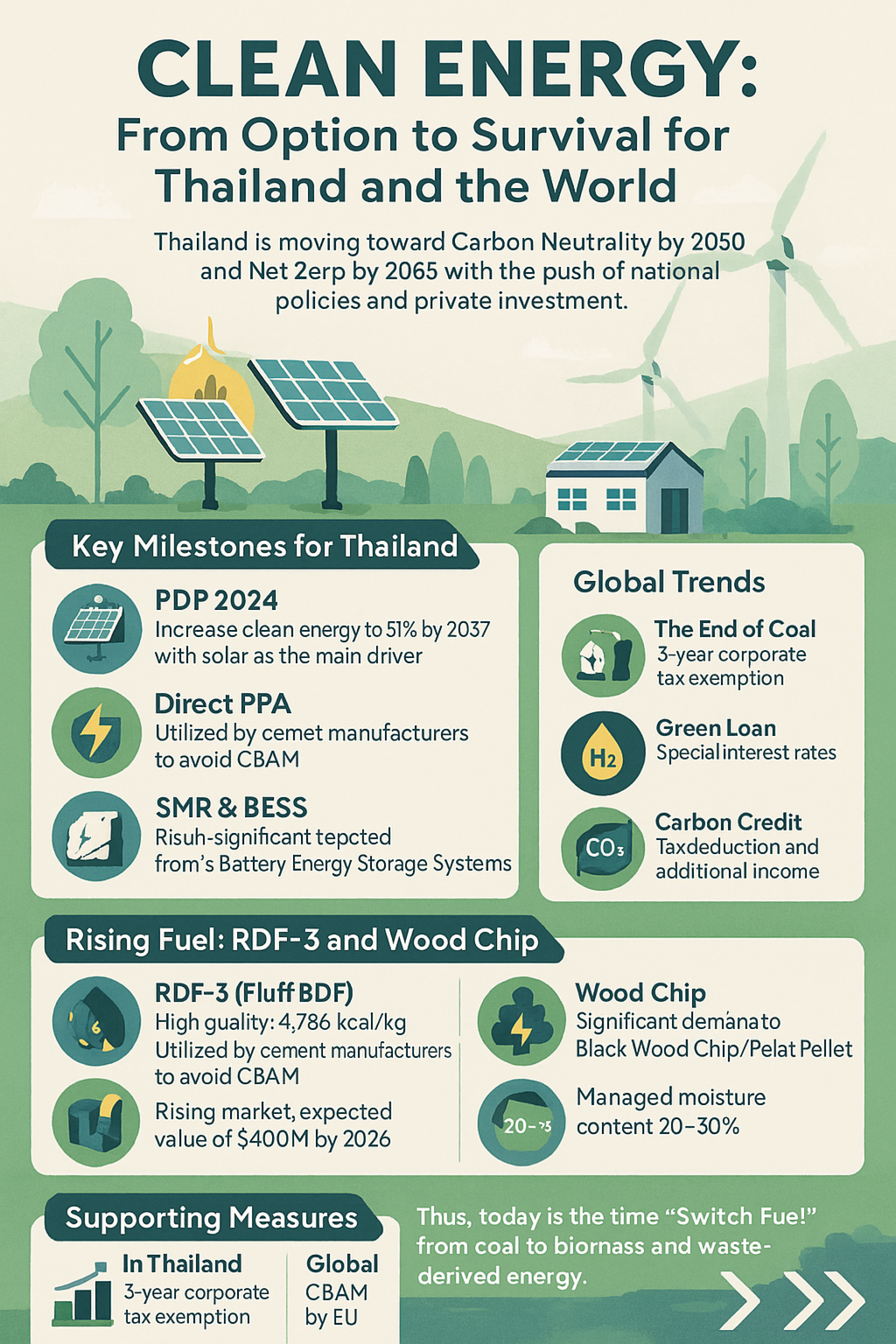
Thailand is advancing toward a major energy transition, driven by both national policies and proactive private investment. The clear targets are Carbon Neutrality by 2050 and Net Zero by 2065. This is not only about reducing greenhouse gas emissions, but also about building new competitiveness for the Thai economy in the global market.
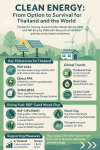
Key Milestones for Thailand
PDP 2024: Increase the share of clean energy to 51% by 2037, with solar power as the main driver.
Direct PPA: Unlock direct trading of renewable electricity by private companies, attracting global tech giants seeking 100% green power.
SMR & BESS: Study Small Modular Reactors (SMR) and Battery Energy Storage Systems (BESS) to stabilize intermittent wind and solar power.
⚡ Rising Fuels: RDF-3 and Wood Chips
RDF-3 (Fluff RDF)
High Quality: Average calorific value of 4,786 kcal/kg, close to coal but cleaner.
Practical Use: Cement factories such as SCG, Insee, and TPI are adopting RDF-3 to avoid CBAM carbon taxes.
Development: Moving toward RDF-5 (Pellet) for denser, easier transport and longer storage.
Market Growth: By 2026, Thailand’s RDF market is expected to reach 14.5 billion THB, with 64% used for power generation and 36% for heavy industry.
Wood Chips
Export Demand: Strong demand from Japan and South Korea, supported by Feed-in Tariff policies for biomass power.
Upgrading: Through torrefaction, producing Black Wood Chips/Pellets with coal-like calorific value but lower carbon emissions.
International Certification: FSC and PEFC standards are crucial for export, ensuring sustainable sourcing.
Quality Control: Local chipping plants and drying technology maintain moisture at 20–30%, ensuring stable calorific value.
Global Trends
The End of Coal: Developed countries are phasing out coal-fired power plants.
Triple Renewable Energy: COP28 agreement to triple renewable capacity by 2030.
Green Hydrogen: Seen as the key solution for heavy industries that cannot fully electrify.
RE100: Global companies like Google, Apple, and Toyota demand 100% renewable electricity in their supply chains.
Supporting Measures
In Thailand
BOI: Corporate tax exemption for 3 years for renewable energy equipment investment.
Green Loans: Special low-interest financing for clean energy projects.
Carbon Credits: Tax deductions and new revenue streams from carbon credit trading.
Global
EU CBAM: Carbon border tax applied to steel, cement, and other products.
Paris Agreement Article 6: Enables international carbon credit trading.
RE100: Thai factories using clean fuels can become suppliers to global corporations.
Strategic Summary
Switching to RDF-3 and Wood Chips is not just about lowering energy costs. It is about:
Reducing taxes through BOI incentives
Avoiding EU CBAM barriers
Creating new income from carbon credits
Strengthening ESG and sustainability branding
For Thai industry, now is the time to “Switch Fuels, Switch the Future.” This is not merely a choice, but a survival strategy to thrive in the Net Zero era and remain competitive on the global stage.
For clean energy fuel inquiries:
Wood Chips, Wood Pellets, RDF-3, Sawdust, and other fuels are available. Please contact SO OK TRADING at:
WWW.SOOKTRADING.COM → “Give Inquiry”
sooktrading@outlook.com