Share

“The World After Lunar New Year: Strong Dollar, Rare Earth Shortages, and the Rise of AI” “From Tariff War to Resource War: The World of 2026 Will Never Be the Same” “Trump 2.0 Reshapes the Globe: When the Economy Turns Into a Battlefield"
Last updated: 19 Feb 2026
665 Views

Global Economy in the Trump 2.0 Era: From Trade War to Resource War

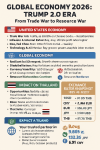
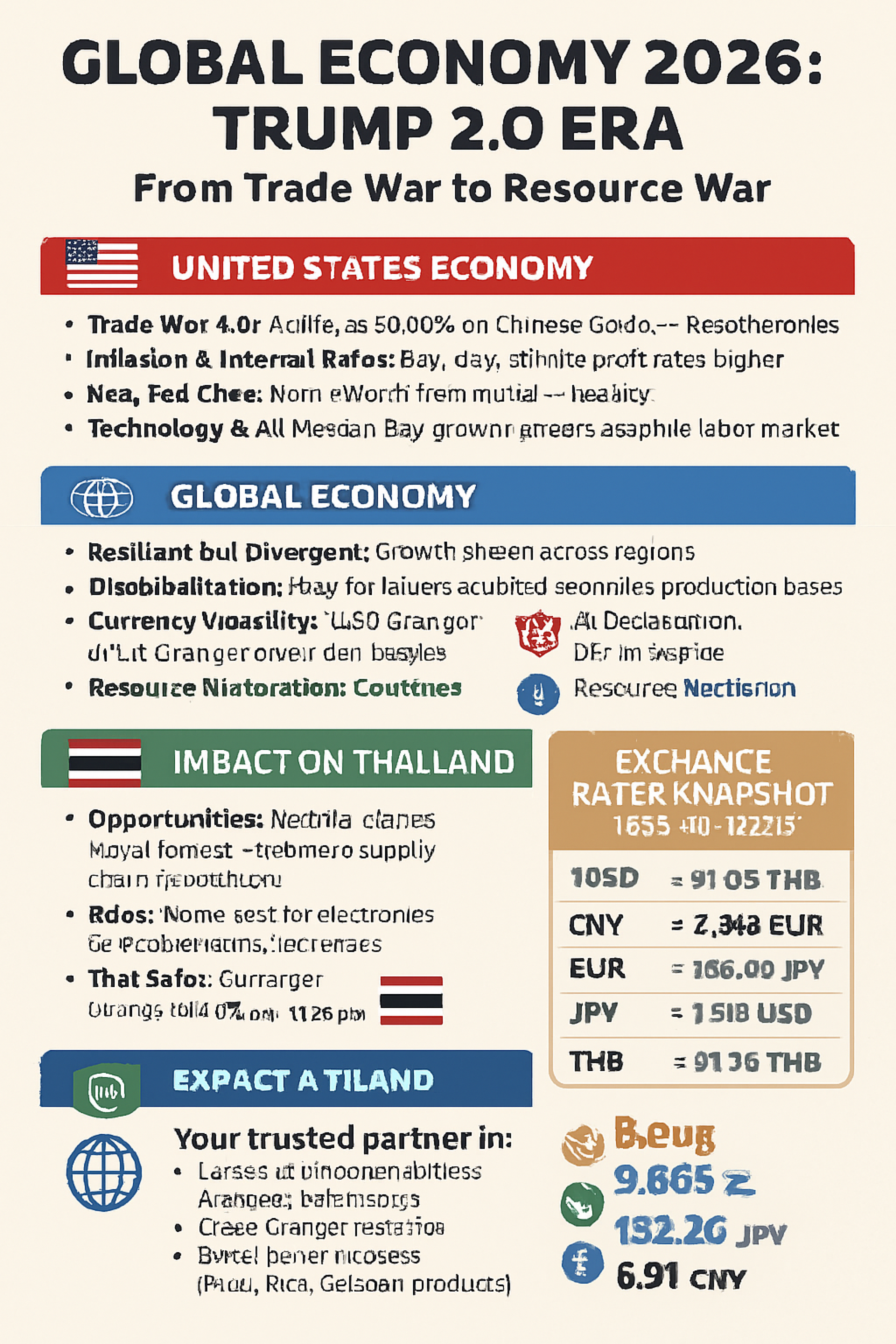
2026 is not just a year of transition—it marks the beginning of a new era of economic and resource conflict. Under President Donald Trump’s “America First” policy, the world is undergoing a profound transformation in trade, finance, and geopolitics.


U.S. Economy: Tariffs + New Fed Chair

Trade War 2.0: Tariffs up to 60% on Chinese goods → factories reshored, global import costs rising.
Inflation & Interest Rates: Domestic tax cuts + tariffs fuel inflation → Fed keeps interest rates higher for longer.
Fed Leadership Change: Kevin Warsh nominated; markets watch closely whether he remains “hawkish” or shifts to easing.
Labor Market & Technology: Hiring slows, but AI and advanced tech remain the main drivers of stock markets.
 

Global Economy: Resilient but Divergent

Global Trade Slowdown: Supply chains disrupted → countries accelerate relocation of production bases.
Currency Volatility: USD stronger short‑term, weaker mid‑term → EUR recovery potential, JPY under pressure, THB strengthening.
Geopolitical Tensions: Conflicts with China and oil producers push energy prices higher.
AI Investment Boom: Massive investments in AI across the U.S. and Europe help prevent a global recession.
 

⚔️ Resource Wars: Rare Earths, Battery Metals & Chips

Rare Earths: China controls 80% of supply, begins restricting exports.
Battery Metals: Lithium, cobalt, nickel → South America’s “Lithium Triangle” and Congo become diplomatic battlegrounds.
Semiconductor War: U.S. blocks China’s access to advanced chip technology → China stockpiles high‑tech raw materials.
Resource Nationalism: Countries hoard resources → commodity prices swing violently.
 

Impact on Thailand: Opportunities & Risks

Opportunities: Thailand could become a “midstream supply chain” hub if it maintains neutrality and attracts investment in mineral processing.
Risks: Rising raw material costs for electronics and automotive industries.
Currency: Thai Baht strengthens (31.00–31.50 per USD).
 

Exchange Rate Summary (Feb 2026)

USD: 1 USD ≈ 31.09 THB 0.845 EUR 153.26 JPY 6.91 CNY
CNY: 1 USD ≈ 6.91 CNY
EUR: 1 EUR ≈ 1.18 USD
JPY: 1 USD ≈ 153.26 JPY
THB: 1 USD ≈ 31.09 THB
 

Overall Summary

U.S. Economy: “America First” → high tariffs + Fed leadership change.
Global Economy: Entering a “survival of the fittest” era, with AI as the growth engine.
Currencies: USD strong short‑term, Thai Baht strengthening steadily.
Resource Wars: China dominates rare earths, U.S. seeks new sources → commodity prices highly volatile.
 

If you are interested in non‑ferrous commodities (copper, aluminum), clean energy resources, or agricultural exports (fruit, rice, cassava products),
SO OK TRADING is your trusted partner in global markets.

For more details:
www.sooktrading.com
sooktrading@outlook.com


Related Content
ZINC INGOT สังกะสีแท่ง และ การใช้งาน
สังกะสีแท่ง (Zinc Ingot) ส่วนใหญ่ใช้ในงานอุตสาหกรรม เช่น ทำแผ่นสังกะสีสำหรับชิ้นส่วนยานยนต์เพื่อลดน้ำหนักและประหยัดน้ำมัน, ทำสังกะสีสำหรับเคลือบกันสนิม (Galvanizing), และใช้ในการผลิตสังกะสีอัลลอยด์ ในการใช้งานกับโลหะ สังกะสีจะทำหน้าที่เป็นขั้วบวกเพื่อป้องกันการกัดกร่อน (Zinc Anode) การใช้งานหลักของ Zinc Ingot อุตสาหกรรมยานยนต์: ใช้ทำชิ้นส่วนต่างๆ เพื่อให้น้ำหนักเบาและประหยัดน้ำมันเชื้อเพลิง การเคลือบกันสนิม: นิยมนำไปใช้ในกระบวนการเคลือบสังกะสี (Galvanizing) เพื่อป้องกันการผุกร่อนของโลหะ เช่น เหล็ก สังกะสีอัลลอยด์: ใช้ในการผลิตสังกะสีอัลลอยด์สำหรับงานต่างๆ
26 Nov 2025
เกร็ดความรู้ ซิลิคอน by SO OK
ซิลิคอน (Silicon) คือธาตุสารกึ่งตัวนำสำคัญที่พบมากบนเปลือกโลก (ในรูปซิลิกา) ใช้ทำชิปอิเล็กทรอนิกส์, แผงโซลาร์เซลล์, แก้ว, เซรามิก, และผสมโลหะ; ส่วน ซิลิโคน (Silicone) คือพอลิเมอร์ที่ใช้ทำกาวอุดรอยรั่ว, สารหล่อลื่น, เครื่องสำอาง, ยา, และอุปกรณ์การแพทย์ คุณสมบัติเด่นคือทนความร้อน, ทนสารเคมี, เป็นฉนวนไฟฟ้า, ยืดหยุ่น, และกันน้ำ แม้ชื่อคล้ายกัน แต่คือคนละอย่าง. เกร็ดความรู้เกี่ยวกับ ซิลิคอน (Silicon - Si) (ธาตุ) ธาตุสำคัญ: เป็นธาตุที่พบมากเป็นอันดับสองในเปลือกโลก (รองจากออกซิเจน) มักอยู่ในรูปซิลิก้า (Silicon Dioxide - SiO2) เช่น ทราย, ควอตซ์. หัวใจอิเล็กทรอนิกส์: ซิลิคอนบริสุทธิ์พิเศษ (Doped Silicon) เป็นหัวใจของวงจรรวม (IC) และเซมิคอนดักเตอร์ในคอมพิวเตอร์, สมาร์ทโฟน, และแผงโซลาร์เซลล์. โลหะผสม: ผสมกับอะลูมิเนียมเพื่อทำชิ้นส่วนรถยนต์ และผสมเหล็กเพื่อทำเหล็กกล้า. เกร็ดความรู้เกี่ยวกับ ซิลิโคน (Silicone - พอลิเมอร์สังเคราะห์) คุณสมบัติมหัศจรรย์: ทนร้อน/เย็นจัด, กันน้ำ, ยืดหยุ่น, เป็นฉนวนไฟฟ้า, ทนสารเคมี, ไม่ติดไฟ. งานก่อสร้าง: กาวซิลิโคนใช้อุดรอยต่อกระจก, หน้าต่าง, หลังคา, ป้องกันน้ำรั่วซึม. เครื่องสำอาง: ทำให้ผลิตภัณฑ์เกลี่ยง่าย, เงางาม, ติดทนนาน (เช่น ลิปสติก), นุ่มลื่น (เช่น แชมพู). ทางการแพทย์: ใช้ในอุปกรณ์ทางการแพทย์, และซิลิโคนเจลสำหรับแผลเป็น. ระวังโรคปอด: การสูดดมฝุ่นผงซิลิก้า (ซิลิคอนไดออกไซด์) เป็นเวลานานในงานก่อสร้าง (เช่น โม่หิน) อาจทำให้เป็นโรคปอดฝุ่นหิน (Silicosis) ได้. ข้อแตกต่างที่สำคัญ ซิลิคอน (Silicon - Si): ธาตุโลหะ (สารกึ่งตัวนำ). ซิลิโคน (Silicone): สารประกอบพอลิเมอร์สังเคราะห์ที่มาจากซิลิคอน (มีออกซิเจนและคาร์บอน) มีความยืดหยุ่นและใช้งานหลากหลายกว่า.
11 Dec 2025
HNY 2026 with a First Analysis on Thai Baht Value
he Thai baht in Q1 2026 is expected to strengthen against the US dollar, driven primarily by a weaker dollar globally, a seasonal tourism boost, and expectations of US Federal Reserve rate cuts. This strength is occurring despite a weak domestic economic outlook and the Bank of Thailand's (BoT) likely continued easing of its policy rate. Exchange Rate Drivers and Forecast External Factors: The primary driver for the strengthening baht is external, mainly the broad weakness of the US dollar as global markets price in expected Fed rate cuts. The baht is also correlated with global gold prices, which have been climbing. Tourism High Season: The period extending into Q1 2026 is the high season for tourism, which typically brings in foreign currency and supports the baht's value. Policy Divergence: The BoT is expected to continue its easing cycle, potentially cutting the policy rate further to 1.00% by Q1 2026 to stimulate the sluggish domestic economy. This divergence from a potentially less aggressive US Fed in Q1 could support the baht in the short term, though some analysts warn the currency could weaken later in 2026. Forecasts: Projections for 2026 generally place the baht in a range of 30.80–33.00 per US dollar. Some models estimate it could trade around 31.06 by the end of Q1. A persistently strong baht below 31 per US$ is seen as a significant risk to the Thai export and tourism sectors. Key Economic Context Weak Growth: Thailand's economy is expected to slow down to a 5-year low growth rate of around 1.6-1.8% in 2026, pressured by US tariffs, global trade tensions, and high household debt. The central bank chief expects an improvement in Q1 2026 after a weak second half of 2025. Political Uncertainty: A general election expected in February 2026 could also introduce volatility, though some historical trends suggest the baht may strengthen following the formation of a new government. Low Inflation: Headline inflation is projected to remain subdued or even negative, providing the central bank with justification for further rate cuts to stimulate demand. In summary, Q1 2026 is characterized by a strong and volatile baht driven by external factors, contrasting sharply with a weak domestic economy and accommodative monetary policy.
1 Jan 2026
This website uses cookies for best user experience, to find out more you can go to our Privacy Policy and Cookies Policy
Powered By MakeWebEasy Logo MakeWebEasy