“Thai Fruits Enter China: New Premium Market Opportunities 2024–2027 — SO OK TRADING Brings Thai Fruits to the Hearts of Chinese Consumers”
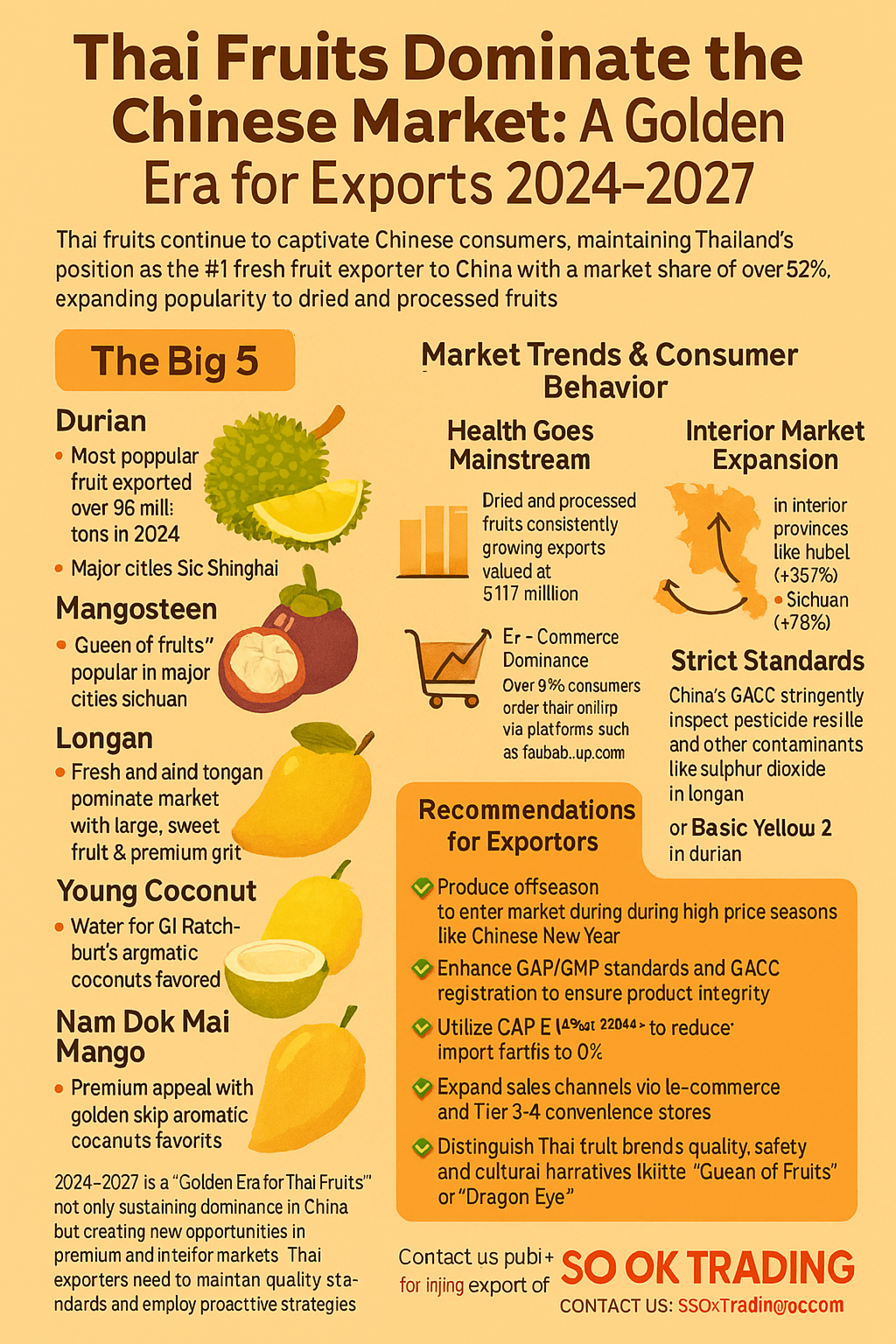
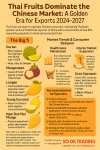
Thai Fruits Conquer the Chinese Market: Golden Export Era 2024–2027
Thai fruits continue to win the hearts of Chinese consumers, securing Thailand’s position as the #1 exporter of fresh fruits to China with a market share of over 52%. Beyond fresh produce, dried and processed fruits are also gaining strong momentum.
The Big 5 Fruits
Durian: The undisputed champion. Over 950,000 tons exported in 2024, valued at 1.3 trillion THB in 2025. Seen by Chinese consumers as a luxurious fruit symbolizing social status.
Mangosteen: The “Queen of Fruits,” popular in major cities like Shanghai and Sichuan for its sweet-tart flavor and nutritional value.
Longan: Both fresh and dried varieties dominate the market. Golden dried longan is especially prized for soups and premium gifts.
Young Coconut: Fresh coconut water is highly sought after, especially GI-certified aromatic coconuts from Ratchaburi.
Golden Nam Dok Mai Mango: A premium fruit with golden skin, sweet fragrance, and soft texture. Demand peaks in leading supermarkets and during Chinese New Year.
Market Trends & Consumer Behavior
Health Focus: Dried and processed fruits continue to grow, with exports valued at over 4.3 billion THB, appealing to health-conscious younger generations.
Interior Market Expansion: Demand is spreading beyond coastal cities into inland provinces such as Hubei (+367%) and Sichuan (+79%).
E-Commerce Dominance: Over 81% of consumers purchase fruits online via platforms like Taobao and JD.com, driven by convenience and fast delivery.
⚔️ Competitive Landscape
Vietnam: A strong competitor in durian and mango, leveraging price and logistics advantages.
Malaysia & the Philippines: Expanding their share in fresh durian and tropical fruits.
Strict Standards: China’s GACC enforces rigorous checks on pesticide residues and plant hygiene, including sulfur dioxide in longan and Basic Yellow 2 in durian.
Fruit Highlights
Golden Dried Longan: Holds over 90% of China’s market share, used in food, herbal medicine, and premium gifts.
Aromatic Coconut: Annual demand reaches 3 billion coconuts, with China relying on imports for over 90%.
Golden Nam Dok Mai Mango: Positioned as a premium fruit in high-end supermarkets, with peak demand during Chinese New Year.
✅ Recommendations for Exporters
Off-season production: Target high-demand, high-price periods like Chinese New Year.
Enhance GAP/GMP standards & GACC registration: Build trust and ensure compliance.
Leverage ASEAN–China FTA Form E: Reduce import tariffs to 0%.
Expand channels via e-commerce & Tier 3–4 convenience stores: Reach new customer bases.
Build Thai fruit branding: Highlight quality, safety, and cultural narratives such as “Queen of Fruits” or “Dragon Eye.”
Conclusion: 2024–2027 marks the “Golden Era of Thai Fruits.” Thailand not only maintains dominance in China but also creates new opportunities in premium and inland markets. Exporters must uphold quality standards and adopt proactive strategies to stay ahead in this highly competitive landscape.
For premium-quality Thai fruits — durian, mangosteen, longan, coconut, and Nam Dok Mai mango — please contact SO OK TRADING for quotations and delivery.