Thai Aluminum Packaging: A Turning Point Toward Global Sustainability
Aluminum Cans: The Future of Circular Packaging
By SO OK TRADING
✅ Key Features
Lightweight and easy to transport → Reduces logistics costs and improves storage efficiency
Corrosion-resistant → Does not rust even in humid or harsh environments
High barrier protection → Effectively blocks gas, moisture, and light, preserving product quality and flavor
Excellent thermal conductivity → Quickly cools beverages and efficiently heats food
100% recyclable, infinitely → Can be reused endlessly without losing properties
Major Applications
Beverage & Food Industry
Soft drinks and beer → Dominating over 41% of the market share in 2026
Canned water → Replacing PET bottles to reduce plastic waste
Canned foods → Fruits, seafood, and ready-to-eat meals
Consumer & Industrial Products
Sprays and cosmetics → Pressure-resistant and rust-free
Chemicals and oils → Leakproof and corrosion-resistant packaging
Circular Economy Innovations
Recycling Loop → Used cans return as new cans within 60 days
Upcycling → Cans repurposed into household items such as plant pots or lamps
Cross-industry use → Recycled aluminum applied in automotive and electronics
Thailand Outlook 2026
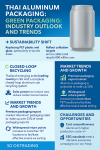
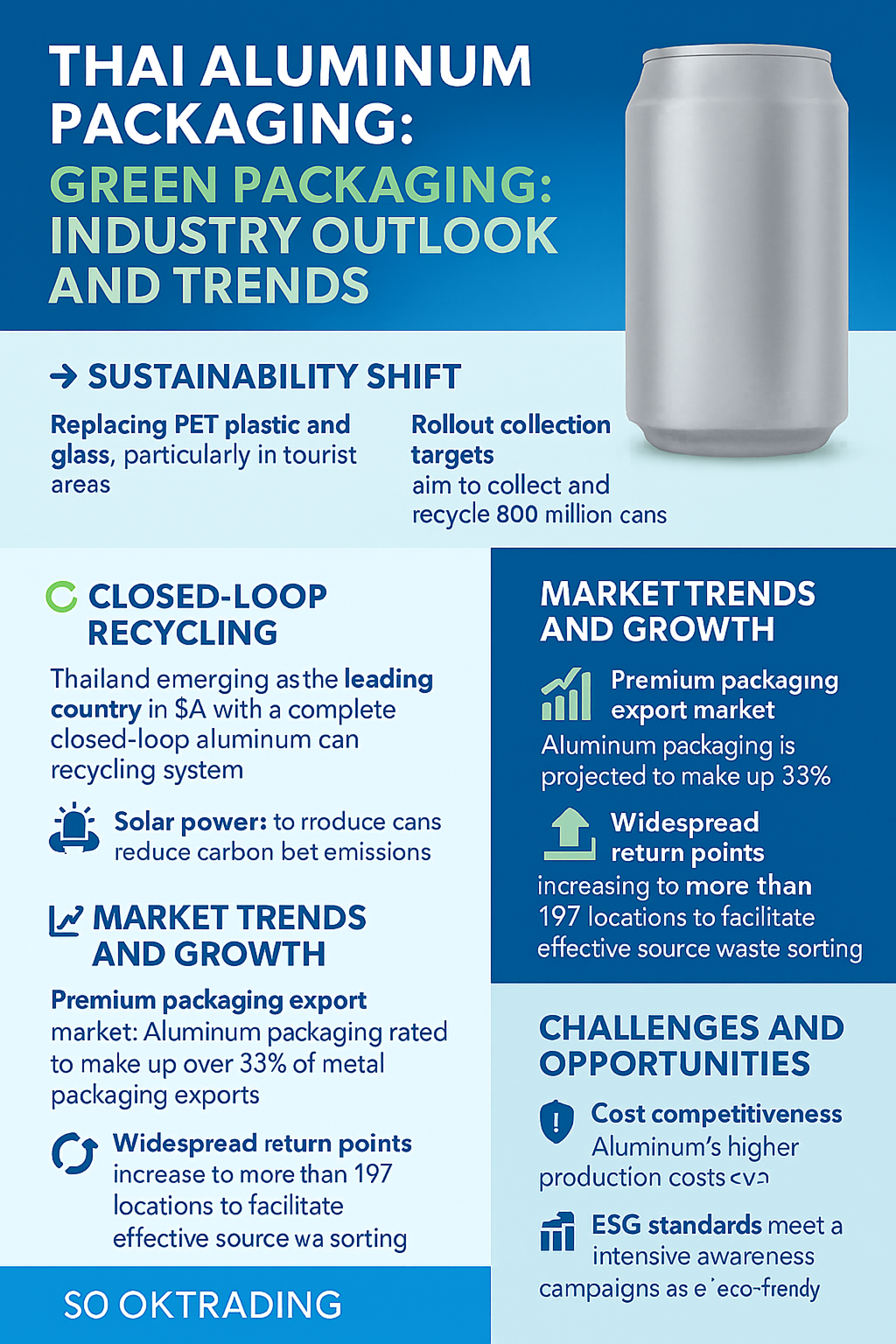
Sustainability Shift → Beverage companies replacing PET and glass with aluminum cans, especially in tourist areas
Collection Targets → Aluminium Loop project aims to recycle 800 million cans, expanding to 5 billion annually
Aluminium Solar → Producing cans with solar energy to reduce carbon footprint
Exports → Accounting for over 33% of metal packaging, meeting ESG standards
Public-Private Cooperation → Driving internationally recognized aluminum waste management systems
Global Trends 2010–2030
2010–2020 → Aluminum cans replace steel and glass
2021–2026 → Era of sustainability and innovation → Recycling surpasses 1.3 billion cans
2027–2030 → Toward Net Zero → Producers target 85% recycled aluminum, global demand reaching 627 billion cans
Environmental & ESG Dimensions
Nearly 100% reduction in new mining → Protecting natural resources
Over 60% reduction in greenhouse gas emissions compared to virgin production
Supporting Net Zero 2050 → Aluminum cans as a cornerstone of the circular economy
Business Opportunities
Aluminum packaging exports → Meeting global demand for ESG and circular economy solutions
Premium Exporter Branding → Linking with Thai agricultural products such as rice and fruit
Environmental Marketing → Positioning aluminum packaging & sustainability as a key selling point
International Partnerships → Leveraging green environment policies (CBAM) to build long-term alliances
Aluminum cans are not just packaging—they are an endlessly renewable resource that elevates Thailand’s industry to compete globally. By advancing the Aluminium Loop model and embracing clean energy, Thailand is set to lead sustainable packaging in Southeast Asia.
Contact SO OK TRADING to connect Thai quality with global sustainability.
Would you like me to also prepare this in a short LinkedIn-style post (more concise, engaging, and shareable) so you can use it directly on social media?