“Thai Steel 2026: Turning Crisis into Opportunity” BY SO OK TRADING
Thailand Steel Industry 2026 – Where is the Next Step?
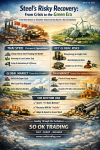
In 2026, Thailand’s steel industry faces mounting pressure from the EU’s Carbon Border Adjustment Mechanism (CBAM), which adds more than 28 billion THB in export costs. Yet opportunities remain for producers who adapt to low-carbon steel production and adopt Electric Arc Furnace (EAF) technology to gain an edge in global markets.
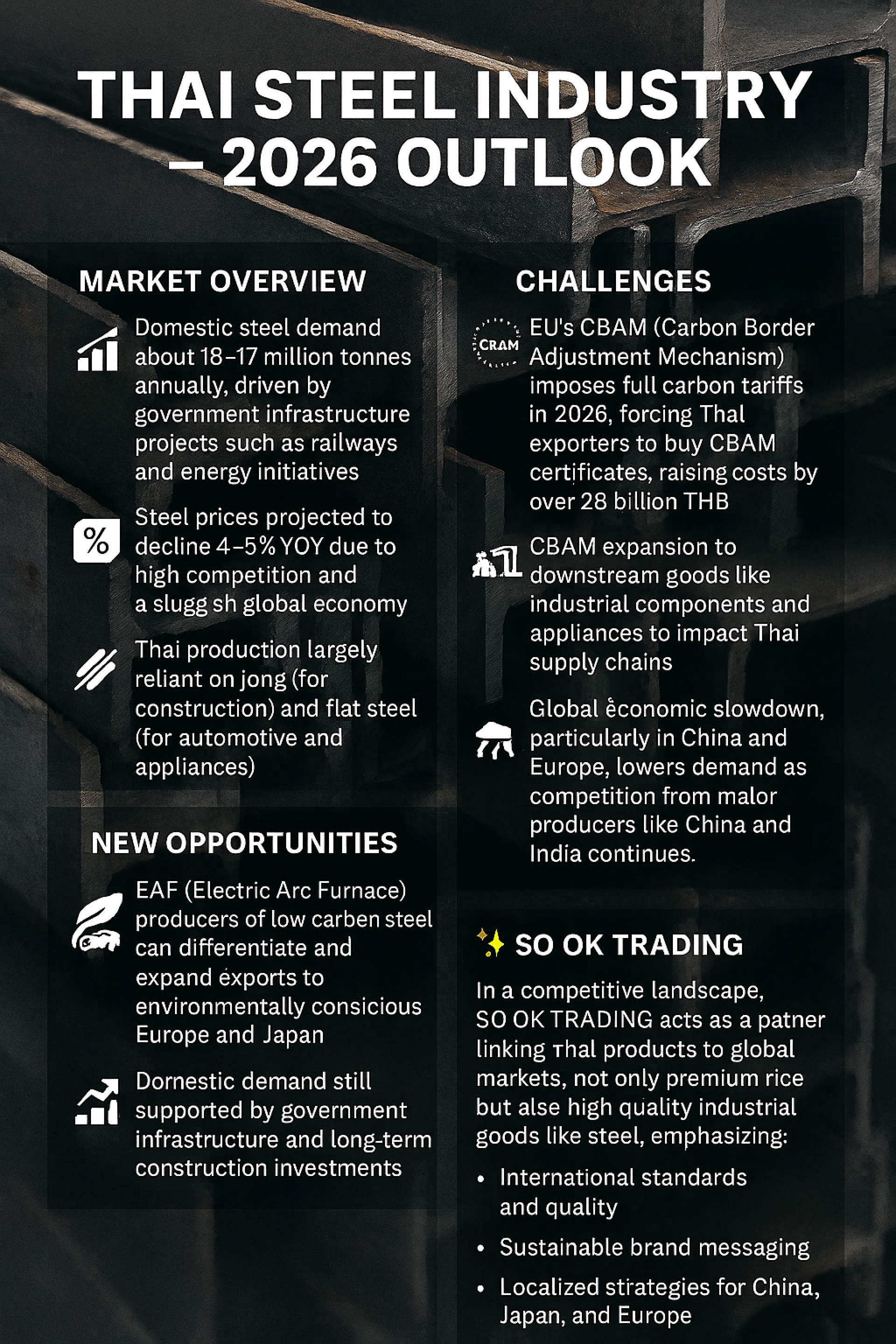
Market Overview
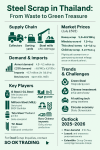
Domestic demand: Around 16–17 million tonnes per year, driven by government construction and infrastructure projects such as railways and energy initiatives.
Steel prices: Average prices for long and flat steel are down 4–5% YoY due to intense competition and a sluggish global economy.
Production structure: Thai steel production relies heavily on long steel (construction) and flat steel (automotive and appliances).
Challenges
CBAM costs: From 2026, EU fully enforces carbon tariffs, requiring exporters to purchase CBAM certificates based on embedded emissions, raising costs by over 28 billion THB.
Expansion of CBAM: Plans to extend coverage to downstream goods such as industrial components and appliances, impacting Thailand’s supply chain.
Global slowdown: Weak demand in China and Europe, coupled with fierce competition from major producers like China and India.
New Opportunities
Low-carbon steel: Producers using EAF technology can differentiate and expand exports to Europe and Japan, where environmental standards are prioritized.
Domestic demand: Infrastructure projects continue to support long-term steel consumption.
Specialty steel: Development of high-quality steel for EVs and clean energy projects offers new value-added channels.
Profitability of Domestic Producers
In 2025–2026, rising energy and raw material costs, combined with CBAM, squeeze margins. Net profits of major producers are expected to decline 8–12% YoY.
However, EAF-based producers using scrap recycling can reduce carbon costs and maintain healthier margins compared to blast furnace operators.
Domestic demand, especially from construction and EV sectors, helps cushion performance.
Industrial Usage Trends
Construction & infrastructure: Still the largest consumer, accounting for over 60% of domestic steel use, supported by rail, expressways, and renewable energy projects.
Automotive & EV: Rising demand for high-quality steel, hot-rolled and cold-rolled sheets, especially for EV structures and batteries.
Appliances & manufacturing: Growing use of flat steel and galvanized steel in electronics and household appliances.
Clean energy & offshore structures: Increasing demand for specialty high-strength steel for wind turbines and marine energy structures.
✨ Role of SO OK TRADING
In this competitive landscape, SO OK TRADING acts as a bridge connecting Thai products to global markets — not only premium rice but also high-quality industrial goods like steel.
International standards: Delivering products that meet global benchmarks.
Sustainability: Promoting environmentally friendly production and brand messaging.
Value creation beyond price: Transforming Thailand’s role from “exporter” to “global value creator.”
Conclusion
Although Thailand’s steel producers in 2026 face profit pressures from CBAM and rising costs, the shift toward low-carbon steel and the growing demand from EV and clean energy industries represent crucial opportunities. SO OK TRADING is ready to serve as the bridge, connecting the value of Thai agriculture and industrial products to consumers and investors worldwide.