RDF3 — From Waste Fuel to the New Hero of Clean Energy and Carbon Credits in Industry
Last updated: 10 Jan 2026
3725 Views
RDF3 Waste Fuel: The New Hero of Clean Energy
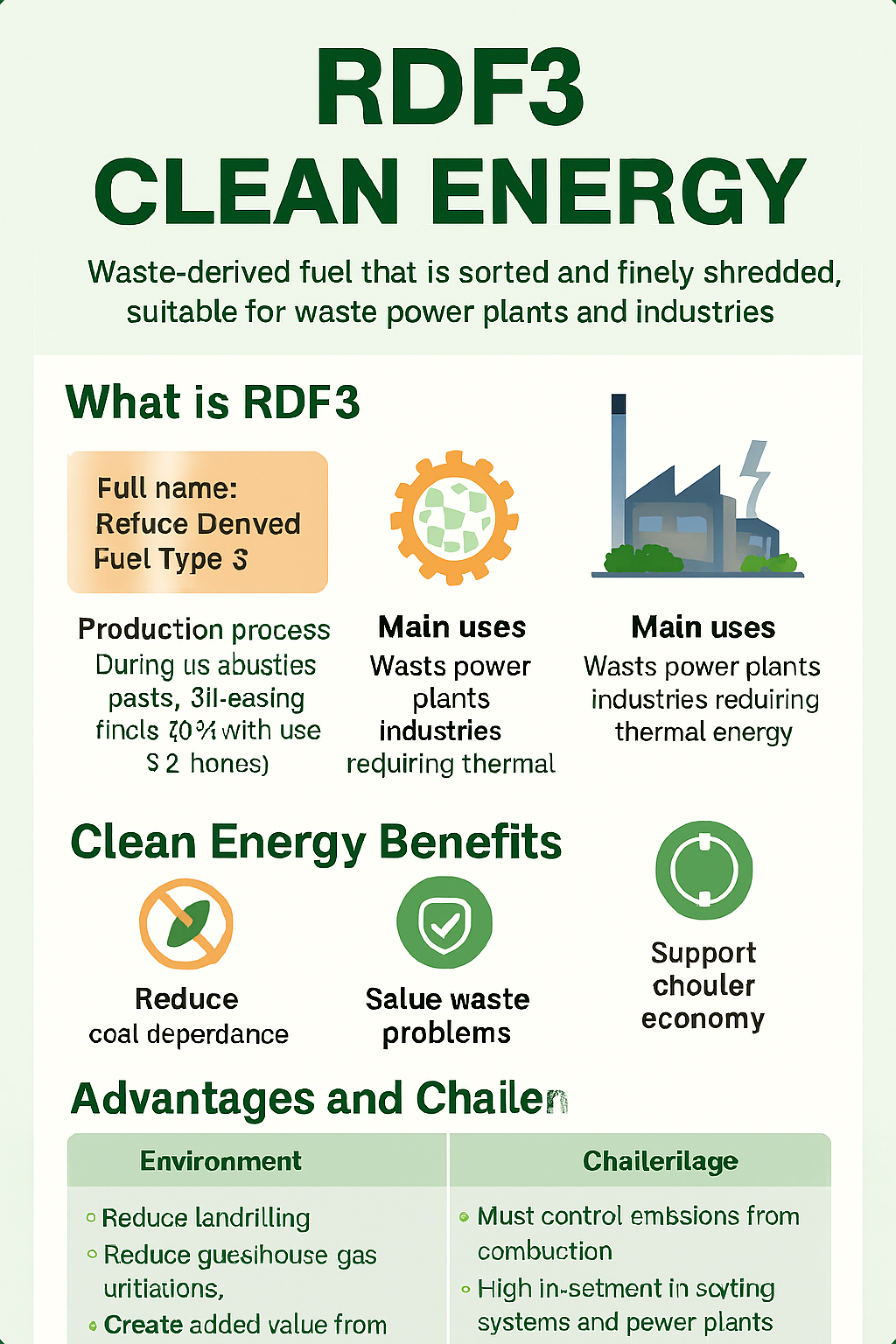
RDF3 (Fluff RDF) is a waste-derived fuel that has been sorted and finely shredded so that more than 95% of the material is smaller than 2 inches. It is suitable for waste-to-energy power plants and industries requiring thermal energy. RDF3 is considered one of the clean energy alternatives that reduces reliance on coal while addressing Thailand’s municipal waste problem.
What is RDF3?
Full name: Refuse Derived Fuel type 3 (Fluff RDF)
Production process:
Sorting combustible municipal waste
Shredding or cutting until 95% is < 2 inches
Reducing moisture to increase calorific value and improve transport efficiency
Main applications:
Waste-to-energy power plants (stoker boilers)
Industries requiring thermal energy such as cement, paper, and metals
Clean Energy Advantages
Reducing coal dependency: RDF3 can replace fossil fuels in industry, lowering CO₂ emissions and meeting EU CBAM requirements
Solving waste problems: RDF3 transforms non-recyclable waste into energy instead of landfill
Supporting circular economy: Waste is reused as energy, aligning with circular economy principles
RDF Market Trends in Thailand
By 2025: RDF market expected to grow 6.3% to reach 1.8 billion THB
Electricity sector: About 61% of RDF is used for power generation, with 9.9% growth
Government support: Policies encourage waste-to-energy plants and purchase of RDF electricity at higher rates than solar and wind
Benefits of RDF3
Environmental: Reduces landfill, mitigates global warming, and lowers greenhouse gas emissions
Economic: Creates added value from waste, reduces fossil fuel and coal costs, and supports a green society
Future Applications of RDF3
Market growth: Expected 6.3% increase, reaching 1.8 billion THB by 2025
Electricity sector: 61% of RDF used for power generation, average growth 9.9%
Industrial demand: Cement and other industries expected to grow 1.1%
Industrial applications:
Power plants: Biomass energy growth driven by demand for green energy and carbon credits
Thermal industries: RDF3 use in boilers continues to expand, reducing coal reliance and supporting CBAM compliance
Waste management: RDF is a key option for reducing waste, building a circular economy and sustainable value chain
Drivers and Limitations
✅ Drivers
Government policies supporting waste-to-energy and RDF use
CBAM measures pushing industries to reduce coal consumption
Circular economy concepts promoting RDF utilization
⚠️ Limitations
Uncertainty in electricity purchase rates
High RDF production costs
Strict pollution control required during combustion
Final Note from SO OK TRADING
RDF3 represents a golden opportunity for businesses seeking clean energy and sustainable waste management. It is especially valuable for industries aiming to reduce coal dependency and comply with global environmental standards.
SO OK TRADING can supply high-quality RDF3 with strong calorific value, helping expand the alternative energy market while enhancing your company’s image as a truly responsible green enterprise.
For inquiries (especially regarding applications in Thailand), please contact SO OK TRADING. We can provide premium RDF3 as an alternative energy source for your operations. Thank you.
RDF3 (Fluff RDF) is a waste-derived fuel that has been sorted and finely shredded so that more than 95% of the material is smaller than 2 inches. It is suitable for waste-to-energy power plants and industries requiring thermal energy. RDF3 is considered one of the clean energy alternatives that reduces reliance on coal while addressing Thailand’s municipal waste problem.
What is RDF3?
Full name: Refuse Derived Fuel type 3 (Fluff RDF)
Production process:
Sorting combustible municipal waste
Shredding or cutting until 95% is < 2 inches
Reducing moisture to increase calorific value and improve transport efficiency
Main applications:
Waste-to-energy power plants (stoker boilers)
Industries requiring thermal energy such as cement, paper, and metals
Clean Energy Advantages
Reducing coal dependency: RDF3 can replace fossil fuels in industry, lowering CO₂ emissions and meeting EU CBAM requirements
Solving waste problems: RDF3 transforms non-recyclable waste into energy instead of landfill
Supporting circular economy: Waste is reused as energy, aligning with circular economy principles
RDF Market Trends in Thailand
By 2025: RDF market expected to grow 6.3% to reach 1.8 billion THB
Electricity sector: About 61% of RDF is used for power generation, with 9.9% growth
Government support: Policies encourage waste-to-energy plants and purchase of RDF electricity at higher rates than solar and wind
Benefits of RDF3
Environmental: Reduces landfill, mitigates global warming, and lowers greenhouse gas emissions
Economic: Creates added value from waste, reduces fossil fuel and coal costs, and supports a green society
Future Applications of RDF3
Market growth: Expected 6.3% increase, reaching 1.8 billion THB by 2025
Electricity sector: 61% of RDF used for power generation, average growth 9.9%
Industrial demand: Cement and other industries expected to grow 1.1%
Industrial applications:
Power plants: Biomass energy growth driven by demand for green energy and carbon credits
Thermal industries: RDF3 use in boilers continues to expand, reducing coal reliance and supporting CBAM compliance
Waste management: RDF is a key option for reducing waste, building a circular economy and sustainable value chain
Drivers and Limitations
✅ Drivers
Government policies supporting waste-to-energy and RDF use
CBAM measures pushing industries to reduce coal consumption
Circular economy concepts promoting RDF utilization
⚠️ Limitations
Uncertainty in electricity purchase rates
High RDF production costs
Strict pollution control required during combustion
Final Note from SO OK TRADING
RDF3 represents a golden opportunity for businesses seeking clean energy and sustainable waste management. It is especially valuable for industries aiming to reduce coal dependency and comply with global environmental standards.
SO OK TRADING can supply high-quality RDF3 with strong calorific value, helping expand the alternative energy market while enhancing your company’s image as a truly responsible green enterprise.
For inquiries (especially regarding applications in Thailand), please contact SO OK TRADING. We can provide premium RDF3 as an alternative energy source for your operations. Thank you.




Tags :
Related Content
Middle East in Turmoil: Prolonged Stalemate Shakes Global & Thai Economies
SO OK TRADING | 11 October 2026
The Middle East crisis is reaching a new boiling point —
from military clashes in Yemen and Saudi Arabia, to the maritime disruption in the Strait of Hormuz, and the tense standoff between the United States and Iran.
Together, these events reflect a “Prolonged Stalemate of Attrition” where no side gains decisive ground, yet the shockwaves reverberate across the global economy.
Oil prices have surged past $104 per barrel,
global trade routes are being rerouted,
and Thailand, as a major oil importer, faces mounting pressure from rising energy costs, higher living expenses, and disrupted exports.
This article dives deep into the battlefronts, economic impacts, and ripple effects —
revealing the full scope of a crisis shaking the world, and exploring how Thailand must prepare to navigate this era of uncertainty.
11 Oct 2026

China’s Role in the Global Economy & Thailand – Mid‑2026: The Crossroads of Global Shifts and New Opportunities
Article by SO OK TRADING : June 21, 2026
In the second half of 2026, the world is closely watching China’s economic transformation — from being “the world’s factory” to becoming “a hub of innovation and advanced technology.”
For the first time in three decades, China has lowered its GDP growth target below 5%, signaling a clear shift from quantity-driven growth to quality-driven development, with a strong focus on AI, clean energy, and future industries.
China’s stable slowdown does not mean stagnation, but rather a recalibration of the global economy. While facing tariff pressures from the U.S. and Europe, China is strengthening ties with ASEAN and the Global South, building new trade networks under the Belt & Road Initiative (BRI).
For Thailand, this moment represents a strategic global connection point and a golden opportunity:
Expanding premium agricultural exports
Integrating into high‑tech supply chains
Attracting Chinese investment into the Eastern Economic Corridor (EEC)
At the same time, Thailand must prepare for challenges such as the influx of low‑cost Chinese goods, currency volatility, and rising competition in advanced technologies.
China is transforming the world — Thailand must reshape its economic game to keep pace!
Read the full analysis in the complete article by SO OK TRADING.
SO OK TRADING : FAST • SHARP • RELIABLE
21 Jun 2026
Wood Pellets: The Future Energy Thailand and the World Must Watch
Wood pellets are rapidly becoming the strategic energy of the modern era. More than just an alternative, they represent a golden opportunity for Thailand to expand exports to Japan and South Korea, while supporting the rise of new industries such as Green Steel and Bio-chemicals.
Thailand holds a production capacity of 5.32 million tons per year and has already begun investing in Black Pellets, which deliver higher heat value and qualify for Carbon Credits.
12 Mar 2026
