SO OK TRADING’s Insight Tracking the Pulse of the Thai Baht Baht Focus: Weekly Outlook (October 26–30, 2026)
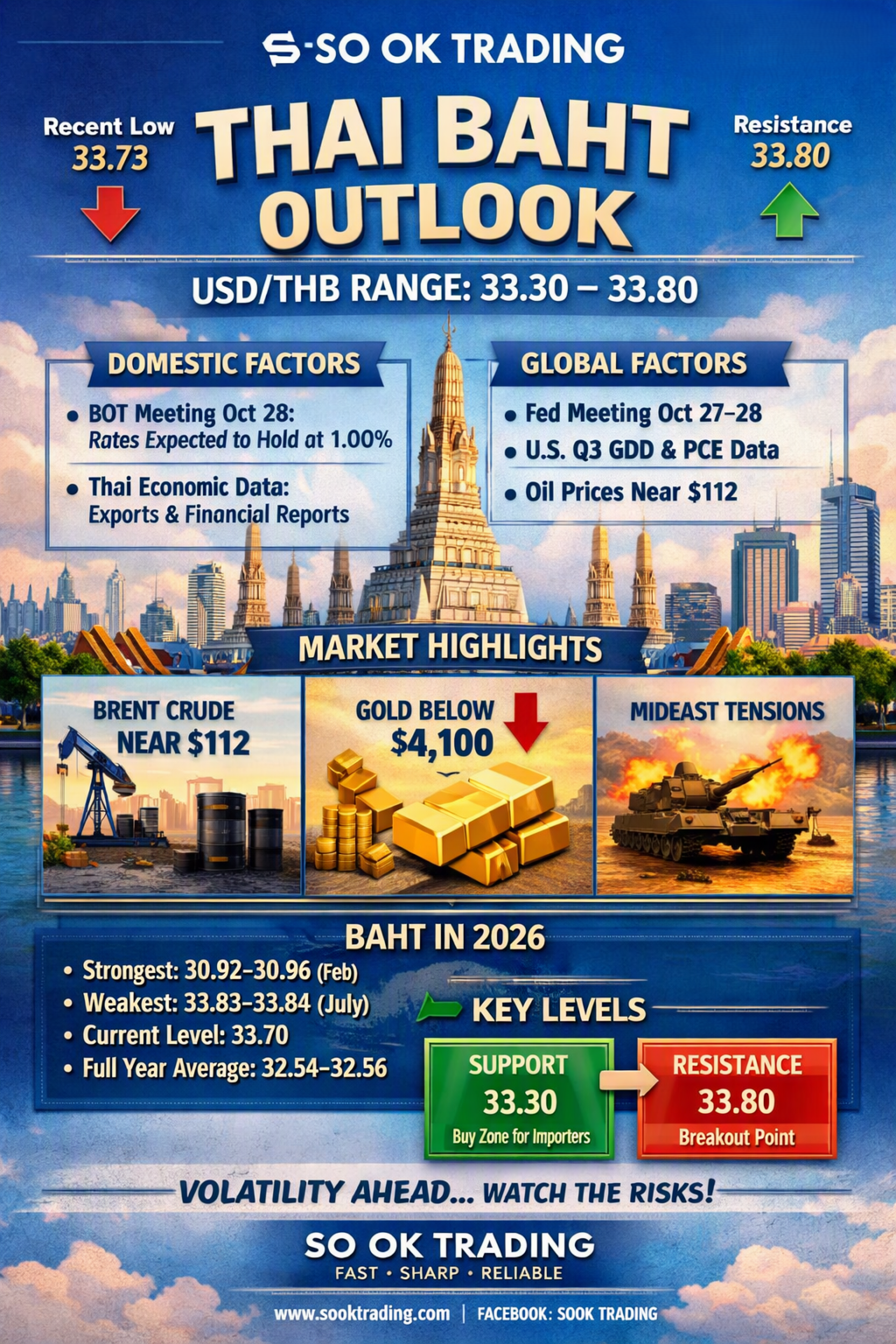
Thai Baht Outlook (October 26–30, 2026) : SO OK TRADING
The Thai Baht is expected to trade within a narrow range of 33.30–33.80 per USD next week. Analysts, including Kasikornbank (KBANK), assess that the Baht remains under depreciation pressure after touching a three‑month low of 33.73 last week, reflecting the fragility of Thailand’s financial market amid both domestic and global headwinds.
Domestic Factors
BOT Policy Meeting (Oct 28): Policy rate expected to remain at 1.00%. The committee’s communication will guide capital flows.
Thai Economic Data: Export figures and September financial reports from the Bank of Thailand will provide insights into the recovery trajectory.
Global Factors
Major Central Bank Meetings: The Fed (Oct 27–28) is expected to hold rates, with markets watching for December hike signals. ECB and BOJ also meet later in the week.
U.S. Economic Data: Q3 GDP, PCE/Core PCE, and consumer confidence index.
China: September industrial profit data impacting regional trade and investment.
Commodities & Geopolitics
Oil: Brent crude surged to a five‑month high near $112/barrel, pressuring Thailand’s trade balance as a net energy importer.
Gold: Spot prices fell below $4,100/oz, triggering sell‑offs and weighing on the Baht.
Middle East Tensions: Prolonged conflict drives global risk‑off sentiment, with investors shifting to safe‑haven assets like the USD.
Baht in 2026
Strongest: 30.92–30.96 (Feb)
Weakest: 33.83–33.84 (Jul)
Current: 33.70 (Oct 23 close)
Full‑Year Average: 32.54–32.56
The current level is near the weakest zone of the year, only 0.13–0.14 Baht away from the low, underscoring USD strength and foreign capital outflows.
Q4 Outlook & Risks
SCB EIC, KBANK, Krungsri: Project Q4 range at 33.25–33.70.
Main Trend: Seasonal tourism inflows may support short‑term Baht strength.
Risk: U.S. tariff policies under the Trump administration could pressure Thai exports, reversing gains.
Key Support & Resistance
Support: 33.30 → Dollar buying zone for importers.
Current: 33.70 → Weakness zone.
Resistance: 33.80 → Breakout could test July high of 33.84.
✍️ Summary The Baht is likely to remain volatile on the weak side next week, driven by global central bank meetings, key economic data, and unresolved geopolitical tensions. Seasonal tourism inflows and gold price dynamics may provide limited support compared to regional peers.
For importers and exporters, risk‑management tools such as FX Forwards or Options are recommended to mitigate cost exposure and currency volatility.
SO OK TRADING — Your Trusted Business Partner FAST • SHARP • RELIABLE www.sooktrading.com Facebook: SOOK TRADING