“Stagflation 2026: Global Economy Stalls • Inflation Pressures • Businesses Must Adapt Amid Middle East Conflict” Article by SO OK TRADING: April 24, 2026
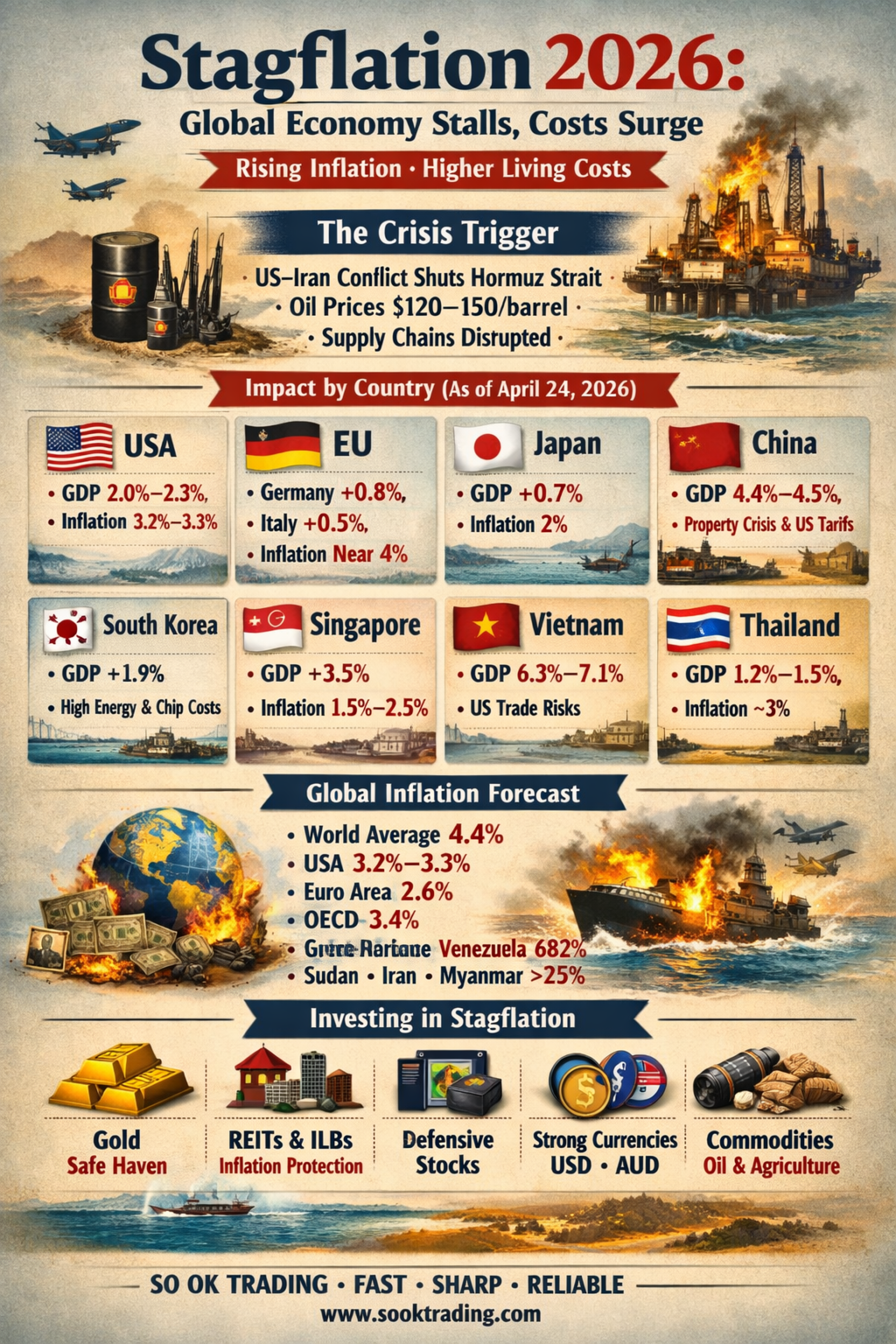
Stagflation 2026: When the Global Economy Stalls and Living Costs Surge The year 2026 has forced the world economy into stagflation — high inflation with low or stagnant growth. This is not just numbers in a report, but a real economic condition that every country is experiencing in its own way.
The Beginning of the Crisis
At the start of the year, the U.S.–Iran war erupted. The Strait of Hormuz was closed, instantly cutting off about 15% of the world’s oil supply. Oil prices soared to $120–150 per barrel. Global supply chains collapsed, energy and food costs skyrocketed, and nations faced severe cost-push inflation.
Impact by Country (Updated: April 24, 2026)
United States
GDP growth: 2.0–2.3%
Inflation: 3.2–3.3%, above the Fed’s target
Impact: High import tariffs and protectionist policies further strain manufacturing
Europe
Germany GDP: +0.8%
Italy GDP: +0.5%
Inflation: Could exceed 4% if the war drags on
Impact: Heavy reliance on imported energy makes Europe the most vulnerable among developed economies
Japan
GDP growth: +0.7%
Inflation: Stable above 2%
Impact: Real wages are negative, pressuring domestic consumption
China
GDP growth: Slows to 4.4–4.5%
Impact: Lingering property sector problems + U.S. tariff barriers
South Korea
GDP growth: +1.9%
Impact: High semiconductor and energy costs
Singapore
GDP growth: +3.5%
Inflation: 1.5–2.5%
Impact: Supported by electronics and AI sectors
Vietnam
GDP growth: 6.3–7.1%
Impact: Still high growth, but slower than last year; exposed to U.S. tariff risks
Thailand
GDP growth: 1.2–1.5%
Inflation: Could reach 3%
Impact: High household debt, shrinking purchasing power, businesses cutting production and jobs
Global Inflation Forecasts
World average: 4.4% (IMF)
USA: 3.2–3.3%
Euro Area: 2.6%
OECD: 3.4%
China & Thailand: Very low at 0.4–0.7% (some periods near deflation)
Severe cases: Venezuela 682%, Sudan–Iran–Myanmar >25%
War Scenarios and Economic Impact
Scenario 1: Containment
Situation: Fighting limited in scope, no permanent shipping route closures
Impact: Oil stabilizes at $90–100, temporary economic slowdown
Scenario 2: Escalation — Highly Likely
Situation: Strait of Hormuz closed + Red Sea attacked
Impact: Oil surges to $120–150, global supply chains collapse, inflation spikes sharply
Investor Strategies Against Stagflation
Gold: The number one safe haven
Real Estate/REITs: Rental income adjusts with inflation
Inflation-Linked Bonds (ILBs): Protect returns from inflation erosion
Defensive Stocks: Consumer staples, healthcare, utilities
Strong Currencies: USD, AUD
Commodities: Oil, agriculture — but beware volatility
Conclusion
2026 is the year the world must learn to live with stagflation — an economy that doesn’t grow, but where prices keep rising. For investors and businesses, the priority is not chasing short-term profits, but preserving purchasing power and diversifying risks to remain resilient in a volatile world.
SO OK TRADING: Your Business Partner FAST • SHARP • RELIABLE www.sooktrading.com Facebook: SO OK TRADING