“Thai Beer Rising: Powered by Agriculture and Sustainable Aluminum Packaging”: SO OK TRADING’s Insight: October 22, 2026
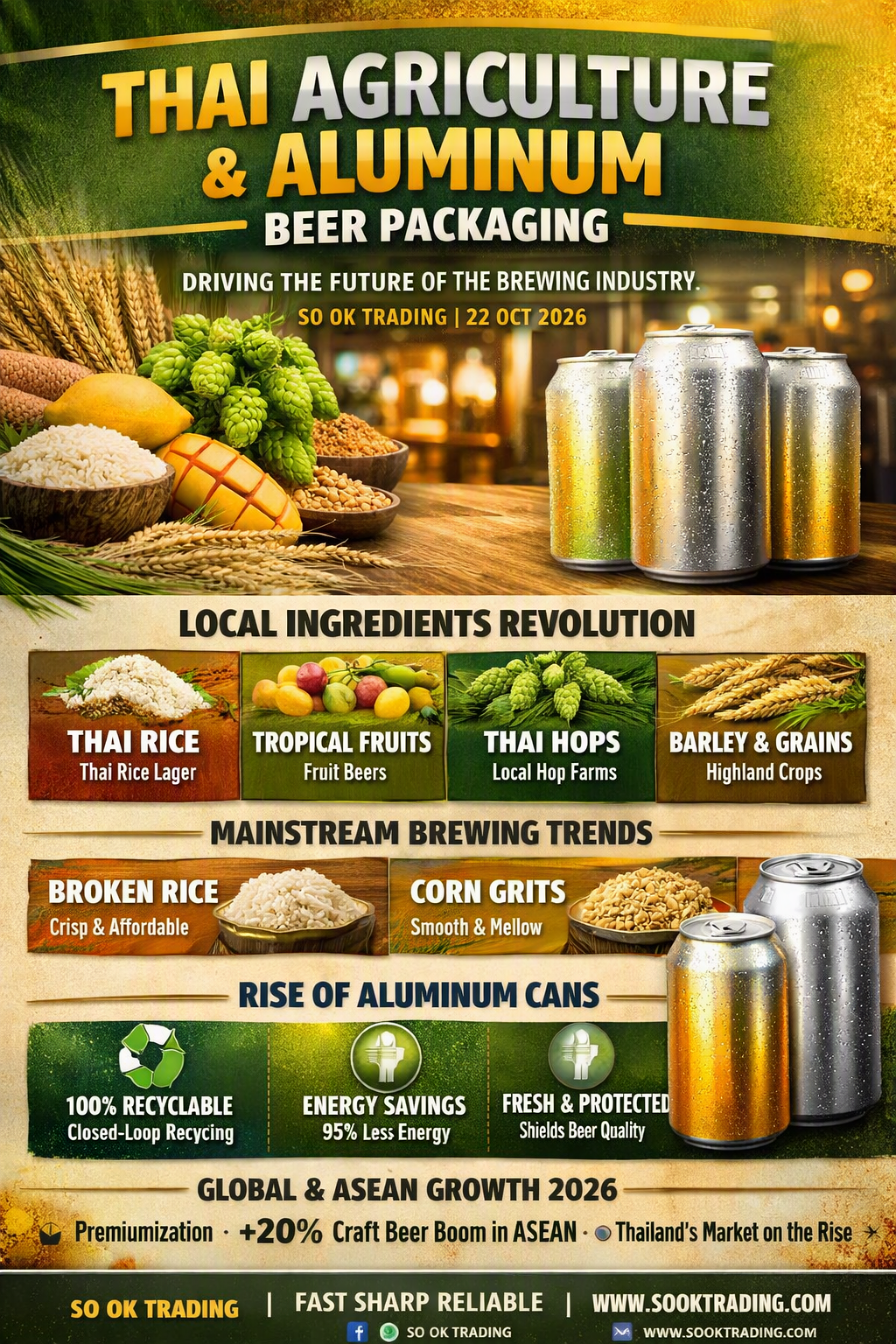
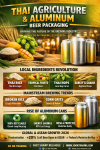
Thai Agriculture & Aluminum Packaging: The New Driving Force of the Beer Industry
SO OK TRADING : October 22, 2026
Thailand’s Beer Industry at a Turning Point
Thailand’s beer industry is undergoing a major transformation. Local agricultural products have become key ingredients and supplementary components, adding value, reducing costs, and creating unique identities. This trend is evident in both mainstream beer and the rapidly growing craft beer segment. At the same time, aluminum can packaging is emerging as a powerful driver, symbolizing sustainability and innovation.
Highlighted Thai Agricultural Ingredients
Thai Rice: The heart of Thai Rice Lager. Used to partially replace malt, it creates a light, easy-to-drink flavor with a distinctive aroma. Innovations such as Koji fermentation help convert starch into sugar before brewing.
Tropical Fruits & Surplus Produce: Mango, pomelo, pineapple, lychee, and mayongchid are widely used in Fruit Beer, enhancing tropical flavors while adding value to surplus crops.
Thai Hops: Farms in Chiang Rai and Devanom Farm have successfully cultivated imported varieties, giving Thai craft beer a fresh and distinctive aroma.
Barley & Cold-Climate Grains: Trial cultivation in northern highlands, such as Royal Project areas, provides alternative raw materials for small breweries.
Agricultural By-products: Coffee cherries and other residues are repurposed to create new flavors in craft beer while reducing waste.
Secondary Ingredients in Mainstream Beer
In mainstream beer production, secondary ingredients are widely used to control costs and tailor flavors to Thai consumers.
Broken Rice: Produces a clean, crisp, and dry taste with a pale yellow appearance. Affordable and consistently available, it is heavily used by large breweries.
Corn Grits: Adds mellow sweetness and a smooth body. Popular in global brands, including those brewed in Thailand. Corn is easy to process and energy-efficient, though subject to seasonal price fluctuations.
Beer Industry Outlook for 2026
Global Market: Valued at approximately USD 870 billion, with an average growth rate of 4.7–5.1% annually. Key drivers include premiumization (drinking less but better), low-/non-alcoholic beer, and growth in emerging APAC markets.
ASEAN Market: Craft beer is booming, with an average growth rate of 20.76%. Vietnam and Thailand lead in drinking culture, while Singapore serves as a hub for premium innovation.
Thailand: Market value is projected at USD 4.7 billion, growing at 2.1–3.1% annually. Growth is fueled by tourism recovery (expected to reach 40 million visitors) and regulatory relaxation.
Aluminum Can Trends in the Beer Industry
Beyond local ingredients, packaging is shaping the future of the market — with aluminum cans leading the way.
100% Recyclable: Aluminum cans can be recycled in a closed-loop system within 60 days, aligning with ESG and Net Zero goals.
Energy Savings: Recycled aluminum reduces production energy costs by over 95% compared to new aluminum.
Quality Protection: Shields beer from UV light and oxygen, preserving freshness longer than glass bottles.
Key Trends
Premiumization: Sleek cans, tall cans, and aluminum bottles are favored for premium and craft beer branding.
Functional Packaging: Innovations include color-changing cans, full-aperture lids, and neck-reduction designs.
Craft Beer Explosion: Microbreweries increasingly choose cans for easier distribution and home consumption, especially for fruit beers and low-alcohol varieties.
Emerging Asian Markets: Thailand consumes around 7–7.5 billion cans annually (2026), representing 25% of the beverage market. In comparison, Vietnam reaches 60% and Cambodia 70%, highlighting Thailand’s growth potential.
Conclusion
Thai agriculture and aluminum packaging are becoming the twin pillars of value creation and identity in Thailand’s beer industry. The fusion of innovation, local raw materials, and sustainable packaging is propelling Thai beer onto the global stage with confidence and modernity. Aluminum cans are not just containers — they are symbols of sustainability and innovation, connecting producers and consumers in a new era.
SO OK TRADING: Your Trusted Business Partner SO OK TRADING: FAST. SHARP. RELIABLE.
www.sooktrading.com Facebook: SOOK TRADING E-mail: sooktrading@sooktrading.com
SO OK TRADING — The True Leader in Thailand’s Aluminum Packaging Industry