“Copper Scrap: The Future Resource of Global Recycling – Thailand’s Structural Uptrend in the EV & AI Era | FAST • SHARP • RELIABLE | SO OK TRADING INSIGHT : 11 OCT 2026”
Copper Scrap Classification and Market Trends in Global and Thai Markets : SO OK TRADING : 11 OCT 2026
✨ Introduction
Copper scrap is not merely “old material” but a strategic resource in modern metal industries and recycling. It is 100% recyclable without losing its electrical or physical properties, making it a cornerstone for reducing production costs, lowering dependence on natural resources, and meeting environmental (ESG) standards.
International classification systems such as the ISRI Standard are crucial in determining price, value, and recycling processes. From the highest purity Bare Bright Copper to mixed Copper Alloys requiring separation and re-smelting, classification directly impacts market valuation.
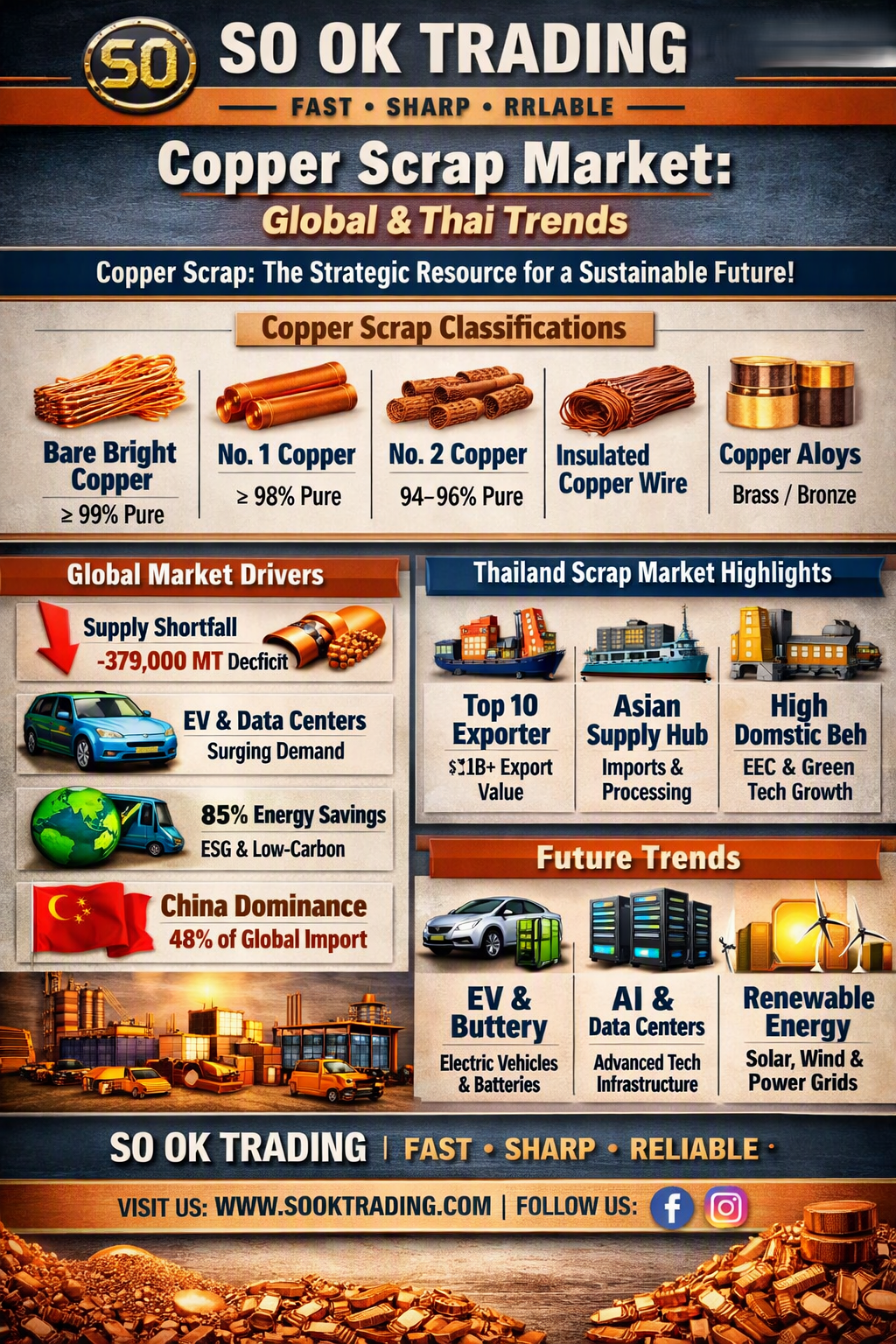
Copper Scrap Classification (ISRI Standard)
Bare Bright Copper (Millberry) – ≥ 99% purity, shiny bare copper wire, highest value
No. 1 Copper – ≥ 98% purity, clean pipes and bus bars, high value
No. 2 Copper – 94–96% purity, tarnished with oil or paint, medium value
No. 3 Copper / Light Copper – ~92% purity, thin sheets, gutters, lower value
Insulated Copper Wire – high-grade (large core) vs. low-grade (thick insulation), value depends on copper ratio
Copper Alloys – brass, bronze, cupronickel, separated from pure copper
Global Market Outlook
Supply Shortfall: Chile and Peru mines reduced output, ~379,000 MT deficit
Rising Demand: EVs, grid expansion, AI & data centers driving copper needs
ESG & Low-Carbon: Recycling saves ~85% energy compared to new ore refining
China Dominance: ~48% of global imports
Thai Market Situation
Top 10 Exporter: Over $1 billion copper scrap exports, China ~60% share
Asian Supply Hub: Imports from US & EU, processed with mechanical liberation technology
High Domestic Demand: EEC, EV, and data center investments boosting premium copper demand
Strict Environmental Rules: Burning insulated wire banned, mechanical separation required
Future Directions
Growth despite economic headwinds: EVs, air conditioning, data centers
Environmental challenges: plastic insulation waste in hundreds of thousands of tons
Ban on burning copper: mechanical separation promoted
Market restructuring: from informal collectors to franchise networks and digital platforms
Price & Usage Trends
Price: Bare Bright in Thailand reached 330–420 THB/kg
Usage:
EV & battery manufacturing
Data centers & AI infrastructure
Renewable energy (solar & wind power grids)
✨ Conclusion: Copper Recycled
Copper scrap is not just “old metal” but a resource of the future, directly linked to clean energy and advanced technologies. Both global and Thai markets are entering a structural uptrend, and businesses that invest in clean recycling technologies, comply with environmental standards, and adopt digital management will secure sustainable growth opportunities.
SO OK TRADING : Your Trusted Business Partner FAST • SHARP • RELIABLE WWW.SOOKTRADING.COM Facebook : SOOK TRADING