“SO OK TRADING Analysis: Middle East Crisis OCT 2026 — From Ceasefire Rejection to Energy War and Global Economic Shockwaves in Oil, Gold, and Logistics”
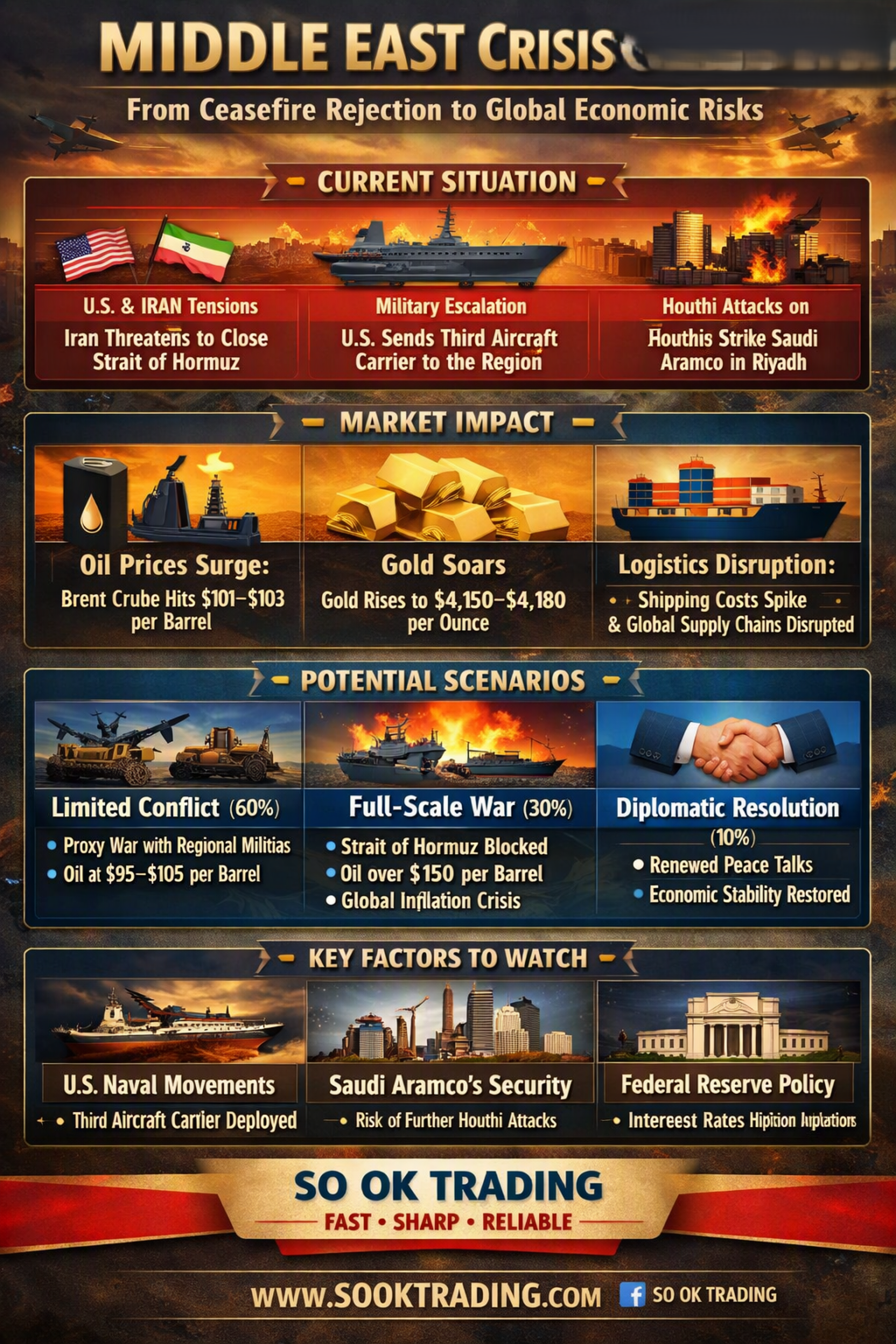
Middle East Crisis 2026: From Ceasefire Rejection to Full-Scale War Risk and Global Economic Shockwaves
✨ Introduction As of October 5, 2026, the Middle East is entering one of its most critical turning points in decades. The United States, under President Donald Trump, has rejected Iran’s proposed 7‑day ceasefire plan, rapidly escalating tensions across diplomatic, military, and economic dimensions.
This confrontation between two major powers in the region not only threatens political stability but also sends shockwaves through oil prices, gold markets, and international logistics systems. Global markets are already reacting to the rising uncertainty day by day.
At a time when the world is closely watching the Strait of Hormuz — the vital artery of global energy trade — U.S. and allied maneuvers, along with Iran’s and the Houthis’ responses in Yemen, are becoming decisive factors for the global economy in the final quarter of 2026.
⚔️ Current Situation
U.S.–Iran Diplomatic Breakdown: Iran has threatened to close the Strait of Hormuz if the U.S. continues military operations, a move widely seen as a declaration of “full‑scale war.”
U.S. Military Deployment: Vice President J.D. Vance convened an emergency meeting at Camp David, preparing to deploy a third aircraft carrier to the region by November.
Houthi–Saudi Arabia Frontline: Houthi rebels attacked Saudi Aramco’s refinery in Riyadh for the first time in four years. Saudi forces retaliated immediately, shaking energy security across the Arabian Peninsula.
⛽ Oil and Global Energy Markets
Brent Crude Surge: Prices rebounded above $100 per barrel (range $101–$103) despite G7’s emergency oil release.
Logistics Costs Rising: Exports through the Strait of Hormuz recovered to 18.5 million barrels/day, but insurance and freight premiums rose more than tenfold.
Supply Constraints: OPEC+ maintained production targets, while China temporarily halted refined‑oil exports.
Impact on Thailand: The Fuel Fund Committee raised domestic fuel prices by 0.75 baht per liter.