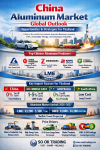
“China: The Global Aluminum Powerhouse — Reshaping Metal Markets, Analyzing Price Trends, and Unlocking New Opportunities for Thailand’s Industry” SO OK TRADING | 28 SEP 2026
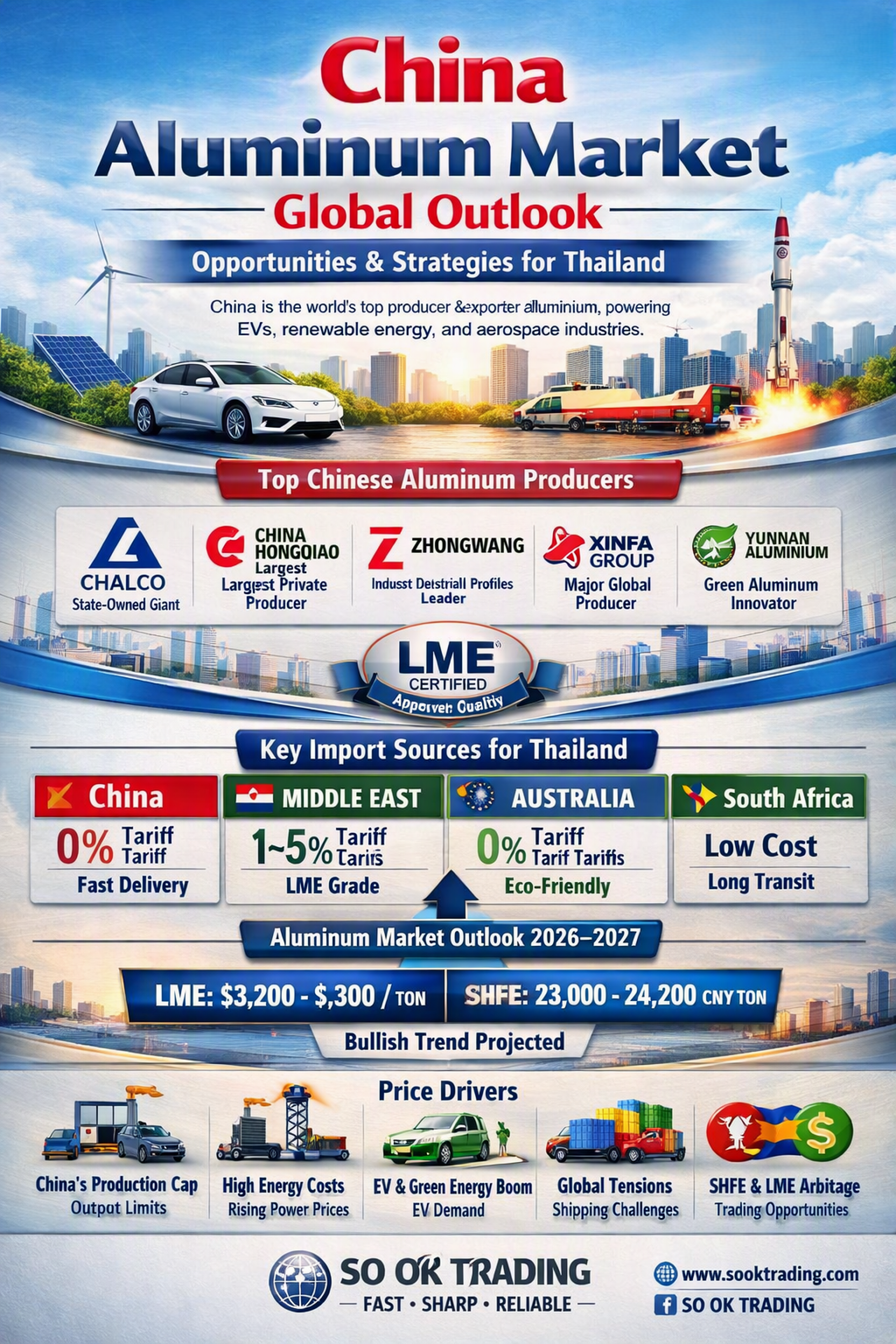
China: The Global Aluminum Powerhouse — Market Overview, Future Outlook, and Opportunities for Thailand
SO OK TRADING | 28 SEP 2026
✨ Introduction
Aluminum has become one of the most strategic metals in today’s global economy. From electric vehicles (EVs) and renewable energy infrastructure to aerospace and food packaging, aluminum plays a vital role across industries.
China, as the world’s largest producer and exporter of aluminum, accounts for more than half of global output. It is also the hub of advanced manufacturing technologies. Unsurprisingly, China is recognized as the “Global Aluminum Powerhouse”, directly shaping the direction of the international market.
Overview of China’s Aluminum Market
China possesses massive production capacity that supports diverse industries such as automotive, electronics, and construction. However, as competition intensifies and oversupply emerges, many producers are shifting toward high-value products like aerospace components and EV-grade aluminum. Additionally, Chinese companies are expanding production bases abroad, such as in Indonesia, to manage costs and avoid trade barriers.
Leading Chinese Aluminum Producers
CHALCO (Aluminum Corporation of China): State-owned giant, covering mining to processing.
China Hongqiao Group: The world’s largest private producer of molten aluminum.
Zhongwang: Leader in industrial aluminum profiles.
Xinfa Group: Ranked among the world’s top five producers.
Yunnan Aluminium (雲鋁): Known for “Green Aluminum” powered by hydropower.
Many of these producers are registered as LME-Approved Brands, ensuring quality, purity, and responsible sourcing — a global benchmark trusted by buyers worldwide.
Pricing References
Domestic Market (China): Prices referenced from SHFE (Shanghai Futures Exchange) and SMM (Shanghai Metals Market).
Export Market: Prices referenced from LME (London Metal Exchange), plus Premiums covering freight, insurance, and delivery complexity.
Import Sources for Thailand
China: Fastest shipping (7–14 days), 0% tariff under ACFTA. Limitation: pure ingot exports restricted, often supplied as alloy ingots or billets, some subject to anti-dumping duties (AD).
Middle East (Dubai, Oman, Bahrain): Premium LME-grade quality, but tariffs of 1–5% and longer shipping (≈1 month).
Australia: 0% tariff under FTA, strong in Green Aluminum. Challenges: volatile freight rates and limited spot availability.
South Africa: Occasionally lower prices, but longest shipping (35–45 days) with cash flow and volatility risks.
Outlook and Future Trends (2026–2027)
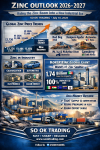
LME Prices: $3,200–3,300 per ton (+20% YoY).
SHFE Prices: 23,900–24,200 CNY/ton ≈ $3,432 USD/ton (including 13% VAT).
Price Drivers:
China’s production cap (≤45 million tons/year).
Rising energy costs in Western markets.
Strong demand from EVs and renewable energy.
Geopolitical tensions driving higher freight rates.
Arbitrage opportunities between SHFE and LME.
Overall, the market remains in a Bullish Structural Shift, with prices likely to stay above $3,200 through next year.
✅ Conclusion
China remains the dominant supply source with cost and shipping advantages. However, Thai businesses should avoid over-reliance on China. Diversifying imports from the Middle East, Australia, and South Africa can reduce risks and stabilize long-term costs. Securing long-term contracts to lock in Premiums and using hedging tools against LME volatility are crucial strategies.
As global demand for lightweight metals continues to rise, Chinese aluminum will remain at the heart of the supply chain. Yet, strategic import planning and risk management will be the keys for Thai manufacturers to maintain competitiveness and sustainability.
SO OK TRADING — FAST • SHARP • RELIABLE Your trusted partner in the world of strategic metals.
Visit us at: www.sooktrading.com Facebook: SO OK TRADING