“Non-Ferrous Scrap: The Strategic Resource of the Future — From Waste to the Driving Force of Circular Economy and Net Zero” SO OK TRADING: 21 SEP 2026
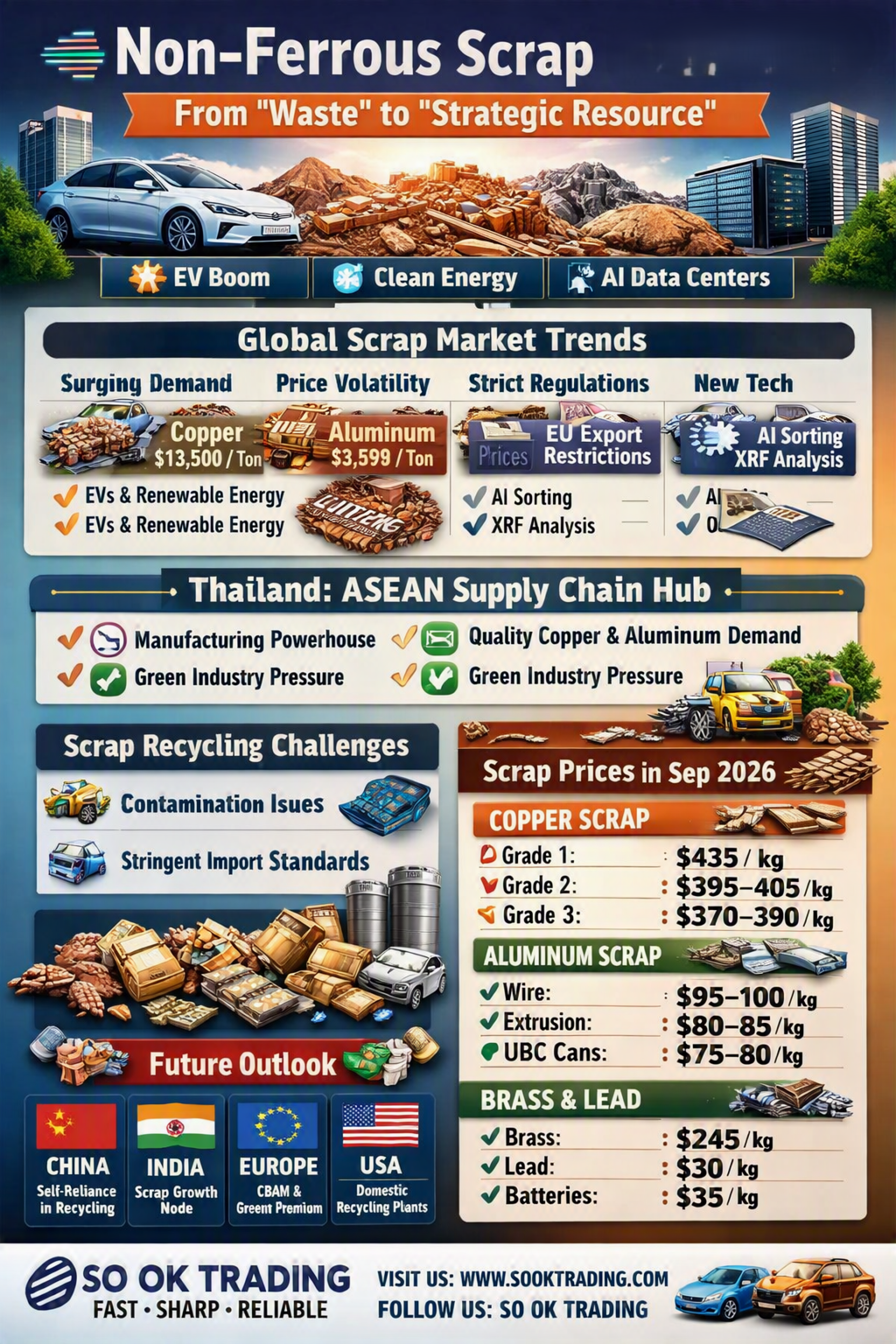
Non-Ferrous Scrap: From “Waste” to “Strategic Resource”
SO OK TRADING: 21 SEP 2026
✨ Introduction
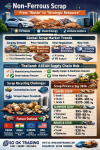
Non-Ferrous Scrap is shifting from “industrial waste” to a strategic resource. Nations worldwide are competing to secure it as part of the Circular Economy and the global drive toward Net Zero Carbon by 2050. Demand for copper and aluminum has surged to historic highs, driven by the growth of Electric Vehicles (EVs), Energy Storage Systems (ESS), and AI Data Centers. At the same time, Thailand plays a vital role as a supply chain hub in ASEAN.
Market Situation and Overview
Global Scrap Market
High Demand: New metal production is declining, factories worldwide are turning to scrap.
Key Drivers: EVs, AI, clean energy, rising mining costs.
Price Volatility (Jun–Sep 2026):
Copper: ~13,500 USD/ton
Aluminum: ~3,598 USD/ton (worst shortage in a decade)
Strict Regulations: EU restricts scrap exports outside OECD, pushing regional recycling.
New Technology: AI, XRF, robotic sorting → higher purity and stricter standards.
Thailand Scrap Market
ASEAN Hub: Thailand is a key supply chain center, especially Laem Chabang Port.
Domestic Demand:
Automotive industry shifting to EVs, electronics manufacturing.
Rising demand for high-quality copper (Millberry) and aluminum.
Green Industry Pressure: Factories must increase scrap usage to avoid EU’s CBAM.
Challenges in Scrap Recycling
Sorting systems lack standardization → contamination issues.
Strict regulations from China/EU → reliance on suppliers with CoA certification.
Scrap Prices in Thailand (Sep 2026)
Copper Scrap
Grade 1 (Millberry): 435 THB/kg
Grade 2: 395–405 THB/kg
Grade 3: 370–390 THB/kg
Aluminum Scrap
New wire: 95–100 THB/kg
Clean extrusion: 80–85 THB/kg
Alloy wheels: 90–95 THB/kg
UBC cans: 75–80 THB/kg
Brass & Lead
Heavy brass: 245 THB/kg
Lead blocks: 30 THB/kg
Used batteries: 35 THB/kg
Thai Import–Export Regulations (Non-Ferrous Scrap)
Import
Only factories with smelters and Ror.Ngor.4 license permitted.
Must pass purity inspection and pre-shipment certification.
Hazardous waste under Basel Convention requires PIC.
Export
Certain copper/aluminum scrap requires permits and export duties.
Must prove origin to prevent false declaration as e-waste.
EU/China destinations must comply with Waste Shipment Regulation.
Future Outlook (Scrap Recycling)
Global: Scrap elevated to “strategic resource” under resource nationalism and green premium.
Higher Standards: Low-grade scrap harder to sell, premium grades surge in price.
Circular Economy: Nations investing in domestic recycling plants.
Country Outlook (Aluminum & Copper Scrap)
China: From importer to self-reliance, domestic recycling >40–50%.
India: Super growth node, buying mid–low grade scrap globally, BIS standards enforced.
Europe (EU): Environmental regulation leader, CBAM & Waste Shipment Regulation, willing to pay green premium.
USA: Focus on domestic recycling plants to reduce import dependence.
Conclusion
The non-ferrous scrap market is entering a major transition — from “waste” to “strategic resource.” Every region is competing to secure future industrial growth. Thailand, as ASEAN’s supply chain hub, holds immense opportunities but must urgently upgrade sorting standards and certification systems to remain competitive in the era of Circular Economy and Net Zero.
SO OK TRADING: Your Trusted Business Partner FAST • SHARP • RELIABLE www.sooktrading.com Facebook: SO OK TRADING