Share

“Tin Market 2026: From Base Metal to Strategic Future Metal — A Journey from Food Cans to AI Chips Driving Technology and Clean Energy” SO OK TRADING | 12 SEP 2026

Last updated: 12 Sept 2026
110 Views

Tin: From Base Metal (LME) to the Heart of Future Technology
SO OK TRADING | September 12, 2026

Introduction
Tin (Sn), the silvery metal long known and used by humanity for thousands of years, is once again emerging as a star in the global industrial landscape. Once valued mainly for coating metals and producing food cans, tin has now transformed into a “strategic mineral” essential for the advancement of cutting-edge technologies — from artificial intelligence (AI) to clean energy and electric vehicles (EVs).

 
Properties and Applications
Tin is prized for its corrosion resistance, non-rusting nature, low melting point, and non-toxic qualities, making it indispensable across industries:

Tin Plating: Used to coat steel, copper, and brass for rust protection, widely applied in food and beverage cans.
Electronics Soldering: Tin mixed with lead or in lead-free formulations is used to solder circuits in computers, smartphones, and semiconductors.
Alloys: Combined with copper to form bronze, or with lead and antimony to create pewter for luxury goods.
Glass Industry: Used in the production of float glass.
Chemical Compounds: Applied in plastics, dyes, toothpaste, and fungicides.
 
From Ore to Refined Metal
Tin Concentrate: Ore concentrate with 50–70% purity.
Tin Ingot: Refined tin with 99.9–99.99% purity, cast into ingots ready for industrial use.
 
Major Global Producers
Asia: China dominates (nearly 50% of global output), followed by Indonesia and Myanmar.
Africa: Congo (Bisie mine), Rwanda, and Nigeria.
South America: Peru (San Rafael mine), Brazil, and Bolivia.
Others: Australia and Russia also play significant roles.
 
Outlook and Usage Trends
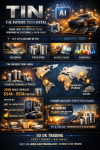
AI & Semiconductors: Over 50% of global tin is used in soldering electronics. Demand is surging with AI data centers and advanced chips. By 2030, AI servers alone are expected to consume 25,000 tons per year.
EVs & Clean Energy: EVs require far more electronic components than combustion vehicles. New-generation solar panels also rely heavily on tin-coated ribbons.
Eco-Friendly Packaging: 100% recyclable tin cans continue to grow in demand as industries shift away from plastics.
 
Price Trends
Global tin prices have soared between 2025–2026:

2025: Average LME price at $34,059 per ton, up 13% year-on-year, closing above $40,000.
2026: Starting the year above $51,000 per ton, and by August–September stabilizing at $54,000–$55,300 per ton, over 60% higher than the previous year.
This surge is driven by strong demand (AI, EVs, clean energy) and tight supply (Myanmar export issues and low global stocks), keeping the market in deficit and prices elevated above $50,000 for the foreseeable future.

 
Conclusion
Tin is no longer just a basic metal — it is a “strategic metal of the future”. From food cans to AI chips, from traditional industries to clean energy, tin is becoming the backbone of global technology and economic growth.

 
✨ SO OK TRADING — FAST • SHARP • RELIABLE Visit us: www.sooktrading.com Facebook: SO OK TRADING

Related Content
“Thai Baht September 2026: Sideways Up Amid Strong Dollar, Weak Yen, and Slowing Yuan in the Global Economic Storm”   SO OK TRADING: September 1, 2026
Thai Baht September 2026: Sideways Up Amid Dollar Strength, Weak Yen, and Slowing Yuan Analysis by SO OK TRADING | September 1, 2026 At the start of September, the Thai Baht opened at THB/USD 33.16, moving within the 33.00–33.30 range. Global markets remain under a Risk-off sentiment — the Dollar Index (DXY) holds above 99, U.S. 10Y Treasury yields surged past 4.77%, and Brent crude prices spiked to $90–91 per barrel amid escalating tensions in the Middle East. These pressures have kept the Baht and most Asian currencies on a weakening trend, while foreign investors continued net selling in Thai equities, exceeding THB 24 billion. September is shaping up to be a month of Two-way Risk, requiring careful risk management. Importers should gradually buy dollars when the Baht strengthens near 32.80–33.05, while exporters should hedge or sell dollars when the Baht weakens toward 33.50–33.80.
1 Sept 2026
“Singapore 2026: ASEAN’s Economic Pillar and Global Capital Gateway in the AI Era”   SO OK TRADING | 31 August 2026
Singapore 2026: Global Economic Hub Amid Trade Storms SO OK TRADING | August 31, 2026 In 2026, Singapore continues to stand firm as the “Economic Heart of Asia.” Despite global volatility from geopolitics and trade tensions, Singapore has turned crisis into opportunity by driving Quality Growth through three key engines — its role as a global financial center, advanced technology & AI industries, and a comprehensive network of FTAs worldwide. The economy expanded +6.1% in the first half of the year, with strong momentum expected in the second half. Growth is fueled by the AI & Electronics Boom, with exports surging over +88.1%, alongside a robust recovery in the commodity markets. Singapore is not only a hub for finance and technology but also a Non-Ferrous Metals Hub, controlling over 20% of global trade in metals and energy. This global trading ecosystem directly connects with Thailand. For Thailand, Singapore is the No.1 investor, with more than 61,112 million baht flowing into technology, clean energy, and component industries. At the same time, premium Thai agricultural products — such as Tubtim Siam pomelo — are gaining access to global markets.
31 Aug 2026
“Thailand’s Corn Power: From Fields to Global Markets – In-Depth Corn Market Outlook 2026: Thailand on the World Stage  Article by SO OK TRADING”
Thailand’s Corn Industry: Global Market By SO OK TRADING Thailand is one of the world’s key players in the corn industry, contributing both to livestock feed and human consumption exports. Sweet corn, in particular, has secured Thailand’s position as the No.1 exporter worldwide. This infographic highlights the Thai–global corn market in five essential dimensions: - Feed Corn: 7 million rai cultivated, yet domestic output still falls short of demand. - Consumption Corn: Thailand leads in sweet corn exports, with potential expansion into bioplastics and textiles. - Cost & Environmental Challenges: High production costs, PM2.5 pollution, and new “No Burning” certification standards. - Imports: 3–4 million tons annually from Laos, Myanmar, and Cambodia, subject to moisture standards and strict traceability. - Market Prices: Bullish trend both domestically and globally (CBOT), signaling strong demand and tight supply.
21 Feb 2026
This website uses cookies for best user experience, to find out more you can go to our Privacy Policy and Cookies Policy
Powered By MakeWebEasy Logo MakeWebEasy