“Global Pulse 2026: Resilient World Economy Amid Soaring Energy Prices and Prolonged War” Data: September 7–11, 2026 SO OK TRADING

Global Economic Overview (September 7–11, 2026)
SO OK TRADING : September 11, 2026
“Global Economy on Fire: Soaring Energy Prices, Prolonged War, but AI Keeps Markets Afloat”
Introduction
This week, the global economy continued to demonstrate remarkable resilience despite mounting pressures from the prolonged Middle East conflict, surging energy prices, and geopolitical uncertainties disrupting supply chains worldwide. On the other hand, the Artificial Intelligence (AI) investment cycle has emerged as a crucial driver, helping sustain growth and preventing a downturn.
Global Economic Overview
IMF projects 3.0% global GDP growth in 2026, despite ongoing conflict.
The world economy faces two-sided pressures:
Negative: soaring energy and commodity prices.
Positive: booming investments in AI and advanced technologies.
Major risk: global public debt nearing 100% of GDP, while disinflation efforts stall.
United States
Markets closely watch August CPI ahead of the FOMC meeting.
PPI +0.4% MoM, driven by higher energy costs and electronic component prices (+3.4%).
Labor market remains strong: initial jobless claims at just 205,000.
Over 70% of investors expect Fed Chair Kevin Warsh to raise rates by 0.25%.
China
CPI +0.8% YoY.
PPI +3.8% YoY, reflecting persistent production cost pressures.
Europe
ECB raises interest rates to curb inflation fueled by global oil prices.
Germany’s August CPI stands at 2.9% YoY.
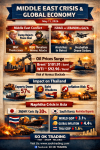
⚔️ Middle East Conflict
Conflict escalates into a “war of supply route disruption.”
Houthi forces seize Mocha port, securing control of the Bab el-Mandeb Strait.
Iran’s IRGC expands restricted zones in the Persian Gulf and Strait of Hormuz.
The U.S. responds with military strikes and sanctions (Operation Economic Outcast).
Commercial shipping through Hormuz drops 28% (only 77 vessels this week).
️ Oil Prices
Brent: $105.20–$108.68 per barrel.
WTI: $102.05–$103.94 per barrel.
OPEC cuts 2026 global demand forecast to 380,000 barrels/day.
Outlook: oil prices expected to remain high at $90–$110 per barrel throughout the year.
⚙️ Metal Markets
Copper: $14,533–$14,737 per ton (record high).
Zinc: $3,883–$4,115 per ton (4-year high).
Tin: $54,675–$55,223 per ton (boosted by AI chip demand).
Silver: $63.28–$67.29 per ounce (+50–60% YoY).
Gold: $4,330–$4,400 per ounce (+18% YoY).
Summary
The global economy this week proved stronger than expected, though war and high energy prices continue to fuel volatility across financial markets. Meanwhile, AI and new technologies remain the key growth engines sustaining resilience.
Outlook
Global Economy: moderate growth expected, but risks from public debt and slow disinflation persist.
Middle East Conflict: likely to drag on, keeping energy prices elevated.
U.S. Financial Markets: Fed rate hike highly probable.
Metals & Energy: prices to remain high, especially copper, tin, and oil.
SO OK TRADING : Your Trusted Business Partner FAST | SHARP | RELIABLE www.SOOKTRADING.com Facebook: SO OK TRADING