“Global Oil Prices Break $100: Geopolitical Crisis and Chain Reactions Across Petrochemical Industry and World Economy” SO OK TRADING | September 10, 2026
Global Oil Market Situation and Impacts on Related Industries (September 10, 2026)
SO OK TRADING | FAST • SHARP • RELIABLE
Introduction
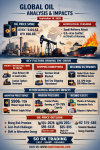
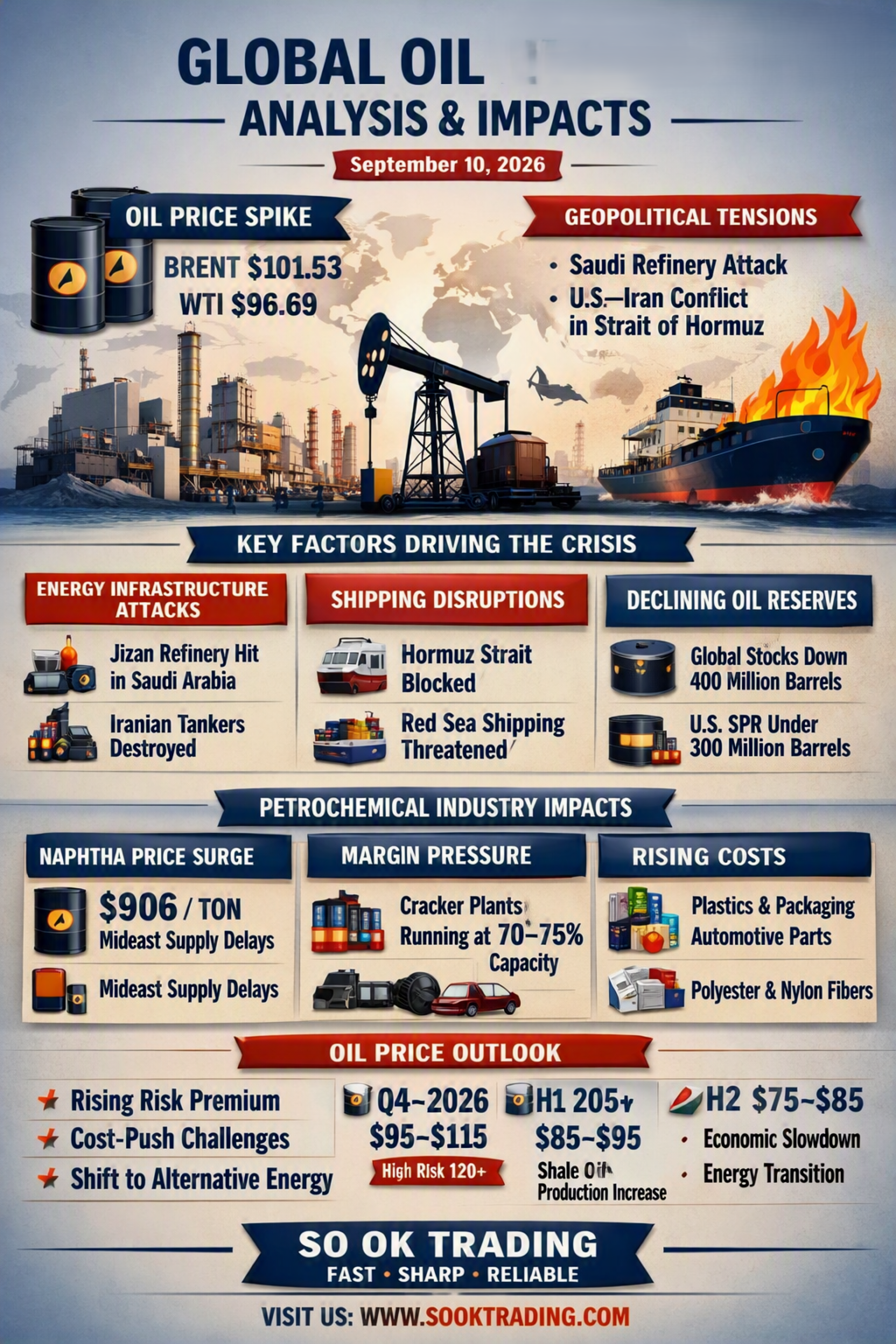
The global oil market is facing one of its most turbulent periods in recent years. Brent crude has surged past the psychological threshold of $100 per barrel, while WTI jumped more than 4% in a single day. The main driver is escalating geopolitical tension in the Middle East: the Jizan refinery of Saudi Aramco was attacked by Houthi forces, and clashes between the U.S. and Iran in the Strait of Hormuz — a route that carries over 20% of the world’s oil — have further disrupted supply chains. This situation not only pressures oil prices upward but also shakes the global energy supply chain and downstream industries.
Key Drivers of Oil Prices
Energy Infrastructure Attacks
Jizan refinery (400,000 barrels/day) hit and set ablaze
U.S. destroyed five Iranian oil tankers
Transport Bottlenecks
Strait of Hormuz nearly paralyzed
Red Sea shipping routes attacked, delaying oil and naphtha exports
Shrinking Global Oil Stocks
Global inventories down by 400 million barrels since the start of the year
U.S. SPR below 300 million barrels, limiting intervention capacity
⚠️ Impacts on Petrochemical Industry and Related Products
Naphtha: Prices surged to $906/ton, with Middle East supply delays forcing Asian and European plants to compete for feedstock
Spread Compression: Costs rising faster than product prices; cracker plants cut operating rates to 70–75% to avoid losses
Ripple Effects on Products:
Plastic packaging: prices up 15–20% in Q4 2026
Automotive & synthetic rubber: higher costs for parts and materials
Textiles: polyester and nylon prices rising due to PX shortages
Outlook and Future Trends
Crude Oil
Q4 2026: $95–115 range, risk of $120–130 if tensions worsen
H1 2027: correction to $85–95 with shale oil expansion and SPR measures
H2 2027: stabilization at $75–85 as global economy slows and energy transition accelerates
Petrochemicals & Related Industries
Olefins (Ethylene/Propylene): prices remain high, spreads below $250–300/ton, continued losses for Asian & European crackers
Plastics & Packaging (PE, PP, PET): prices up 15–20% in Q4 2026, but demand temporarily weak
Synthetic Fibers (Polyester/Nylon): sustained price increases from costly naphtha and PX shortages
Automotive & Textiles: rising costs, shrinking margins, urgent need for production restructuring
Conclusion
The current oil price surge reflects a heightened Risk Premium driven by geopolitical uncertainty and declining inventories. The petrochemical industry is clearly entering a Cost-Push Supercycle, forcing producers to rethink strategies in production and raw material sourcing.
In the short term, businesses must cope with high costs and compressed spreads. In the medium to long term, oil price corrections and the accelerating shift toward alternative energy will define the new trajectory of global markets and downstream industries.
SO OK TRADING — Your Trusted Business Partner VISIT US: www.sooktrading.com FACEBOOK: SO OK TRADING