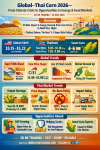
“Corn Rising 2026–2027: Bullish Momentum in Clean Energy, Food Security, and Thailand’s Future”: SO OK TRADING: 26 AUG
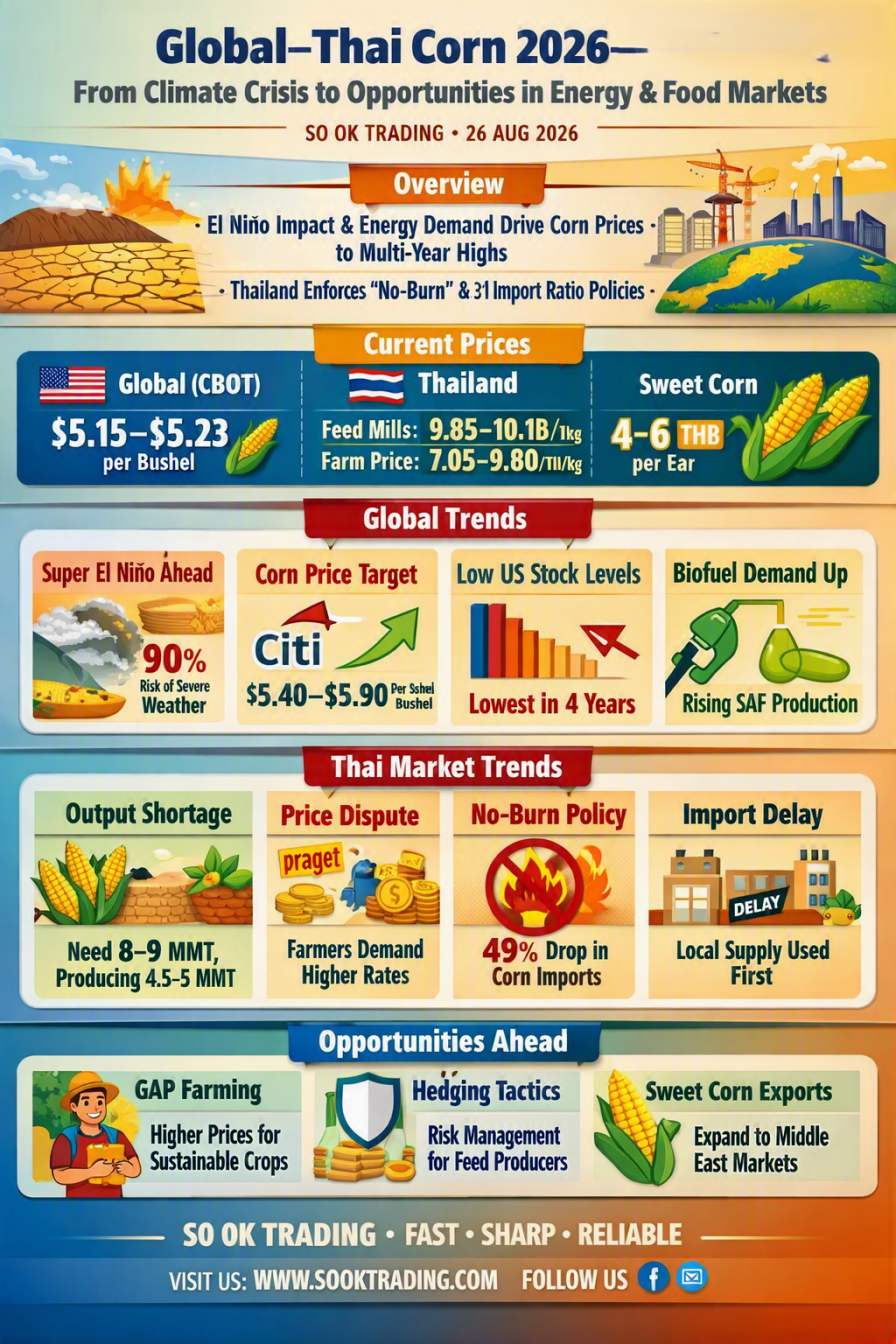
Global–Thai Corn Market 2026–2027: From Climate Crisis to Golden Opportunities in Energy and Food
Introduction The years 2026–2027 mark a period of major transformation for both the global and Thai corn markets. Extreme climate pressures, a severe El Niño phenomenon, and the rising demand for clean energy have driven corn prices to their highest levels in years. Meanwhile, Thailand must adapt under new government regulations, including the “No-Burn Corn” policy to tackle PM2.5 pollution and the 3:1 import ratio control to stabilize domestic production prices.
On the other hand, global supply tightness and domestic raw material shortages have become a golden opportunity for Thai farmers and feed producers. By shifting toward sustainable production standards and effectively using financial tools to manage risks, the corn market is not merely a “challenge” but also a “new opportunity” that will shape the future trajectory of Thailand’s agricultural economy.
Current Price Situation
Global Market (CBOT): December 2026 feed corn futures at 5.15–5.23 USD/bushel
Thailand: Feed mill price 9.85–10.15 THB/kg; farm-gate price (14.5% moisture) 9.00–9.80 THB/kg; (30% moisture) 7.05 THB/kg
Sweet Corn: Wholesale market (Si Mum Mueang) average 4–6 THB/ear
Global Market Trends
Super El Niño: NOAA forecasts over 90% probability of severe impact on U.S. and South American production
New Price Target: Citi raises corn futures target to 5.40–5.90 USD/bushel
Stocks-to-Use Ratio: USDA reports U.S. corn stocks at a 4-year low
Biofuel Demand (SAF): Rising demand for corn in sustainable aviation fuel production
Thai Market Trends
Production Shortfall: Thailand produces only 4.5–5 million tons annually, while demand reaches 8–9 million tons
Price Dispute: Farmers demand 7.50 THB/kg for 30% moisture corn, while feed producers worry about rising costs
Environmental Measures: Ban on corn from burned fields reduces imports by over 49%
Import Slowdown: Feed mills required to prioritize domestic production
Opportunities and Adaptation for Thai Corn Agriculture
Farmers: Adopting GAP standards and avoiding burning can secure higher selling prices
Feed Producers: Should use hedging to mitigate risks and explore substitutes such as wheat and soybean meal
Sweet Corn Market: Thailand remains the world’s No.1 exporter, with potential expansion into Middle Eastern markets
Outlook 2026–2027
Global Market: Prices expected to continue rising due to drought and clean energy demand
Thai Market: Prices remain high and stable under government support and strict environmental measures
Overall: Market shifting from “oversupply” to “tight balance,” driving corn prices upward globally and in Thailand
✨ Conclusion The corn market in 2026–2027 is entering a phase of “Bullish to Stable High”, supported by climate challenges, environmental policies, and biofuel demand. Thailand must adapt across both farming and business sectors to manage costs and seize new opportunities in global and regional markets.
SO OK TRADING: Your Trusted Business Partner SO OK TRADING: FAST SHARP RELIABLE VISIT US AT: WWW.SOOKTRADING.COM FACEBOOK: SO OK TRADING