“Thailand’s Steel Industry on the Net Zero Path: From Scrap to a Green Future — The Turning Point of EAF & Green Steel | SO OK TRADING Insight” :11 AUG 2026
Business Insight
Thailand’s Steel & Scrap Industry 2026 – The Road to Green Steel and Global Competition By SO OK TRADING | 11 AUG 2026
1. Industry Overview
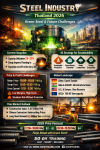
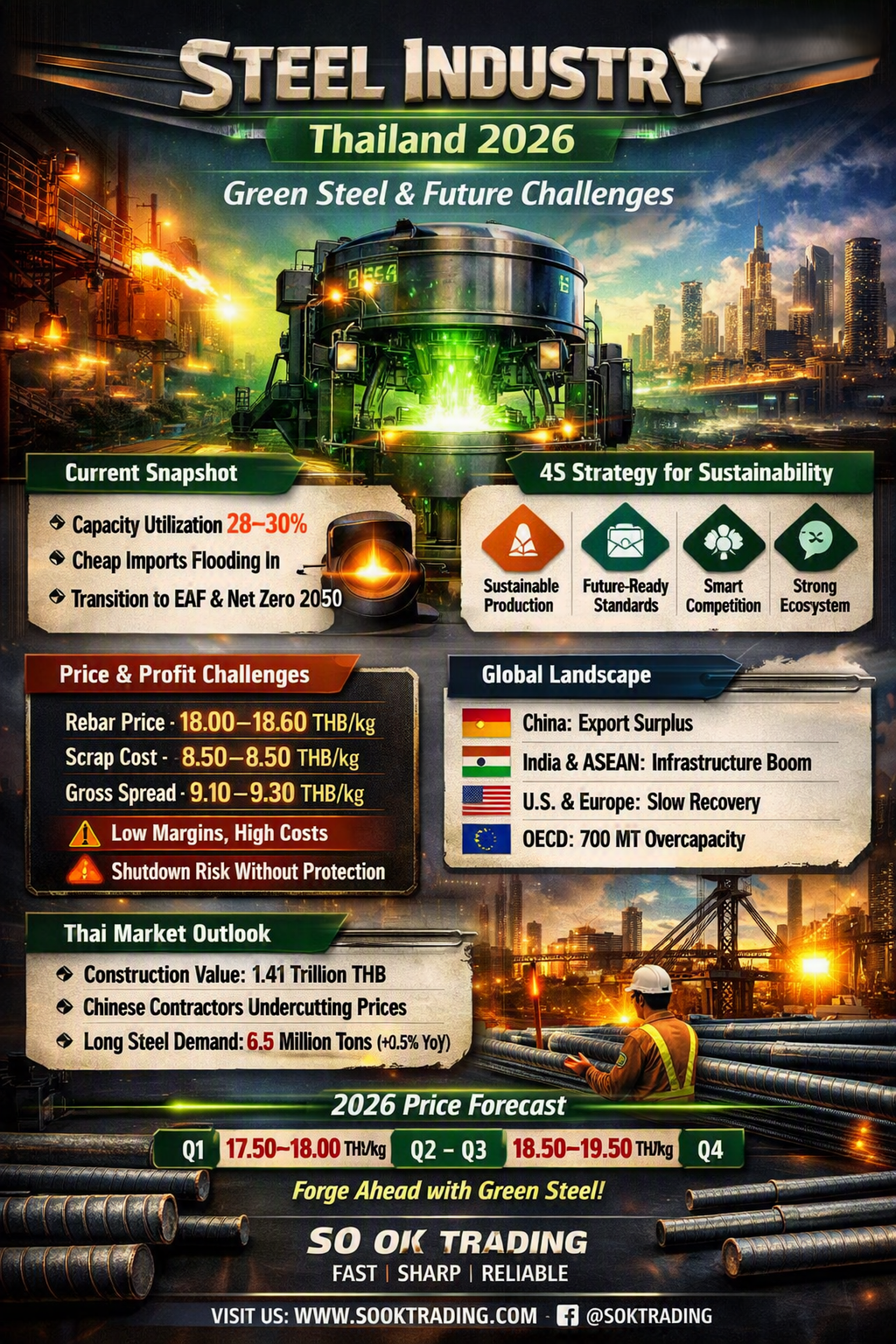
Thailand’s steel industry is at a critical turning point. Cheap steel imports from China and other countries have driven domestic capacity utilization down to 28–30%, compared to over 40% in the past. Rising energy and logistics costs further pressure local producers.
Thailand’s strength lies in its reliance on Electric Arc Furnaces (EAF), which recycle domestic scrap steel. This reduces carbon emissions and aligns with the Net Zero 2050 target. However, the transition requires both government support and strategic private investment.
2. The 4S Strategy – Path to Sustainability
Major players such as TATA Steel Thailand have proposed the 4S framework to drive industry transformation:
Sustainable Production – Advance EAF technology and circular economy practices
Future-ready Standards – Upgrade domestic steel standards with safety and traceability
Smart & Fair Competition – Enforce fair regulations on imported steel quality
Strong Local Ecosystem – Build resilient supply chains and invest in workforce development
3. Price Structure & Profitability – The Harsh Reality
Finished rebar price: 18.00–18.60 THB/kg
Scrap steel price: 8.50–9.50 THB/kg
Gross spread: 9.10–9.30 THB/kg
After accounting for 10–12% yield loss and hidden conversion costs (electricity, electrodes, labor, logistics), net profit margins remain razor-thin.
Business Insight:
If imports continue to suppress prices → Thai mills risk shutdowns.
If AD (Anti-Dumping) measures and Green Steel adoption succeed → Spreads could widen, improving profitability.
4. Global Competitive Landscape
China: Demand contraction due to real estate crisis → Exporting cheap steel
India & ASEAN: Strong growth driven by mega infrastructure projects
U.S. & Europe: Limited recovery, supported by government initiatives
OECD Warning: Global overcapacity may exceed 700 million tons, pressuring prices
Business Insight: Thailand must carve out a clear position in the global value chain by focusing on Green Steel and targeting high-standard markets such as public infrastructure and advanced industries.
5. Thai Market – “Stability Amid Risk”
Construction industry value: 1.41 trillion THB
Public projects: +1% to +2.5% growth (EEC mega projects)
Private sector: -1% decline (housing market slump)
Long steel demand: 6.5 million tons (+0.5% YoY), but domestic mills gain little due to import influx
New threat: Chinese contractors undercutting prices in Thailand
Strategic Response:
Tight inventory management
Focus on public infrastructure and industrial projects (e.g., data centers, warehouses)
Accelerate Green Steel development to capture premium markets
6. 2026 Rebar Price Trends
Jan–Feb: First price hike → 17.50–18.00 THB/kg
Mar–May: Construction peak season → 18.50–19.50 THB/kg
Jun–Jul: Rainy season slowdown → Prices ease
Aug (latest): Sideways movement
Standard rebar: 16.95–17.60 THB/kg
EAF rebar: 18.00–18.60 THB/kg
Premium rebar (TATA): 18.60–19.10 THB/kg
7. Conclusion
2026 marks a year of stabilization and restructuring for Thailand’s steel industry.
Short-term survival: Rely on AD measures and strict inventory control
Mid-term adaptation: Transition to Green Steel and strengthen domestic standards
Long-term growth: Build a robust ecosystem, expand supply chains, and capture premium/mega project markets
✨ Those who transition to Green Steel fastest will dominate the future market — not only meeting Net Zero goals but also creating unique value in an increasingly competitive environment.
SO OK TRADING
Your Trusted Business Partner FAST | SHARP | RELIABLE www.sooktrading.com Facebook: SOOK TRADING