“Thai Cassava Rising: The Golden Era of Export and Innovation to the Global Market” SO OK TRADING | 5 AUGUST 2026
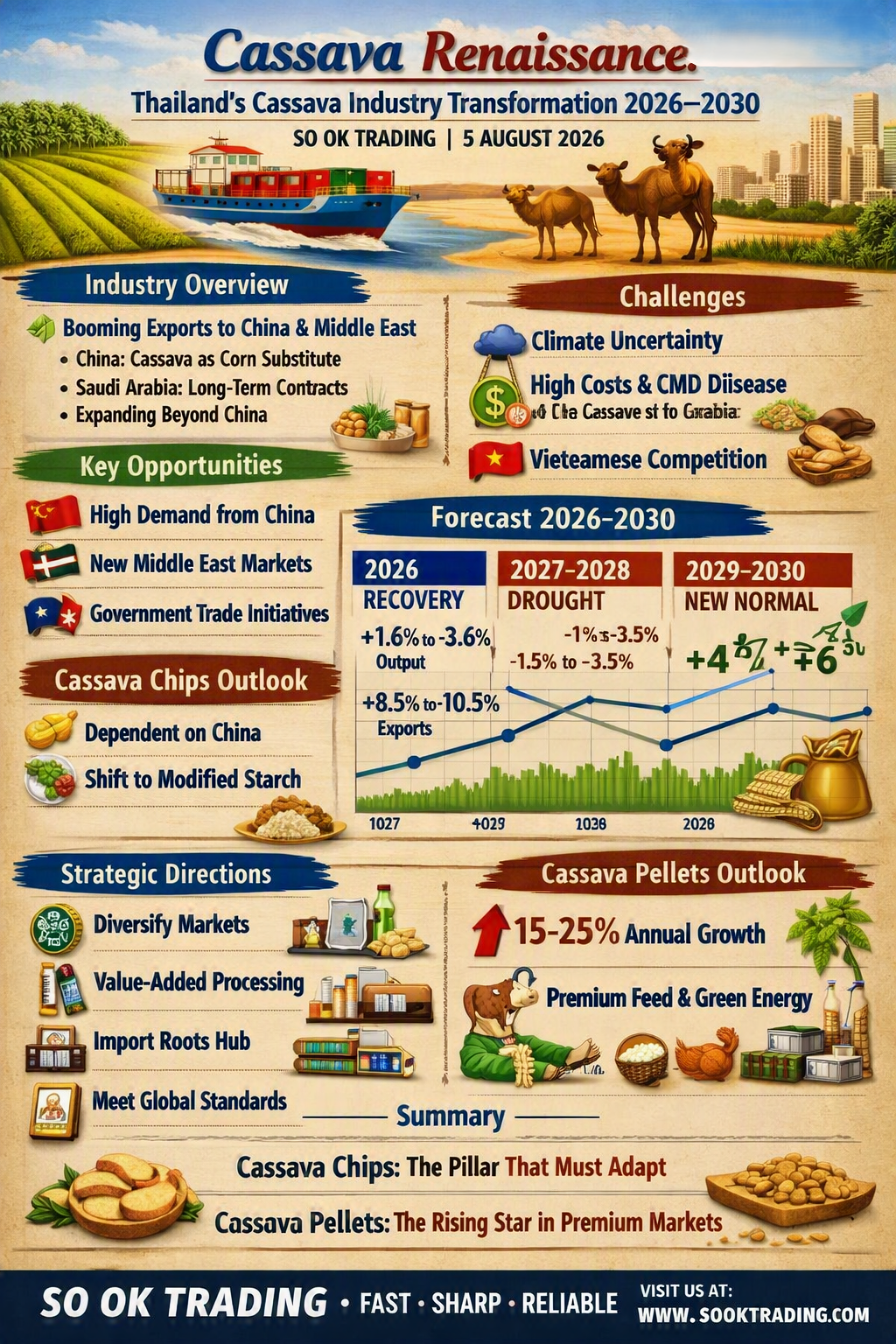
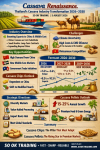
Cassava Renaissance: Thailand’s Cassava Chips & Pellets Transition to the Global Market 2026–2030
SO OK TRADING | 5 AUGUST 2026
Industry Overview
Thailand’s cassava chip and pellet industry is entering a positive expansion phase, driven by export demand. China continues to use cassava chips as a substitute for corn in animal feed and ethanol, while new markets in the Middle East — especially Saudi Arabia — are opening through long-term purchase agreements.
However, challenges remain: volatile weather, rising production costs, cassava mosaic disease (CMD), and competition from Vietnam, which has access to cheaper raw materials.
Positive Factors & Opportunities
China as the main market: Strong demand for cassava chips as a corn substitute in feed and ethanol.
New Middle Eastern markets: Major deals with Saudi Arabia open doors to premium markets.
Government policy: Thailand’s Department of Foreign Trade promotes business matching and expansion into Western China and ASEAN.
⚡ Challenges
El Niño–La Niña: Unstable yields due to climate fluctuations.
Low value-added products: Prices fluctuate with global markets and substitute crops.
Domestic competition: Cassava chip factories compete with starch factories, which have stronger purchasing power.
Trends 2026–2030
2026: Strong recovery; output growth +1.6–3.6%, cassava chip exports +8.5–10.5%.
2027–2028: Drought risk; output decline -1.5% to -3.5%, tighter exports.
2029–2030: Entering the “New Normal”; exports grow +4–6% annually. Thailand must import cassava roots from neighboring countries to sustain production.
Cassava Chips Outlook
China remains the core market, but risks are rising as China expands corn cultivation and invests in neighboring countries. Thailand must diversify and upgrade production toward value-added products such as Modified Starch, used in pharmaceuticals, chemicals, paper, and high-value food industries.
Future market structure: cassava chips will remain the “pillar,” but Thailand must evolve into a Processing Hub rather than relying solely on China.
Cassava Pellets Outlook
2026–2027: Growth phase, exports increase 15–25% annually, driven by Saudi Arabia and Middle Eastern contracts.
2028–2030: Entering the “Renaissance,” transforming from a forgotten product into a premium green energy and animal feed crop. Japan and Saudi Arabia embrace Thai pellets.
Strengths of pellets:
Lower logistics costs (bulk shipping efficiency).
High nutritional value and Non-GMO certification.
Strong demand in premium markets (Japan, Saudi Arabia, Philippines).
Key Strategies for Thai Producers
Diversification: Reduce reliance on China; expand into Middle East, Japan, and ASEAN.
Value Upgrade: Transition from commodity to Modified Starch.
Processing Hub: Position Thailand as a regional processing center, importing roots from Cambodia and Laos.
Global Standards: Upgrade factories to meet strict international quality requirements.
✨ Conclusion
Thailand’s cassava chip and pellet industry stands at a historic crossroads. Cassava chips remain the foundation but must adapt to survive. Cassava pellets, once overlooked, are now the rising star, propelling Thailand into premium global markets .
SO OK TRADING — Your Business Partner FAST • SHARP • RELIABLE www.sooktrading.com Facebook: SO OK TRADING