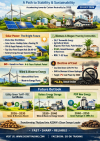
“Thailand Clean Energy Revolution — Thailand’s Clean Energy Transformation: Driving Sustainability and Rising as ASEAN’s Hub” SO OK TRADING : 30 July 2026
Thailand Renewable Energy Outlook: Entering a New Era of Stability and Sustainability
SO OK TRADING : 30 July 2026
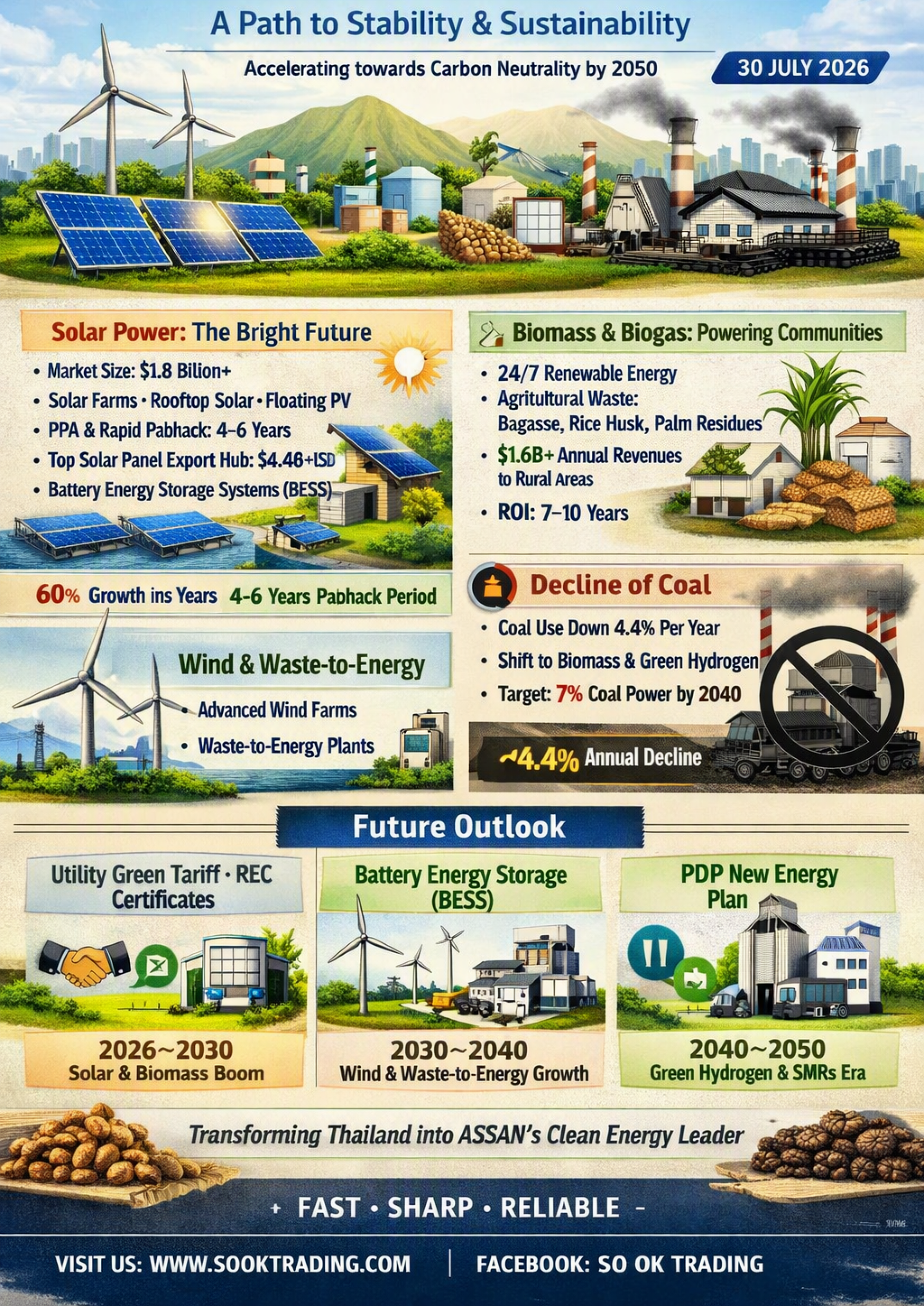
Thailand is moving forward with a serious energy transition. The major goal is Carbon Neutrality by 2050. Under pressure from Europe’s Cross-Border Carbon Adjustment Mechanism (CBAM), both government and private sectors are accelerating investments in clean energy to maintain competitiveness and secure long-term economic stability.
☀️ Solar Power: The Star of Transition
The fastest-growing segment in Thailand: solar farms, rooftop solar, and floating solar on major dams operated by EGAT.
Market value exceeds 60 billion THB and continues to expand.
Businesses and households are installing solar to cut electricity costs, supported by PPA models that make investment easier.
Payback period is only 4–6 years.
Thailand is a major global base for solar panel production and exports, worth over USD 4.4 billion.
Although limited to daytime generation, the arrival of Battery Energy Storage Systems (BESS) is solving instability issues, making solar a more reliable main energy source.
Biomass & Biogas: Power for Communities and Grassroots Economy
Provides stable 24-hour electricity supply.
Uses agricultural residues such as bagasse, rice husk, and palm waste.
Sugar mills and rice mills often build biomass plants for self-use and sell surplus electricity to the grid.
Generates tens of billions of THB annually for farmers and local communities.
ROI is 7–10 years, but biomass ensures stability and genuine income distribution.
️ Wind & Waste-to-Energy: Enhancing Diversity
New-generation wind turbines improve efficiency in coastal and mountainous areas.
Waste-to-Energy projects, driven by circular economy concepts, reduce landfill problems and create additional local revenue.
⚙️ New Innovations & Policies
Utility Green Tariff (UGT): Enables businesses to purchase green electricity directly with REC certification.
Battery Energy Storage Systems (BESS): Strengthen renewable energy stability.
New PDP Plan: Significantly increases clean energy share, replacing fossil power plants as they retire.
⛏️ Decline of Coal: A Clear Signal
Coal use in Thailand is decreasing by an average of 4.4% per year and continues to decline.
Industries such as cement and heavy manufacturing are shifting to RDF, biomass pellets, and green hydrogen.
Power sector: PDP targets reducing coal power share to just 7% by 2037–2040.
Major coal plants, such as Mae Moh, are scheduled for gradual retirement.
Outlook: The Future of Renewable Energy in Thailand
Short Term (2026–2030): Solar and biomass will be the pillars, driving both business and community, with BESS investments enhancing grid stability.
Medium Term (2030–2040): Waste-to-Energy and wind will play larger roles, especially in high-potential areas, while coal plants disappear from the system.
Long Term (2040–2050): Green hydrogen and Small Modular Reactors (SMRs) will emerge as future energy sources, supporting high-heat demand in heavy industries.
✨ Summary Thailand is transitioning from coal dependency to stable and sustainable renewable energy. Solar and biomass are the key pillars driving both industry and communities, while innovations like BESS and Green Tariff will build a clean energy system that is competitive globally. Thailand has the opportunity to rise as the Clean Energy Hub of ASEAN, if renewable energy is integrated with new innovations and a strong circular economy.
✨ SO OK TRADING Your trusted business partner in the clean energy era FAST • SHARP • RELIABLE WWW.SOOKTRADING.COM FACEBOOK: SO OK TRADING
Interested in biomass fuels (WOOD PELLET, RDF3)? Contact SO OK TRADING for high-quality biofuels with professional service.