✨ “Thai Rubber Golden Year 2026: STR20 – The Strategic Hero Driving EVs into the Global Future” SO OK TRADING : 23 July 2026

Thai Rubber Market Outlook 2026 : SO OK TRADING : 23 July 2026
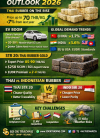
This year, Thai natural rubber is stepping onto the global stage as the “leading star of the market.” The average annual price is expected to reach 70 THB/kg, rising more than 7% from last year. The main drivers are tight global supply and surging demand, especially from the electric vehicle (EV) industry and the medical device sector, both of which are recovering strongly.
China and India remain the largest consumers of natural rubber — China’s demand is up 1.7%, while India shows strong growth of 3.6%. As a result, the global market continues to face a Demand > Supply situation, clearly supporting higher prices.
Electric Vehicles: The Demand Accelerator EVs are the most crucial factor in this year’s rubber market. EVs are 20–30% heavier than combustion vehicles due to their batteries, requiring more durable tires with a higher proportion of premium natural rubber.
Moreover, EV cabins are quieter than conventional cars → tires must be designed to reduce noise. The molecular structure of natural rubber meets this need better than synthetic rubber, driving demand for STR 20 and latex higher than ever.
Global Demand Trends
China: Still the largest importer, demand +1.7%
India: Strong growth +3.6% from automotive and transport expansion
Europe & USA: Focus on EUDR standards (traceability, deforestation-free) → Thai rubber gains advantage
ASEAN emerging markets: Rapid growth, steady orders for block rubber and truck tires
STR 20: The World’s Strategic Raw Material The star of Thai rubber this year is STR 20 (Standard Thai Rubber 20) — the core material for tire production, especially for EVs that require high-quality rubber to withstand torque and heavy weight.
Export price (FOB): 85–90 THB/kg
Futures market (SICOM/SGX): August 2026 contracts at 250 US cents/kg
EUDR Premium: Certified STR 20 earns an additional +2–4 THB/kg
Thai vs Indonesian Rubber Both countries produce TSR 20, but global manufacturers see clear differences:
Thai STR 20: High cleanliness, low dirt content; advanced traceability system; preferred in Europe & USA despite premium pricing
Indonesian SIR 20: Lower cost, suitable for price-sensitive markets; quality and cleanliness lower than Thailand; widely used in China and markets with less strict environmental standards
⚠️ Key Challenges for Thai Rubber Industry
Traceability system costs: Factories must invest to separate EUDR and non-EUDR rubber
Competition from CLMV and Indonesia: Rivals are improving standards to compete on price
Climate volatility: Heavy rains or droughts from El Niño make cup lump supply uncertain
✨ Summary 2026 marks the year Thai rubber “returns to prominence.” Prices continue to rise, global demand remains strong, especially from EVs and medical devices. Thailand’s STR 20 is still the strategic raw material global tire manufacturers “cannot do without.” Despite challenges from regulations and competitors, Thailand maintains its edge in quality and traceability.
SO OK TRADING – FAST • SHARP • RELIABLE Your trusted business partner in the global rubber market
+66 955564255 | www.SOOKTRADING.com | Facebook: SO OK TRADING