“Thai Fruit & Durian Power 2026 – Thai Durian Wins China’s Heart, Thai Tropical Flavors Captivate the World” SO OK TRADING | 8 JULY 2026
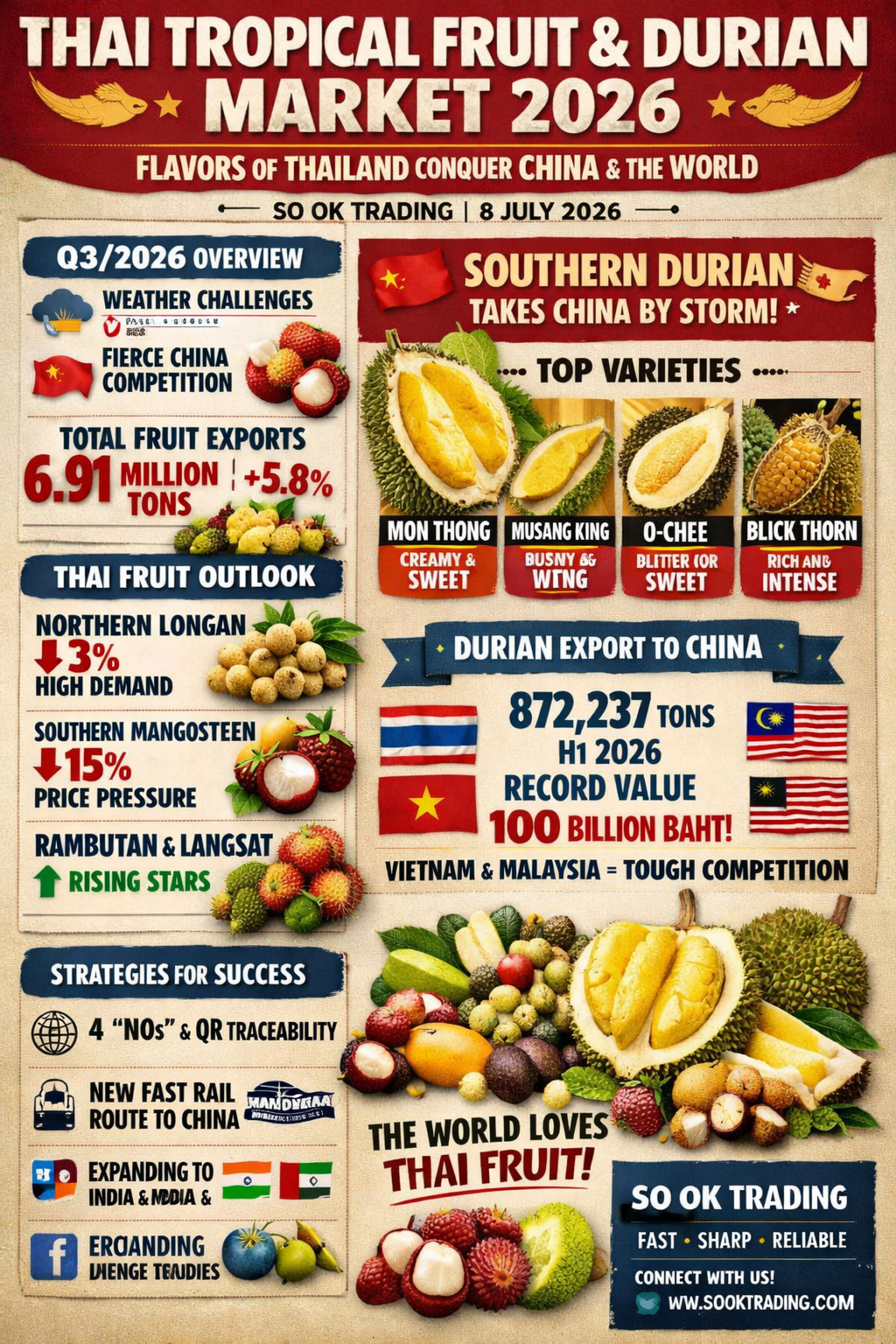
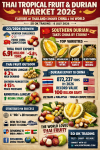
THAI TROPICAL FRUIT & DURIAN MARKET 2026
“Thai Flavors Conquer China and the World” Article by SO OK TRADING | 8 JULY 2026
Market Overview Q3/2026 (July–September) This season, Thai fruits are flowing into global markets at full scale. Yet, challenges remain: climate volatility and intense competition in China, especially as Southern Durian enters its Peak Season and becomes the centerpiece of Asia’s fruit battleground .
Thai Fruit Outlook
Northern Longan: Production down 3%, but overseas demand remains strong, keeping prices stable.
Southern Mangosteen: Production down 15%, still highly favored in China; rapid distribution is needed to stabilize prices.
Rambutan & Langsat: Rising stars with increased yields, creating new export opportunities.
Annual Output: Nine major economic fruits total 6.91 million tons, up 5.8% year-on-year, driven by durian and pineapple.
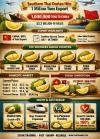
Southern Durian – The King in China Chinese consumers love Thai Southern Durian. Key varieties include:
Mon Thong: Thick flesh, sweet and creamy, mild aroma. “Yala Water-Dried Mon Thong” is sold at premium prices.
Chanee: Strong sweetness, rich flavor, intense aroma.
Kanyao: Fine texture, small seeds, sweet and affordable.
Sarika (Phang Nga): Golden flesh, sweet and fragrant, with a unique rust-colored core.
Yao Litchi (Betong, Yala): Orange-red flesh, floral aroma, favored by high-end Chinese tourists.
Puangmanee: Small fruit, intensely sweet, fine texture.
Musang King: Deep yellow flesh, creamy, “bitter-sweet” flavor, premium demand in China.
Black Thorn (Ochee): Orange-red flesh, bold and intense sweetness, popular among wealthy Chinese consumers.
Outlook for Thai Southern Durian in China
Export Record: In H1/2026, Thailand exported 872,237 tons of fresh durian to China, worth 100,079 million baht — the highest in history.
Fierce Competition: Vietnam and Malaysia also supply fresh durian to China, causing oversupply and price adjustments.
Price Trend: Thai durian prices continue to decline for the second year, averaging 90 baht/kg.
Strict Chinese Regulations: Residue testing, plant health inspections, and orchard/packing registration are enforced.
Thai Strategy:
Uphold “4 NOs” standard + QR Code Traceability
Target high-income provinces (Guangdong, Yunnan, Zhejiang, Sichuan)
Utilize China–Laos high-speed rail, delivering fruit within 15 hours
Thai Durian & Global Market Expansion China remains the main market (over 80% share), but Thailand is diversifying into India, South Korea, and the Middle East to reduce reliance on a single market. Modern Logistics: The China–Laos railway ensures faster delivery, keeping fruit fresher for consumers.
✨ Key Takeaways for Thai Fruit & Durian Businesses
Maintain Premium Standards – Quality is the key to competing with Vietnam and Malaysia.
Build Thai Fruit Branding – Highlight unique flavors: “Sweet, creamy, fragrant yet mild.”
Expand into New Markets – India, South Korea, and the Middle East.
Leverage Logistics Strategy – Fast transport preserves freshness and quality.
Conclusion Q3/2026 is a critical season for Thai fruits, especially Southern Durian. Despite fierce competition in China, maintaining premium standards and expanding into new markets will secure Thailand’s position as the “Global Leader in Tropical Fruits.”
✨ SO OK TRADING – Your Trusted Business Partner FAST • SHARP • RELIABLE
VISIT US: WWW.SOOKTRADING.COM FACEBOOK: SO OK TRADING