“Africa: The Future Resource Treasure — Africa Rising & Copperbelt Awakening, The Turning Point of Global Industry and the New Supply Shift in Mineral Markets” SO OK TRADING | 5 July 2026
Africa: The Resource Treasure Contested by the World
LME • NON‑FERROUS • RARE EARTH • PRECIOUS METAL SO OK TRADING | 5 July 2026
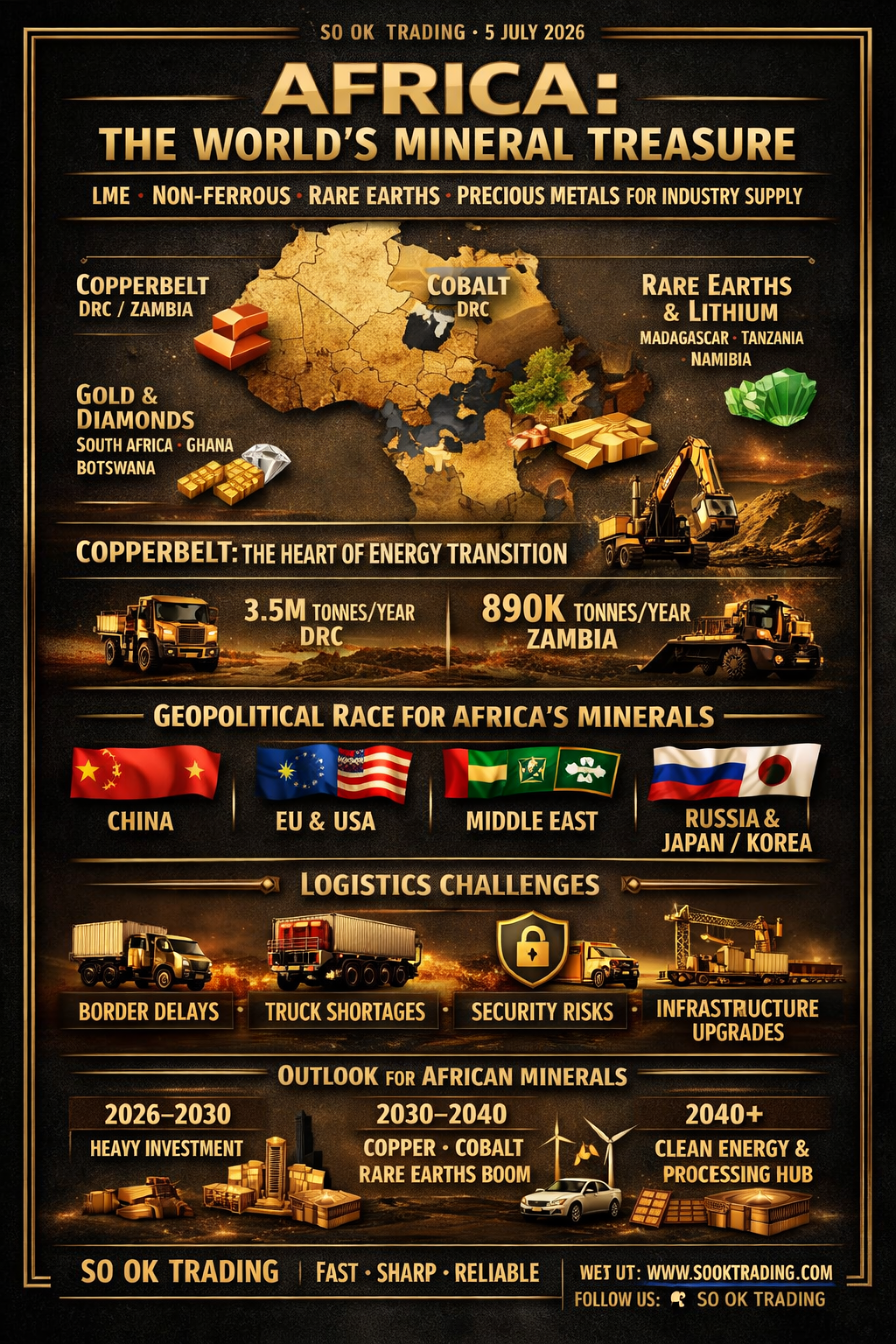
Africa is the world’s mineral vault, rich in industrial metals, strategic minerals, and rare gems. From copper in the Copperbelt (DRC–Zambia), with ore grades as high as 2–5%, to cobalt, lithium, and rare earths powering EV batteries and clean‑energy systems, Africa is becoming the supply frontier of the future.
Copper: The Copperbelt is the largest sediment‑hosted copper deposit globally. Kamoa‑Kakula (DRC) and Lumwana (Zambia) are mega‑projects driving future supply.
Cobalt: DRC accounts for more than half of global reserves, essential for EV batteries and smartphones.
Gold: South Africa (Mponeng mine), Ghana, and Tanzania remain key producers.
Diamonds: Botswana (Jwaneng mine), South Africa, and Angola yield some of the world’s finest stones.
Rare Earths & Lithium: Madagascar, Burundi, Tanzania, and Namibia are emerging as strategic sources.
Bauxite: Guinea is a leading global supplier for aluminum.
Uranium: Namibia and Niger are major exporters.
“The Kamoa‑Kakula mine in Congo produced 388,838 tonnes of copper in 2025 — a new high‑quality deposit under global spotlight.”
⚡ Copperbelt — The Heart of Energy Transition
The Central African Copperbelt, spanning DRC and Zambia, is the most concentrated copper‑cobalt zone in the world, powering EV batteries and smart grids.
DRC: ~3.5 million tonnes/year, ore grades up to 5%.
Zambia: ~890,000 tonnes/year, backed by Canadian, Australian, and Middle Eastern capital.
Geopolitical Competition Intensifies
China: Dominates cobalt and copper mines in DRC.
West (EU/US/UK): Investing in rare earths and gold.
Middle East (UAE/Saudi Arabia): Heavy investments in copper and gold.
Russia: Focused on diamonds and gold.
Japan/Korea: Securing rare earths and lithium for clean‑tech supply chains.
Logistics Bottlenecks
Despite high‑quality resources, exports face critical challenges:
Border delays: trucks stuck 7–14 days, costing $550/day per vehicle.
Shortages of trucks and containers.
Security risks: copper cathodes are highly vulnerable, requiring GPS‑tracked convoys.
New infrastructure: railways and ports in Tanzania, Mozambique, and South Africa are under rapid development.
Outlook for African Minerals
2026–2030: China, the West, and the Middle East expand investments; local governments enforce in‑country processing; logistics upgrades begin.
2030–2040: Explosive demand for copper, cobalt, and rare earths driven by EVs and smart grids; Africa emerges as a challenger to China.
2040+: Africa evolves into a hub for finished products — copper cathodes, lithium carbonate, rare earth oxides — leading the era of Green Mining and Low‑Carbon Copper.
Strategic Summary
Copperbelt and rare earths represent the golden opportunity of the next decade. As traditional suppliers like Chile and Peru decline, Africa rises as the new supply frontier the world depends on.
SO OK TRADING — Your Global Business Partner FAST • SHARP • RELIABLE www.sooktrading.com Facebook: SO OK TRADING