Share

“China Transforms the World, Thailand Reshapes the Economy – Mid‑2026 From the World’s Factory to the Innovation Hub, New Opportunities Await Thailand and the Global Stage”

Last updated: 21 Jun 2026
3508 Views

China’s Role in the Global Economy & Thailand – Mid‑2026: The Crossroads of Global Shifts and New Opportunities
Article by SO OK TRADING : June 21, 2026

 
China’s Stable Slowdown
In the second half of 2026, China’s economy is entering a phase of “stable slowdown.” For the first time in three decades, the government has lowered its GDP growth target to 4.5%–5.0%, marking a clear transition from quantity‑driven growth to quality‑driven development. The focus is on artificial intelligence, clean energy, and future industries.

 
China’s Three Growth Engines
New Quality Productive Forces: Massive investments in AI, advanced technology, and innovation
Proactive Fiscal Policy: Expanding the fiscal deficit by ¥2.3 trillion to stimulate the economy
Price War Regulation: Restructuring competition in EVs and food delivery to emphasize quality and innovation
 
Key Risks to Watch
New Trade Wars: The U.S. and Europe imposing higher tariffs on Chinese goods
Slow Domestic Demand Recovery: Consumption lagging behind production, with real estate and demographic challenges persisting
Geopolitical Pressures: Conflicts in the Middle East and other regions driving up energy costs
 
China’s Global Relations
United States: Tense relations, with exports to the U.S. down 10%. Still, China seeks stability through purchases of Boeing aircraft and agricultural products.
Europe (EU): Pursuing “de‑risking” by reducing reliance on China, imposing EV tariffs, and restricting technology. Chinese capital adapts by building factories directly in Europe.
ASEAN: Now China’s top trading partner, with exports rising 19%. Thailand, Vietnam, and Indonesia serve as bases for EV production and AI infrastructure.
Global South & Russia: Strengthening ties with Africa, Latin America, and Russia through the Belt and Road Initiative (BRI). China is Russia’s largest energy buyer and invests heavily in critical mineral resources worldwide.
 
Belt & Road Initiative (BRI) – China’s New Strategy
China has shifted its BRI approach from “mega projects” to “Small is Beautiful,” focusing on smaller, more efficient projects.

Dual Energy Strategy: Investing in both renewable energy (solar, wind, hydrogen) and traditional energy (oil, gas)
Investment Model Shift: Moving from loans to joint investments and construction contracts, reducing “debt trap” concerns
Alternative Trade: Granting zero‑tariff access to 53 African countries for exports to China
 
Thailand’s Impact and Opportunities
China is Thailand’s largest trading partner and a major investor. This transformation brings both opportunities and challenges.

Golden Opportunities

Exporting premium agricultural products
Integrating into high‑tech supply chains
Leveraging RCEP and ASEAN‑China FTA benefits
Attracting Chinese tech giants relocating production bases to Thailand
Challenges

Influx of cheap Chinese goods
Yuan‑Baht currency volatility
Dependence on Chinese technology, including EVs, green energy, and rare earths
 
China’s Role in the Global Economy – Summary
China is shifting from being “the world’s factory” to becoming “an exporter of innovation and advanced technology.” Despite restrictions from the U.S. and Europe, China maintains strong trade surpluses through ASEAN, the Global South, and the Belt & Road Initiative.

For Thailand, this is a pivotal moment to reshape its economic game — evolving from a follower to a quality‑driven partner in the new global supply chain.

 
SO OK TRADING : Your Business Partner SO OK TRADING : FAST • SHARP • RELIABLE www.sooktrading.com Facebook : SO OK TRADING


Related Content
“RDF-3: Transforming Cement Plants Towards Clean Energy — The Net Zero Survival Strategy  Article by SO OK TRADING (March 15, 2026)”
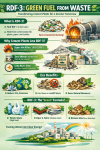
RDF-3: The Waste Fuel Cement Plants Love From waste to clean energy, cement plants worldwide—including Thailand—are shifting from costly coal to RDF, cutting costs and carbon emissions in a serious way. RDF-3 (Fluff RDF) is the star of the industry: small size, fast burning, high calorific value, and zero leftover ash. Global Trends: China, Japan, and South Korea are moving toward premium SRF with advanced smart-sorting technology. Thailand is catching up fast: Major cement plants target 50–100% RDF usage, backed by “Trash-to-Cement” models and the new TIS RDF standard. RDF-3 is not just an “alternative fuel” — it’s the fuel of the future, helping cement plants truly go green.
15 Mar 2026
SO OK INSIGHT: Thailand Flood Crisis 2026 – Lessons from Nature Shaking the Foundations of the Thai Economy October 5, 2026
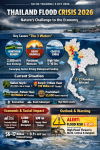
Flood Crisis 2026: When Nature Challenges Thailand’s Economic Structure SO OK TRADING | October 5, 2026 Thailand is facing one of the most significant flood events of the decade — a moment when nature becomes a major test for the country’s economic framework and water management systems, demanding resilience against sudden change. Persistent monsoon rains combined with cold air masses from China have triggered the phenomenon known as the “Three Waters”: Northern Runoff: The Chao Phraya Dam forced to discharge at 2,500 m³/s. Accumulated Rainfall: Heavy downpours intensifying waterlogged lowlands. Coastal Surge: High tides between October 5–10 slowing drainage into the Gulf of Thailand. Together, these factors have created immense natural pressure, leading to widespread flooding across more than 27 provinces in the North, Central, and Eastern regions. This analysis from SO OK TRADING explores the 2026 flood crisis in depth — from meteorological causes and current conditions to economic impacts and future outlook. It highlights that this flood is not merely a natural disaster, but a warning signal underscoring the urgent need for Thailand to strengthen its economic structure and resource management systems to withstand a rapidly changing world.
5 Oct 2026
Aluminum Coil Global Outlook 2027: China Still Dominates, But the World Is Reshaping the Price Equation Toward Green Aluminum and Premium Conversion SO OK TRADING | 16 SEP 2026
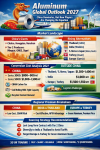
Aluminum Coil for Beverage and Food Packaging: Global Outlook 2027 By SO OK TRADING | 16 September 2026 ✨ Introduction The year 2027 marks a turning point for the global aluminum coil market for beverage and food packaging. While China continues to dominate as the largest producer and exporter, mounting pressures from Carbon Border Adjustment Mechanisms (CBAM), rising demand for recycled content, and expanding production capacity from competitors such as Thailand, India, Japan, Turkey, and Europe are reshaping the industry landscape like never before. Global buyers are now seeking new alternatives that balance cost, quality, and sustainability. ASEAN producers, particularly UACJ Thailand, stand out with their AFTA tariff advantages and Japanese-level manufacturing standards. The aluminum packaging market is no longer just about “price.” It has evolved into a matter of sourcing strategy, requiring careful consideration of conversion costs, regional premiums (MJP / Rotterdam), and the growing trend of Green Aluminum, which is rapidly becoming the new global standard. As a trusted business partner from Thailand, SO OK TRADING provides in-depth insights and global market outlooks to help companies and brands plan their procurement strategies effectively and stay ahead in the new era of the aluminum industry. SO OK TRADING — FAST • SHARP • RELIABLE Your true partner in the aluminum packaging industry from Thailand
16 Sept 2026
This website uses cookies for best user experience, to find out more you can go to our Privacy Policy and Cookies Policy
Powered By MakeWebEasy Logo MakeWebEasy