“Bio Mass Revolution: Wood Pellets Driving Clean Energy and Transforming Asia’s Industrial Future”
Biomass Wood Pellets: The Clean Energy of the Future
SO OK TRADING : June 8, 2026
The world is accelerating toward Carbon Neutrality and reducing greenhouse gas emissions, making Wood Pellets (compressed biomass fuel) rise from being an “alternative fuel” to becoming a “primary fuel” in many sectors—industry, power generation, and households.
Main Applications
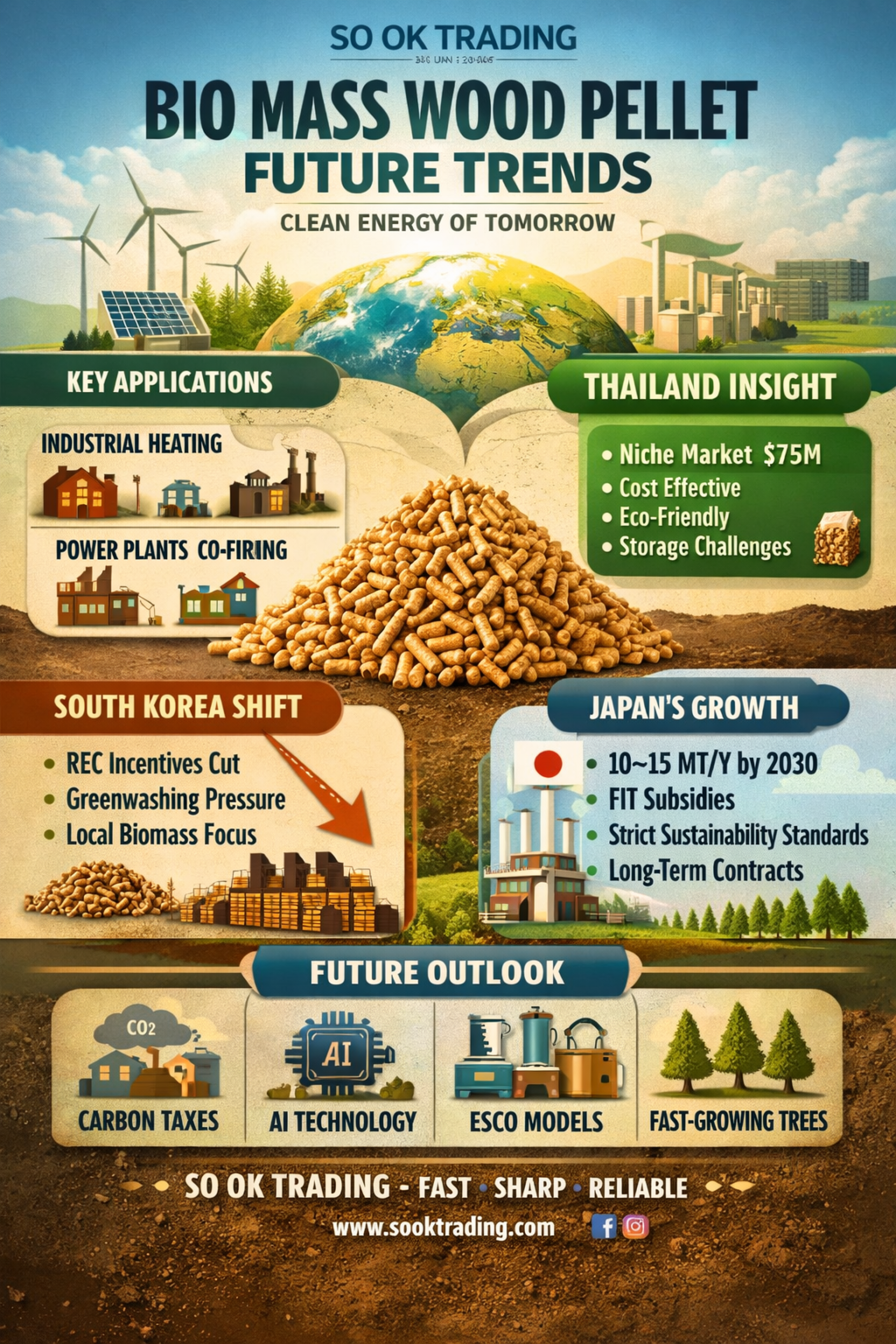
Industrial Heating Large factories such as paper, chemicals, and food are switching from coal/heavy oil to wood pellets in steam boilers, reducing carbon emissions and avoiding environmental taxes.
Power Plants & Co-firing Coal-fired power plants mix 10–20% wood pellets to reduce pollution without building new plants. Dedicated biomass power plants also require high-quality pellets for stable electricity generation.
Residential Heating In Europe and North America, bagged wood pellets are popular for fireplaces and home boilers because they provide high heat, produce little ash, and are easy to use.
Situation in Thailand
Although the global market is booming, in Thailand it remains a niche market worth about 2.6 billion baht, mainly used in industrial factories for steam and heat production—not in large-scale power plants as abroad.
Advantages
Cost-saving compared to heavy oil and LPG
Easy to store, requires little space
Environmentally friendly, low ash emissions
Limitations
Competes with cheaper raw biomass such as rice husks and wood chips
High investment required for boiler upgrades
High humidity in Thailand causes pellets to deteriorate quickly
Supply chain inconsistency
South Korea: From Boom to Slowdown
South Korea was once the largest importer of wood pellets in Asia but is now clearly entering a slowdown.
REC Benefit Cuts: Government reduced renewable energy credits, leaving power plants with less incentive to use imported pellets
Environmental Pressure: Greenwashing scandals and illegal logging have damaged the image of wood pellets
Localization Policy: Government now supports domestically produced biomass instead
Impact on Thai Producers
Declining demand from Korea forces Thai producers to pivot toward Japan
Small factories that relied on exports to Korea are struggling to survive
Japan: Asia’s New Pillar
While Korea slows, Japan has become the fastest-growing market, with demand expected to reach 10–15 million tons per year by 2030.
Government Policy: Targets biomass energy to account for 3.7–4.6% of total electricity generation
FIT System: Biomass and coal co-firing plants receive subsidies for electricity, boosting purchasing power
Strict Standards: Producers must obtain international sustainability certifications such as FSC and SBP
Opportunities for Thai Producers
Japan is ready to sign long-term contracts (10–20 years) for energy security
But producers must upgrade quality and ensure transparent supply chain systems
Future Directions
Carbon Measures: If Thailand enforces the Climate Change Act and Europe tightens CBAM, Thai factories will be compelled to switch to clean energy
AI Technology: Using AI to detect moisture and sort raw materials will stabilize calorific values and improve competitiveness
New Business Models: Thai producers are adopting ESCO models—selling “steam” instead of pellets—to reduce factory investment risks
Fast-growing Tree Plantations: Eucalyptus and Acacia are being planted to build a stable supply chain
✨ Conclusion
Wood pellets are emerging as a clean energy source under global spotlight. Although Thailand has not yet “boomed,” once carbon measures are strictly enforced and producers meet international standards, the Thai market will be ready to leap forward and connect with Japan’s massive demand.
SO OK TRADING offers high-quality wood pellets with reliable supply. Contact us today!
Thank you very much.
SO OK TRADING : Your Business Partner SO OK TRADING : FAST SHARP RELIABLE
VISIT US AT : WWW.SOOKTRADING.COM FACEBOOK : SO OK TRADING