Share

“Bio Mass Revolution: Wood Pellets Driving Clean Energy and Transforming Asia’s Industrial Future”
Last updated: 8 Jun 2026
103 Views

 Biomass Wood Pellets: The Clean Energy of the Future
SO OK TRADING : June 8, 2026

The world is accelerating toward Carbon Neutrality and reducing greenhouse gas emissions, making Wood Pellets (compressed biomass fuel) rise from being an “alternative fuel” to becoming a “primary fuel” in many sectors—industry, power generation, and households.

 
Main Applications
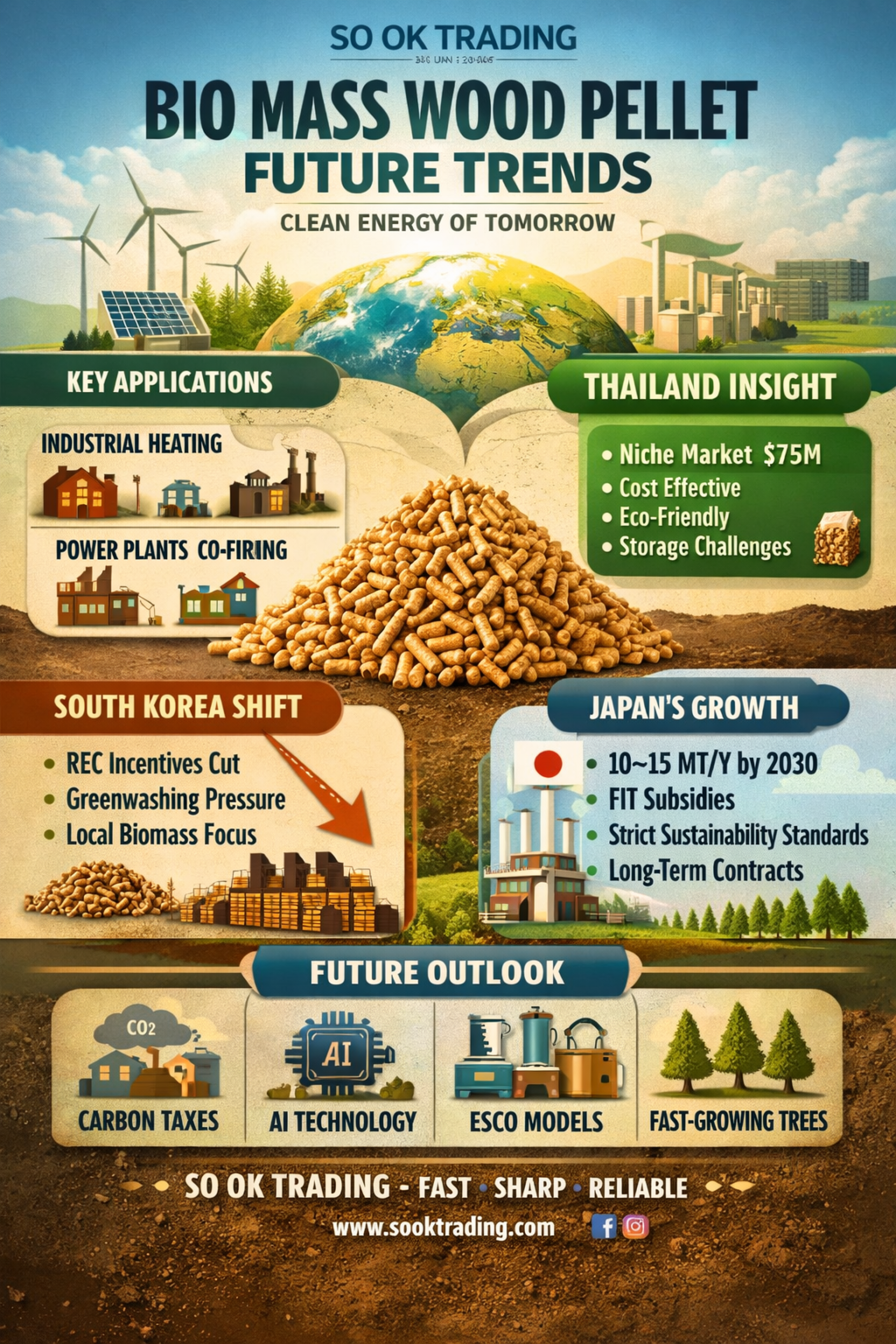
Industrial Heating Large factories such as paper, chemicals, and food are switching from coal/heavy oil to wood pellets in steam boilers, reducing carbon emissions and avoiding environmental taxes.
Power Plants & Co-firing Coal-fired power plants mix 10–20% wood pellets to reduce pollution without building new plants. Dedicated biomass power plants also require high-quality pellets for stable electricity generation.
Residential Heating In Europe and North America, bagged wood pellets are popular for fireplaces and home boilers because they provide high heat, produce little ash, and are easy to use.
 
Situation in Thailand
Although the global market is booming, in Thailand it remains a niche market worth about 2.6 billion baht, mainly used in industrial factories for steam and heat production—not in large-scale power plants as abroad.

Advantages

Cost-saving compared to heavy oil and LPG
Easy to store, requires little space
Environmentally friendly, low ash emissions
Limitations

Competes with cheaper raw biomass such as rice husks and wood chips
High investment required for boiler upgrades
High humidity in Thailand causes pellets to deteriorate quickly
Supply chain inconsistency
 
South Korea: From Boom to Slowdown
South Korea was once the largest importer of wood pellets in Asia but is now clearly entering a slowdown.

REC Benefit Cuts: Government reduced renewable energy credits, leaving power plants with less incentive to use imported pellets
Environmental Pressure: Greenwashing scandals and illegal logging have damaged the image of wood pellets
Localization Policy: Government now supports domestically produced biomass instead
Impact on Thai Producers

Declining demand from Korea forces Thai producers to pivot toward Japan
Small factories that relied on exports to Korea are struggling to survive
 
Japan: Asia’s New Pillar
While Korea slows, Japan has become the fastest-growing market, with demand expected to reach 10–15 million tons per year by 2030.

Government Policy: Targets biomass energy to account for 3.7–4.6% of total electricity generation
FIT System: Biomass and coal co-firing plants receive subsidies for electricity, boosting purchasing power
Strict Standards: Producers must obtain international sustainability certifications such as FSC and SBP
Opportunities for Thai Producers

Japan is ready to sign long-term contracts (10–20 years) for energy security
But producers must upgrade quality and ensure transparent supply chain systems
 
Future Directions
Carbon Measures: If Thailand enforces the Climate Change Act and Europe tightens CBAM, Thai factories will be compelled to switch to clean energy
AI Technology: Using AI to detect moisture and sort raw materials will stabilize calorific values and improve competitiveness
New Business Models: Thai producers are adopting ESCO models—selling “steam” instead of pellets—to reduce factory investment risks
Fast-growing Tree Plantations: Eucalyptus and Acacia are being planted to build a stable supply chain
 
✨ Conclusion
Wood pellets are emerging as a clean energy source under global spotlight. Although Thailand has not yet “boomed,” once carbon measures are strictly enforced and producers meet international standards, the Thai market will be ready to leap forward and connect with Japan’s massive demand.

 
SO OK TRADING offers high-quality wood pellets with reliable supply. Contact us today!

Thank you very much.

 
SO OK TRADING : Your Business Partner SO OK TRADING : FAST SHARP RELIABLE

VISIT US AT : WWW.SOOKTRADING.COM FACEBOOK : SO OK TRADING

Related Content
Global Plastic Crisis! Naphtha Shortage Shakes Industries Worldwide — From Petrochemical Shock, War, Energy, and Environment to a Major Transformation of the Plastic Industry   : SO OK TRADING : 29 APR 2026
Global Plastic Crisis! Overlapping Shocks Shake the Industry At the beginning of 2026, the world faced a “Petrochemical Shock” that sent plastic raw material prices soaring by more than 37%. Conflicts in the Middle East and the closure of the Strait of Hormuz caused a severe shortage of naphtha—the lifeblood of the plastic industry—across the globe. Japan and South Korea were forced to cut production, while China accelerated its shift to alternative energy. Europe and the United States also struggled under surging costs. At the same time, the world is grappling with an environmental crisis from overflowing plastic waste. Recycling rates remain at only 10%, while the other 90% is landfilled, incinerated, or leaked into the environment. Alarmingly, microplastics have already entered the food chain and the human body. This is not just a “temporary crisis” but a structural turning point for the global plastic industry. Companies that adapt quickly—embracing Bio-based Plastics, Chemical Recycling, and the Circular Economy—will emerge as leaders in the new era now taking shape. SO OK TRADING is ready to be your trusted business partner. FAST • SHARP • RELIABLE
29 Apr 2026
“Global Raw Material Crisis: Hormuz Eases, Energy Landscape Transforms — Oil Plunges, Naphtha Softens, Fertilizer Remains Costly”
Global Raw Material Crisis: From Middle East Conflict to the Recovery of Energy and Industrial Markets SO OK TRADING | April 18, 2026 After the tension in the Strait of Hormuz that sent oil and raw material prices soaring, the world is now witnessing clear signs of easing and recovery. Crude oil prices have dropped sharply, naphtha is gradually stabilizing though still costly, and chemical fertilizers remain expensive. Yet the overall direction is a tangible return to balance. ⛽ Oil: Prices fell immediately after Iran reopened the Strait of Hormuz ⚗️ Naphtha: Supply is returning, but full recovery will take time
18 Apr 2026
RDF (เชื้อเพลิงชีวมวลจากวัสดุเหลือใช้และขยะ): เชื้อเพลิง RDF คืออะไร และ ทำประโยชน์อะไรกับ Green Energy ได้บ้าง
Refuse Derived Fuel : RDF โดยทั่วไปนิยมเรียกว่า เชื้อเพลิงขยะ แต่สำหรับคณะกรรมาธิการการทรัพยากรธรรมชาติและสิ่งแวดล้อม สนช. เรียกว่า ก้อนเชื้อเพลิงขยะ และได้มีการพิจารณาศึกษา RDF ซึ่งเป็นประโยชน์กับการจัดการขยะชุมชน รวมทั้งขยะอุตสาหกรรมที่ไม่ใช่ขยะอันตราย ซึ่งมีการทิ้งปะปนกันจนแยกออกได้ยาก จึงขออนุญาตสรุปเนื้อหาของผลการศึกษาจากคณะกรรมาธิการพร้อมแนวคิดจากประสบการณ์ เพื่อเป็นแนวทางการจัดการขยะแบบไทยๆ ดังนี้ การผลิต RDF เป็นแนวทางที่ประเทศพัฒนาแล้วใช้อยู่ โดยเฉพาะอย่างยิ่งในภาคพื้นยุโรป เช่น เยอรมนี สวีเดน ฟินแลนด์ ฯลฯ ทั้งขยะใหม่และขยะเก่าที่ตกค้างในบ่อฝังกลบ สามารถนำมาผลิต RDF ได้ดี การผลิต RDF สามารถทำได้โดยเทคโนโลยีคนไทย เครื่องจักรผลิตในไทย ไปจนถึงการนำเข้าเครื่องจักรคุณภาพสูงจากต่างประเทศในกรณีที่ต้องการผลิตจำนวนมากๆ ตั้งแต่ 100 ตันต่อวันขึ้นไป เมื่อปี พ.ศ. 2557 กรมพัฒนาพลังงานทดแทนและอนุรักษ์พลังงาน ได้ศึกษาพื้นที่ศักยภาพเบื้องต้นว่า มีการผลิต RDF ไม่น้อยกว่า 90 แห่งทั่วประเทศ จากการสำรวจพื้นที่ผลิต RDF 21 แห่ง ใน 15 จังหวัด พบว่ามีการลงทุนกว่า 3,000 ล้านบาท เงินทุนหมุนเวียนสู่ชุมชน 570 ล้านบาท สามารถคืนทุนได้ในเวลา 10-13 ปี ราคาขายของ RDF เริ่มต้นตันละ 500-1,200 บาท ขึ้นอยู่กับคุณภาพและค่าความร้อนของ RDF (ปกติอยู่ระหว่าง 3,000-5,000 กิโลแคลอรี่ต่อกิโลกรัม) ปัญหาของการผลิต RDF ก็คือ ตลาด ซึ่งมีผู้ซื้อน้อยราย ความต้องการใช้ RDF น้อยกว่าปริมาณที่มีการผลิต อีกทั้งจุดรับซื้อมีเพียงไม่กี่จุดทั่วประเทศ เท่าที่มีโรงงานผลิตปูนซีเมนต์ จากการที่มีการผลิต RDF จากบ่อฝังกลบและจากขยะใหม่ในปริมาณมาก RDF จึงล้นตลาดจนราคาซื้อขายไม่คุ้มค่าการลงทุน อีกทั้งโรงไฟฟ้าที่ใช้เชื้อเพลิงขยะส่วนใหญ่ก็มีภาระในการจัดการขยะตามสัญญากับองค์กรปกครองส่วนท้องถิ่น เมื่อราคาตํ่ามากๆ ทำให้เชื้อเพลิง RDF ถูกนำไปใช้ในโรงไฟฟ้าประเภทต่างๆ อย่างไม่เป็นทางการ ดังนั้น สมาคมการค้าพลังงานขยะ จึงได้มีหนังสือถึงประธานคณะกรรมการกำกับกิจการพลังงาน ให้มีการสนับสนุนยกระดับเชื้อเพลิงขยะให้เป็นเชื้อเพลิงเชิงพาณิชย์ เพื่อให้เกิดธุรกิจการค้าที่มั่นคงและเป็นที่ยอมรับของสถาบันการเงินต่างๆ พร้อมกันนี้ทางสมาคมการค้าพลังงานขยะ ยังได้มีเสนอแนวทางการจัดประเภทของ RDF ให้เหมาะสมกับสภาพความเป็นจริงของประเทศไทย เพื่อสะดวกต่อการส่งเสริมของภาครัฐและสามารถกำหนดราคาซื้อขายได้อย่างเหมาะสมและเป็นธรรมต่อทุกฝ่าย ประเภท กระบวนการผลิตเชื้อเพลิง (Method of Manufacture) กลุ่มลูกค้าที่ใช้ RDF RDFRDF – 1 RDF เกรดพรีเมียม (Solid Recovered Fuel : SRF) ผ่านการย่อย-คัดแยกชนิด และขนาดด้วยเครื่องจักร มีขนาด RDF 50-100 มิลลิเมตร ค่าความร้อนสูง อุตสาหกรรมปูนซีเมนต์ และโรงงานอุตสาหกรรม RDF – 2 RDF คุณภาพสูง ผ่านเครื่องย่อย-คัดแยกชนิดและขนาด RDF มีขนาด 90-150 มิลลิเมตร ค่าความร้อนสูง โรงไฟฟ้าพลังงานขยะ และเป็นเชื้อเพลิงเสริมโรงไฟฟ้าชีวมวล RDF – 3 RDF คุณภาพปานกลาง ผ่านการย่อยและคัดแยกเบื้องต้น ขนาด RDF 200-300 มิลลิเมตร ค่าความร้อนปานกลาง-สูง โรงไฟฟ้าขยะทั่วไป RDF – 4 RDF จากบ่อฝังกลบ ผ่านการร่อนด้วยเครื่องจักร แยกดินออก RDF มีขนาดใหญ่เล็กตามสภาพ ต้องนำไปปรับปรุงคุณภาพก่อนใช้เป็นเชื้อเพลิง ลูกค้าที่มีระบบปรับปรุงคุณภาพขยะ ขอยกตัวอย่างบทสรุปจากสมุดปกขาว “เชื้อเพลิงขยะ (RDF) ทางออกของการจัดการขยะชุมชน” 1. โรงงานปูนซีเมนต์ทั้ง 4 แห่งในประเทศไทย ที่รับซื้อ RDF ในพื้นที่มีไม่ทั่วถึงเพียงพอที่จะรับขยะชุมชน 2. ภาคตะวันออก ภาคตะวันออกเฉียงเหนือ และภาคใต้ตอนบน ไม่มีโรงงานปูนซีเมนต์ตั้งอยู่ 3. ราคาเชื้อเพลิงจากฟอสซิล มีผลต่อราคาและการรับซื้อ RDF 4. องค์กรปกครองส่วนท้องถิ่นส่วนใหญ่ ไม่รู้วิธีการผลิต RDF ให้ได้คุณภาพ เพื่อให้ได้ราคาดี 5. รัฐบาลควรส่งเสริมและสนับสนุนให้องค์กรปกครองส่วนท้องถิ่น/ชุมชนผลิตเชื้อเพลิงขยะ RDF ที่มีคุณภาพโดยผ่านการทำสัญญาแบบ Supply Chain ในระยะยาว และสร้างระบบประกันคุณภาพและราคาขาย รวมทั้งค่าขนส่งสามารถปรับตามราคาเชื้อเพลิง 6. การผลิต RDF มุ่งเน้นการกำจัดขยะที่ตกค้างและเกิดขึ้นใหม่อย่างเป็นระบบ ควรใช้เป็นโอกาสให้มีผลต่อการคัดแยกขยะ และการเปลี่ยนแปลงพฤติกรรมคนไทยในอนาคต 7. การผลิต RDF มีผลประโยชน์ร่วมหลายด้าน เช่น ลดปัญหานํ้าเสีย การแพร่ระบาดของโรค สร้างรายได้ให้องค์กรปกครองส่วนท้องถิ่นและชุมชน ได้พื้นที่ขยะที่ฝังกลบหรือกองทิ้งมาใช้ประโยชน์ด้านอื่นๆ ลดการนำเข้าเชื้อเพลิง ลดความขัดแย้ง และเป็นการร่วมกับประชาคมโลกในการลดภาวะโลกร้อน “ขยะไม่ใช่ทอง แต่เป็นของเสียที่ต้องช่วยกันกำจัด” RDF 3: Recycling Energy
24 Nov 2025
This website uses cookies for best user experience, to find out more you can go to our Privacy Policy and Cookies Policy
Powered By MakeWebEasy Logo MakeWebEasy