“U.S. Corn at 0% Tariff – A New Game Transforming Thailand’s Feed Industry, From the Corn Belt to Fresh Business Opportunities” SO OK TRADING: May 17, 2026
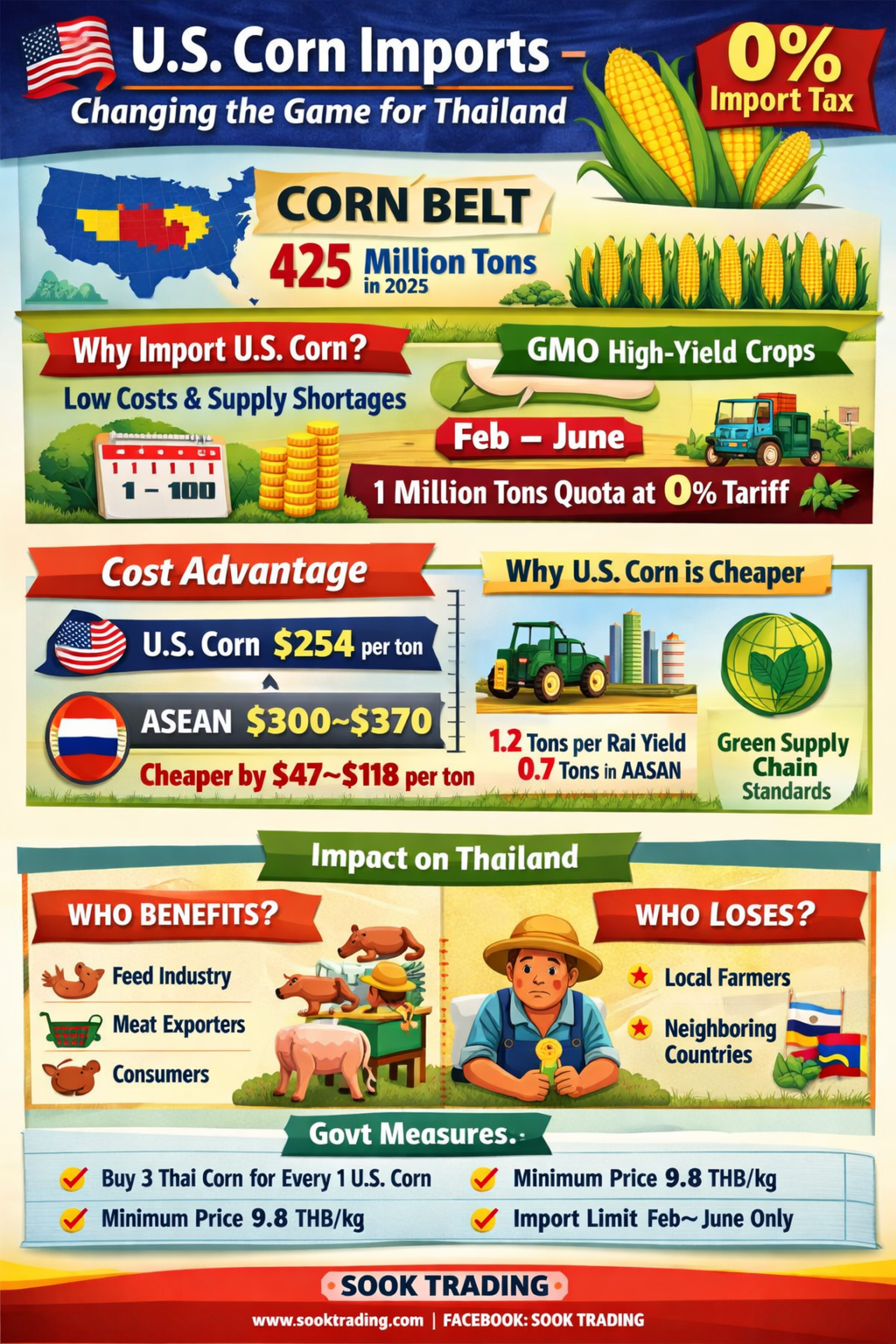
U.S. Corn – When a Giant Reshapes Thailand’s Feed Industry (0% Tariff under FTA Framework)
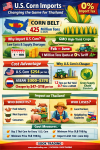
The United States is the world’s corn powerhouse, with 2025 production reaching 425 million tons. From the Corn Belt states of Iowa, Illinois, Nebraska, and Indiana, GMO seeds resistant to pests and disease deliver yields far above global averages. Corn is not only a feed crop but also a key raw material for renewable energy and food processing industries.
Why is Thailand Turning to U.S. Corn? Thailand’s livestock sector faces soaring feed costs and raw material shortages. To ease the pressure, the government has approved imports of 1 million tons of U.S. feed corn at 0% tariff between February 1 – June 30, a window that avoids overlap with domestic harvests.
U.S. corn is significantly cheaper than ASEAN corn, averaging $254 per ton, which is $47–118 per ton (≈1,600–4,000 THB) less than imports from Myanmar and Laos. Even with trans‑Pacific shipping costs, U.S. corn remains highly competitive.
⚙️ Why U.S. Corn is More Competitive
Economy of Scale: Vast farmland, advanced machinery, and efficient operations reduce labor costs.
Higher Yields: GMO corn produces about 1.2 tons per rai, compared to ASEAN’s 0.7–0.9 tons.
Logistics & Government Support: Strong rail and port infrastructure plus subsidies help maintain competitive export prices.
Environmental Standards – ASEAN’s Turning Point Since 2026, Thailand has enforced a “burn‑free corn” policy to combat PM2.5 pollution. ASEAN corn often faces issues with stubble burning and poor traceability, while U.S. corn meets strict Green Supply Chain standards, making it more attractive to Thai buyers.
Impact on Thailand – Who Wins, Who Loses?
Winners
Feed mills & livestock farmers: Raw material costs cut by up to 8%
Meat exporters: Stronger position against competitors like Brazil
Consumers: Stabilized pork, chicken, and egg prices
Thai–U.S. trade relations: Easier exports of jasmine rice and seafood products
Losers
Thai corn farmers (≈420,000 households): Risk of lower purchase prices
Neighboring countries (Myanmar, Laos): Loss of export revenue
️ Thailand’s Safeguard Measures
Importers must buy 3 tons of Thai corn before importing 1 ton of U.S. corn
Minimum purchase price set at 9.80 THB/kg
Import window limited to Feb–June; outside this period, tariffs rise to 72% + 180 THB/ton
Summary U.S. corn imports under the new framework are a game‑changer for Thailand’s feed industry. They reduce costs, boost export competitiveness, and raise environmental standards. Yet they also pose challenges for local farmers and ASEAN neighbors. Balancing import quotas with safeguard measures will be crucial to maintaining both global competitiveness and domestic agricultural stability.
SO OK TRADING FAST • SHARP • RELIABLE www.sooktrading.com Facebook: SO OK TRADING