“Recycling 5.0: The New Business Game — How AI and the Circular Economy Transform Waste into the Strategic Capital of the Future” SO OK TRADING|May 16, 2026

Recycling – From “Waste” to “Strategic Capital” In today’s world racing toward Net Zero and the Circular Economy, recycling is no longer just about protecting the environment. It has become a new global business mandate that every industry must adapt to — both to reduce carbon footprints and to secure future resource stability.
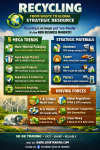
♻️ 5 Recycling Trends Transforming Global Business
Mono-Material Packaging: Single-material packaging simplifies sorting and produces higher-quality recycled plastics.
Food-Grade Plastics: rPET and rHDPE are now widely used in food and beverage packaging after regulatory approval.
Upcycled Premium Products: PET bottles become sportswear; glass and metal waste turn into luxury furniture.
Regulation & Carbon Tax: Mandatory recycled content ratios and carbon footprint accounting reshape supply chains.
Advanced Recycling: Chemical recycling restores complex plastics into pure raw materials, enabling endless reuse.
⚡ Metal Recycling: From Scrap Yard to Strategic Industry
Aluminum: The green metal of EVs, saving 95% energy when recycled, enhanced by AI sorting for high purity.
Copper: The heart of clean energy; urban mining from e-waste supplies strategic copper, cutting emissions by 85%.
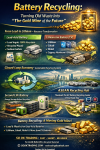
Lead: Over 90% recycled in closed-loop systems, powering UPS batteries for data centers and solar storage.
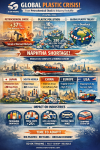
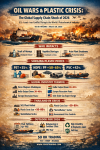
Plastics: Global supply chains now mandate recycled content, with chemical recycling delivering virgin-like quality.
Driving Forces of the Recycling Economy
Market value soaring to $1.6 trillion.
Global regulations like PPWR and EPR enforce producer responsibility.
AI & robotics achieve 95% precision in waste sorting.
Blockchain transparency prevents greenwashing.
Urban mining supplies critical resources for EVs and data centers.
Global Landscape: Opportunities & Contradictions
Worldwide recycling rates average only 19%, despite growth.
Europe leads with strict regulations and rates above 50%.
Asia-Pacific holds 41% of the market, with China and South Korea leading EV battery recycling.
North America invests heavily in polymer centers and advanced technologies.
For Business Recycling is the New S-Curve, blending innovation, regulation, and sustainability.
Early adopters gain cost advantages and market access.
Late movers risk carbon taxes and exclusion from supply chains.
Conclusion: Recycling is not just “waste reused” — it is strategic capital that will define the future of global business and trade in the coming decade.
SO OK TRADING Your Business Partner FAST • SHARP • RELIABLE www.sooktrading.com Facebook: SO OK TRADING