“Trump–Xi Summit 2026: The Big Deal Shaking the World — A Showdown of Economy, Energy, and Technology” : SO OK TRADING : 14 MAY 2026
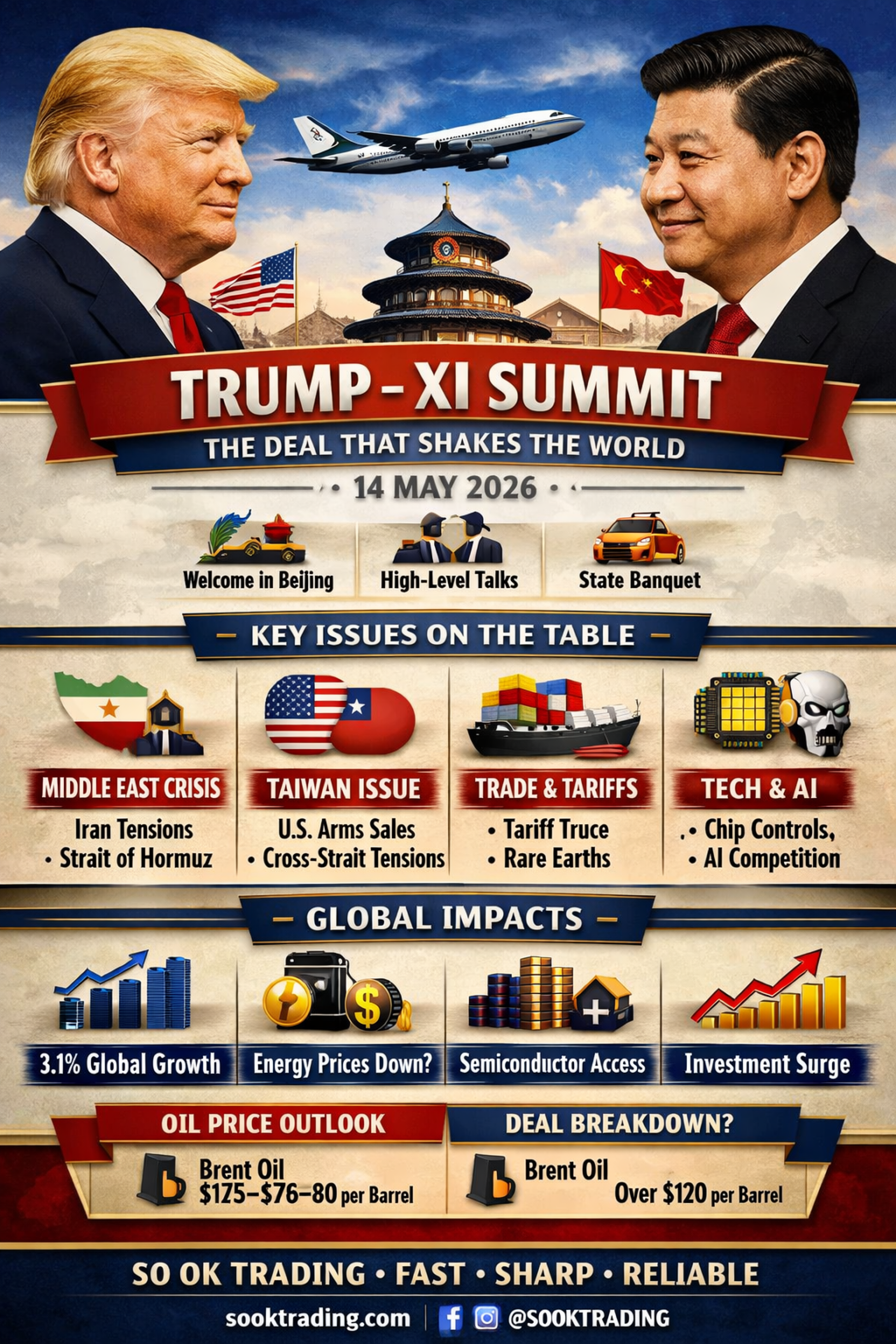
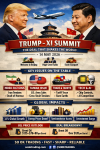
Trump–Xi Summit: The Big Deal Shaking the World — Economy, Energy, and Technology
SO OK TRADING : 14 MAY 2026
✈️ Highlights of the Visit and Schedule
Grand Welcome: President Trump arrived in Beijing aboard Air Force One, greeted with a red carpet and honor guard by Chinese Vice President Han Zheng.
Summit Meeting: Official talks with President Xi Jinping began on May 14.
Special Events: Visit to the Temple of Heaven and attendance at the state banquet.
Four Hot Issues on the Negotiation Table
Middle East War
The U.S. wants China to pressure Iran to reopen the Strait of Hormuz.
China plays a crucial role as Iran’s largest oil buyer.
Taiwan
Trump declared he would raise the issue of U.S. arms sales to Taiwan.
China may use this as leverage to negotiate concessions on other sanctions.
Trade and Tariffs
Both sides are working to extend the “trade truce” to avoid a tariff war.
Rare earths, vital for semiconductors and EVs, are a key topic.
Technology and AI
China is pushing the U.S. to ease restrictions on advanced technology exports.
Global CEOs including Elon Musk (Tesla), Tim Cook (Apple), and Jensen Huang (Nvidia) joined the delegation for direct talks.
Impact on the Global Economy
Global Trade: Extending the tariff truce could support the IMF’s forecast of 3.1% global growth.
Energy and Inflation: Reopening oil routes would lower production costs worldwide, easing inflationary pressures in both China and the U.S.
Technology Supply Chains: Access to rare earths and easing sanctions will be decisive for the future of semiconductors and AI.
Global Capital Markets: A positive outcome would trigger capital inflows into equities and risk assets.
Oil Price Scenarios and Impact on Thailand
Deal Success: Brent crude could fall to $75–80 per barrel, with Thai retail fuel prices dropping within 1–2 weeks.
Deal Failure: If the U.S. takes military action, oil prices could surge past $120 per barrel, worsening inflation and living costs in Thailand.
“Showdown” Strategy and Iran’s Conditions
Iran presented five conditions, including halting attacks on Lebanon, lifting naval blockades, and compensating war damages.
U.S. Vice President JD Vance stressed: “Iran must never possess nuclear weapons.”
Grand Bargain Model: The U.S. may trade concessions on Taiwan and AI chips for China’s pressure on Iran to cut oil purchases.
Conclusion
This summit is a “showdown game” between two superpowers that together account for 42% of global GDP. If the U.S. concedes on Taiwan and tariffs, China may push Iran to retreat, potentially easing the Middle East conflict and restoring global economic stability.
SO OK TRADING : FAST • SHARP • RELIABLE Your trusted business partner in a rapidly changing world
VISIT US AT : WWW.SOOKTRADING.COM FACEBOOK : SO OK TRADING