Share

“Oil Shock 2026: Energy Crossroads on the Global Stage — From War to Diplomacy, Volatile Prices Every Business Must Watch” : SO OK TRADING : 6 MAY 2026
Last updated: 6 May 2026
830 Views

“Global Oil 2026: From War to Diplomacy on the World Stage — Volatile Prices Every Business Must Watch” : SO OK TRADING : 6 MAY 2026

 
Market Overview
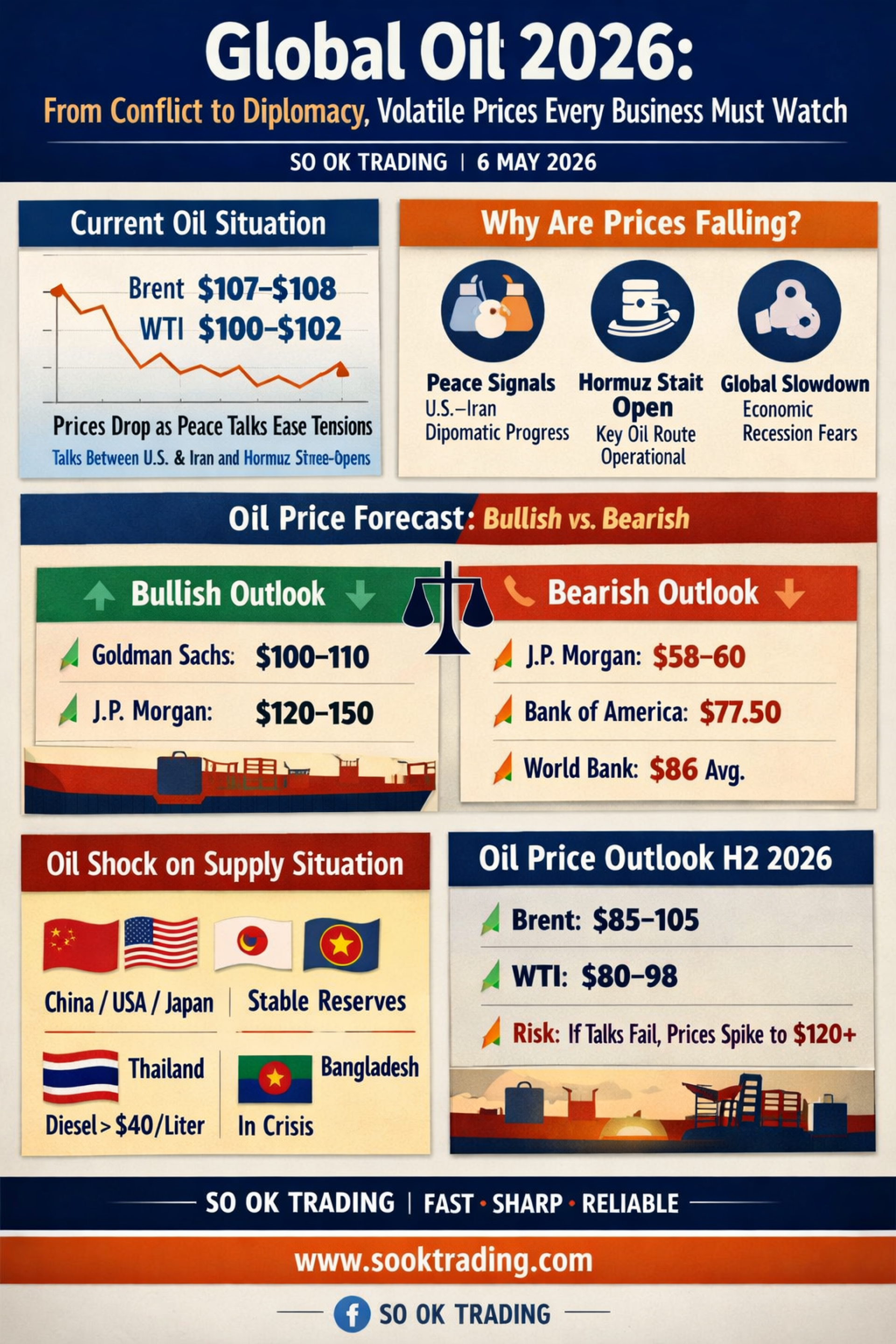
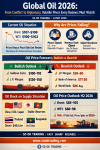
On May 6, 2026, global crude oil prices continued to decline for the second consecutive day after a sharp surge earlier this month. Brent fell to $107–108 per barrel, while WTI dropped to $100–102 per barrel. This adjustment came as supply concerns eased following peace signals between the U.S. and Iran, and the reopening of the Strait of Hormuz, a critical global oil transport route.

 
Factors Behind the Price Drop
Peace Signals from the U.S.: Donald Trump sent positive signals for negotiations and ordered a partial halt to military operations.
Transport Route Reopened: The Strait of Hormuz, previously disrupted, is expected to resume full operations.
Global Economic Slowdown: Recession fears have reduced oil demand.
 
⚖️ Financial Institutions’ Outlook
Bullish (Higher Prices):

Goldman Sachs expects Brent could rebound to $100–110 if conflicts intensify.
J.P. Morgan warns prices could surge to $120–150 if the Strait of Hormuz remains blocked.
Bearish (Lower Prices):

J.P. Morgan projects Brent may average only $58–60 throughout the year.
Bank of America estimates $77.50, with higher prices in the first half and gradual decline later.
World Bank forecasts an annual average of $86.
 
Regional Impacts (OIL SHOCK on Supply Situation)
China, U.S., Japan: Well-prepared with massive reserves and domestic production.
Thailand: Diesel prices remain above 40 THB/liter, requiring government subsidies through the Oil Fund.
Bangladesh: Facing severe crisis, universities ordered to close to reduce energy consumption.
ASEAN: Singapore and Vietnam struggle with inflationary pressure and limited reserves.
 
Price Outlook for H2 2026
Brent: $85–105
WTI: $80–98
If peace talks fail, prices could spike immediately to $120.
If peace progresses, prices may drop below $90.
 
Strategic Insights for Businesses
The global oil market is in a state of “crisis within crisis” with extreme volatility. Energy and transport-related businesses should:

Lock in costs in advance to mitigate risks.
Explore alternative energy sources such as LNG or renewables.
 
SO OK TRADING: Your Trusted Business Partner SO OK TRADING: FAST • SHARP • RELIABLE

Related Content
เกร็ดความรู้ การใช้เชื้อเพลิงชีวภาพในภาคอุตสาหกรรม  By SO OK
เกร็ดความรู้ เชื้อเพลิงชีวภาพ ในภาคอุตสาหกรรม การใช้เชื้อเพลิงชีวภาพในภาคอุตสาหกรรมช่วยลดต้นทุนและมลภาวะ โดยนำวัตถุดิบทางการเกษตร (เช่น ฟางข้าว ซังข้าวโพด) ของเสียจากโรงงาน (เช่น น้ำเสีย) และพืชพลังงาน (เช่น สาหร่าย) มาผลิตเป็นพลังงานชีวมวล (เม็ดเชื้อเพลิง) ก๊าซชีวภาพ (Biogas) ไบโอดีเซล และเอทานอล เพื่อใช้ทดแทนเชื้อเพลิงฟอสซิลในหม้อไอน้ำ โรงไฟฟ้า และยานยนต์ ซึ่งสนับสนุนเศรษฐกิจ BCG ลดการพึ่งพาพลังงานภายนอก และสร้างความมั่นคงด้านพลังงาน. ประโยชน์หลัก: ลดต้นทุนและพึ่งพาเชื้อเพลิงฟอสซิล: แทนที่ถ่านหิน น้ำมันเตา ด้วยพลังงานหมุนเวียน. ลดมลพิษ: ลดฝุ่น PM 2.5 กลิ่น และก๊าซเรือนกระจก. เพิ่มมูลค่าเกษตรกรรม: สร้างรายได้จากผลผลิตทางการเกษตรเหลือใช้ (Zero Burn). สร้างความมั่นคงทางพลังงาน: เพิ่มสัดส่วนการใช้พลังงานหมุนเวียนในประเทศ. รูปแบบการใช้งานในอุตสาหกรรม: เชื้อเพลิงชีวมวล (Biomass Fuel): นำฟางข้าว ซังข้าวโพด กากอ้อย มาอัดเป็นเม็ด (Energy Pellet) ใช้เป็นเชื้อเพลิงในหม้อเผาของโรงงาน (เช่น โรงงานปูนซีเมนต์). ก๊าซชีวภาพ (Biogas): เกิดจากการย่อยสลายสารอินทรีย์ในน้ำเสีย หรือของเสียจากโรงงานและฟาร์มสัตว์ นำมาใช้ผลิตไฟฟ้าหรือทดแทนแก๊ส LPG ได้. ไบโอดีเซล (Biodiesel) และเอทานอล (Ethanol): ผลิตจากพืชน้ำมัน (ปาล์ม) และพืชหัว (มันสำปะหลัง อ้อย) ใช้ผสมในน้ำมันดีเซลและเบนซิน (แก๊สโซฮอล์). พลังงานจากสาหร่าย (Algae Biofuel): สาหร่ายเติบโตเร็ว ดูดซับคาร์บอนได้ดี นำมาผลิตเป็นไบโอดีเซลและเชื้อเพลิงอื่นๆ. ตัวอย่างอุตสาหกรรมที่ใช้: อุตสาหกรรมปูนซีเมนต์/ก่อสร้าง: ใช้ชีวมวล (ฟางข้าว) แทนถ่านหิน. อุตสาหกรรมอาหาร: ใช้ก๊าซชีวภาพจากน้ำเสียเป็นพลังงาน. อุตสาหกรรมเคมีภัณฑ์และวัสดุชีวภาพ (Bio-based Industry): ใช้พืชผลทางการเกษตรเป็นวัตถุดิบหลักในการผลิตสารเคมี, PLA (Polylactic Acid). การพัฒนาอุตสาหกรรมเชื้อเพลิงชีวภาพเป็นส่วนสำคัญของโมเดลเศรษฐกิจ BCG (Bio-Circular-Green Economy) ของไทย เพื่อขับเคลื่อนสู่เป้าหมาย Net Zero และเพิ่มศักยภาพการแข่งขันของประเทศ. การพัฒนาเพื่อการ เชื้อเพลิงชีวภาพ มีหลากหลายประเภท ทั้งไม้สับ ไม้อัดแท่ง ไม้อัดแท่งสีดำ กะลาปาล์ม กะลามะพร้าว และเศษวัสดุทางการเกษตร ช่วยลดมลพิษ สนับสนุนเศรษฐกิจหมุนเวียน.
7 Dec 2025
“Gold Consolidation: Slowing Down… Yet Still on a Long-Term Uptrend. Resting to Surge — This Game Is Far from Over!”   SO OK TRADING : 15 MAY 2026
Gold Consolidation: Still a Long-Term Game to Watch After hitting record highs earlier this year, global gold prices (Gold Spot) are now consolidating within the $4,610 – $4,700 per ounce range. Meanwhile, domestic gold (96.5%) has dropped sharply to 71,100 – 71,750 THB, pressured by a stronger Thai baht. Despite short-term profit-taking and dollar strength, gold continues to be supported by geopolitical tensions and ongoing central bank purchases, which help sustain its long-term appeal.
15 May 2026
This website uses cookies for best user experience, to find out more you can go to our Privacy Policy and Cookies Policy
Powered By MakeWebEasy Logo MakeWebEasy