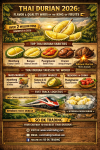
Thai Durian 2026: The King of Fruits Conquers Global Markets — From Orchards to China with Premium Flavor and Quality SO OK TRADING|April 30, 2026
Thai Durian 2026: From the “King of Fruits” to a Global Battle of Flavor and Quality
Imagine a Summer Morning
April 2026 — before the shell is even cracked open, the sweet and creamy aroma drifts through the air. This is the signal that Thailand’s “King of Fruits” has entered its most abundant harvest year in history.
From Soil to Flavor
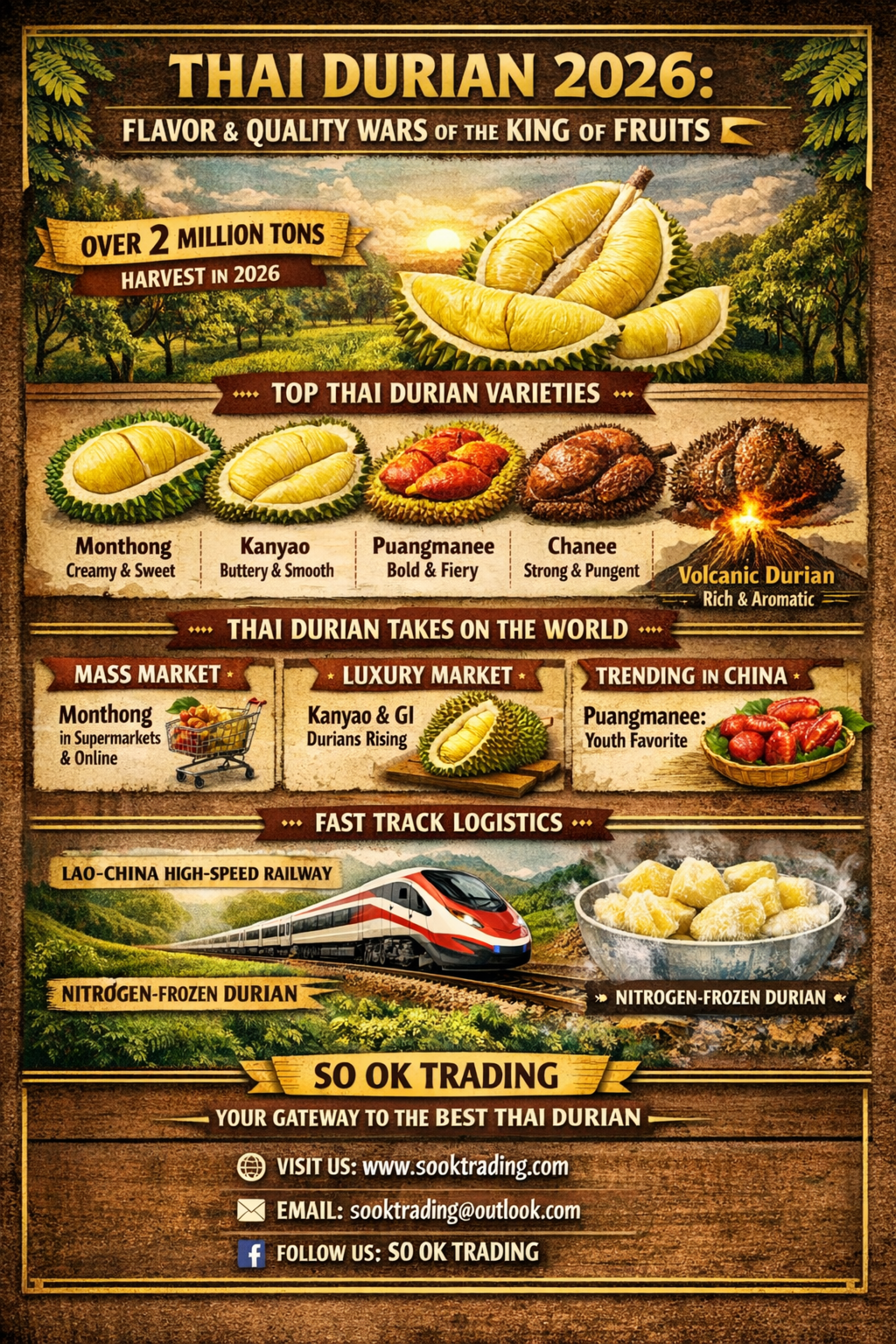
This year, Thai durian production has soared to 1.9–2.0 million tons, over 10% higher than previous years. But what truly wins the hearts of consumers worldwide is not just the quantity — it is the diverse flavors and unmatched taste.
Monthong: Thick flesh, golden yellow, mellow sweetness, mild aroma — perfect for first-time durian lovers.
Kanyao: Silky, cream-like texture, balanced sweetness — a premium durian often described as “melting in the mouth.”
Puangmanee: Small, hand-sized fruit, deep orange flesh, bold sweetness — popular among younger generations.
Chanee: Strong aroma, sharp sweetness — favored in Singapore and markets that enjoy intense flavors.
Volcanic Durian: Dry yet tender flesh, fragrant notes from ancient volcanic soil — a taste that tells the story of the land.
From Thai Orchards to Global Markets
China remains the largest market for Monthong. Yet in 2026, Chinese consumers are seeking durians with a story — GI-certified varieties such as Sisaket Volcanic Durian or Long Lap Lae from Uttaradit are rising stars.
Mass Market: Monthong dominates online platforms and supermarkets.
Luxury Market: Malaysia’s Musang King and Black Thorn target premium buyers, while Thailand counters with Kanyao and GI durians.
Emerging Trend: Puangmanee is gaining popularity among Chinese youth for its small size and bold sweetness.
Flavor Reflected in Price
Although average fresh durian prices have dropped to 90–110 THB/kg, premium varieties maintain their high value. For example, Kanyao sells in Hong Kong at thousands of baht per kilogram, while Volcanic Durian builds prestige in niche markets.
Logistics and Innovation
To preserve freshness and authentic taste, Thailand now relies on the Thai–Lao–China railway as the main transport route, cutting delivery time and better maintaining durian’s natural sweetness compared to sea freight. Additionally, nitrogen-frozen durians and crispy durian chips have become popular souvenirs.
SO OK TRADING: Your Trusted Business Partner
FAST • SHARP • RELIABLE
www.sooktrading.com sooktrading@outlook.com Facebook: SO OK TRADING
For inquiries or orders of premium Thai durians from trusted orchards in Chanthaburi, please visit our website and click Give Inquiry, or email us directly.