Global & Thai Agricultural Market Story Q2/2026: Price Wars, Costly Fertilizer & The World Stage SO OK TRADING | April 23, 2026
Price Wars, Costly Fertilizer & The New Game of Global and Thai Agriculture Q2/2026
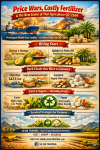
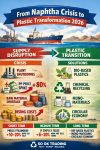
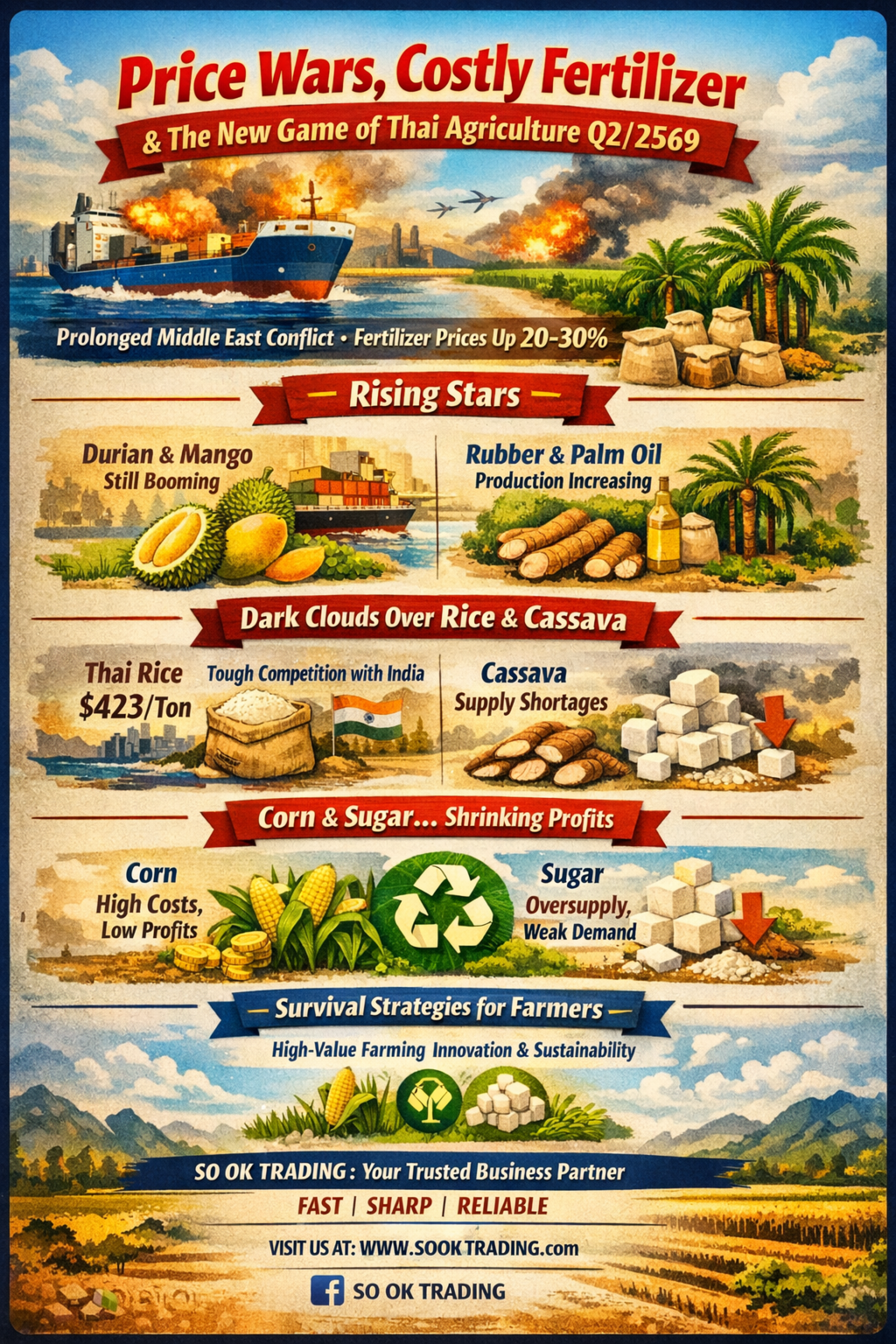
Introduction In the second quarter of 2026, Thai agriculture is stepping into a stage filled with pressure. The prolonged Middle East conflict, lasting more than 50 days, has repeatedly closed and reopened oil and naphtha shipping routes through the Strait of Hormuz, driving energy prices and freight costs relentlessly higher. At the same time, urea fertilizer prices — tied to natural gas — have surged by 20–30%, forcing Thai farmers to confront a “price war” that has seeped into every field and factory.
This is not just a global market battle; it is a struggle that has reached deep into Thailand’s agricultural heartland.
Rising Stars
Despite global pressures, premium fruits such as durian and mango remain in high demand in the Chinese market. Meanwhile, rubber and palm oil are seeing increased yields during their harvest cycles, allowing some farmers to keep smiling.
Shadows Over Rice and Cassava
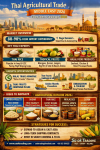
Thai rice faces fierce competition from India, which has resumed full-scale exports, capturing 44–46% of the global market share. Thai 5% white rice is priced at $423 per ton, while premium jasmine rice holds at $1,202 per ton. Yet, Thailand struggles against India and Vietnam in the price war.
Cassava remains firm in price due to supply shortages, but leaf disease and a strong baht pose major risks, potentially eroding farmer income.
Corn – The Golden Hour for Feed Mills
The global market is flooded with corn from the U.S. and Brazil, keeping prices low at $4.42–4.62 per bushel. For feed mills, this is a golden opportunity to secure cheap raw materials. For farmers, however, rising fertilizer and chemical costs mean profits are shrinking.
Sugar – From Sweet to Bitter
The global sugar market has entered a state of oversupply, with production surging from Brazil and India. Raw sugar prices have dropped to an average of 16.5–16.8 cents per pound. Although Thai sugarcane output has increased by more than 6%, export prices remain weak, reducing overall industry revenue. Meanwhile, Indonesia and the Philippines have cut imports, worsening the supply-demand imbalance.
Survival in the Era of Price Wars
With war and rising costs showing no mercy, Thai farmers must pivot toward high-value agriculture. Reducing reliance on monocrops, embracing innovation, and meeting sustainability standards are essential. Examples include no-burn corn cultivation and converting agricultural waste into renewable energy.
⚖️ A Stage Where Buyers Hold Power
Q2/2026 is a period when global markets are oversupplied, prices remain low, and buyers hold strong bargaining power. Thai producers face price wars and rising costs, but this is also a chance to reinvent value and elevate Thai agricultural brands on the world stage.
SO OK TRADING — Your Trusted Business Partner FAST • SHARP • RELIABLE www.sooktrading.com | Facebook: SO OK TRADING