“The Fertilizer Fallout & Stagflation Alert — SO OK INSIGHT: Hormuz Strait Crisis 2026 and the Future of Global Food Security”
Hormuz Strait Crisis 2026: When Fertilizer Becomes a “Scarce Resource” and the World Struggles to Breathe Amid Food Security and Stagflation Article by SO OK TRADING | April 14, 2026
The world is facing a major crisis that impacts not only energy but also food and the global economy. The Hormuz Strait crisis in April 2026 has turned fertilizer into a strategic commodity as valuable as oil, since this narrow passage is a vital artery for transporting natural gas and raw materials for nitrogen fertilizer production.
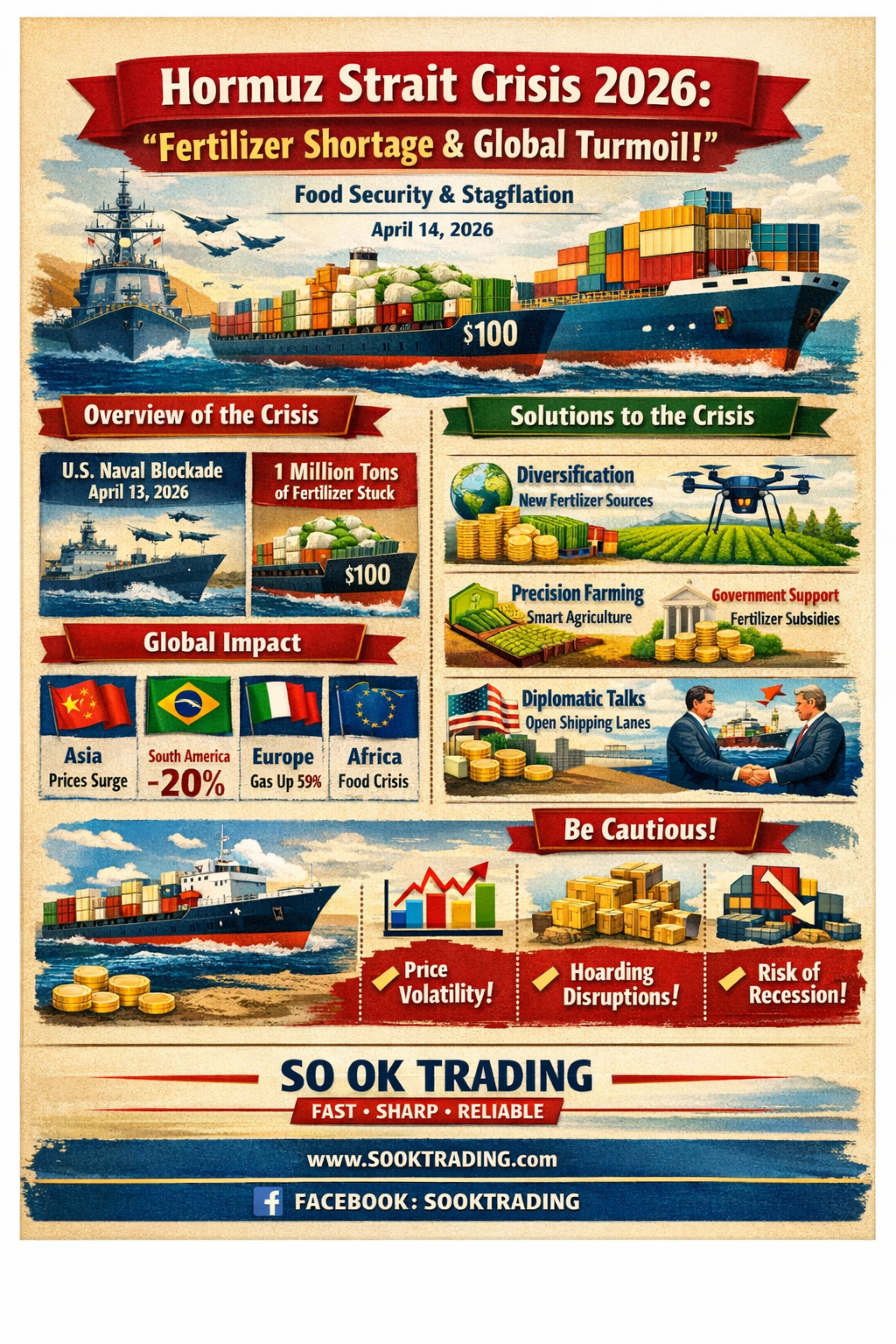
⚡ Breaking Point: The U.S. Naval Blockade
Operation begins: On April 13, the U.S. Navy announced a blockade of Iran’s shipping routes, halting transport almost entirely.
Immediate impact: Oil tankers were forced to turn back, while more than 1 million tons of fertilizer remained stranded in the Persian Gulf.
Energy shock: Oil surged past $100 per barrel, natural gas supplies tightened, and fertilizer production costs spiked.
Global Impact
Asia: Thailand holds 900,000 tons in stock, but prices rose due to speculation. China suspended fertilizer exports to secure domestic supply, while India faced severe shortages.
South America: Brazil imports 85% of its fertilizer needs, risking a 20% decline in crop yields.
Europe: Gas prices jumped 59%, pushing farmers to switch from corn and wheat to soybeans.
Africa: Farmers cannot afford fertilizer, raising the risk of a serious food crisis.
Perspectives from Key Players
FAO & IMF: Warn that fertilizer prices will remain high even if shipping lanes reopen.
Financial markets & central banks: See this as a “new wave of inflation” undermining past stabilization efforts.
Shipping industry: Forced to reroute via the Cape of Good Hope, raising freight costs by 3–4 times.
✅ Proposed Solutions: Fertilizer & Hormuz Crisis
Diversification — Secure new fertilizer sources from Canada, Morocco, Nigeria.
Precision Agriculture — Adopt smart farming to reduce excessive chemical use.
Government Measures — Subsidize fertilizer prices to keep farmers planting.
Diplomatic Negotiation — The most sustainable solution is reopening shipping lanes.
⚠️ Risks Ahead
Fertilizer and energy prices will remain highly volatile, even with partial reopening.
Hoarding and speculation may disrupt markets and inflate costs.
Without diplomatic progress by April, the crisis could escalate into a global recession with stagflation.
Conclusion
The Hormuz Strait crisis of 2026 is a stark warning that the world is entering an era where fertilizer is indispensable. Businesses and farmers must adapt wisely, leveraging technology and precision management, while closely monitoring diplomatic negotiations. As long as the blockade continues, any measures will only serve as temporary relief rather than a permanent solution.
SO OK TRADING — Your Trusted Business Partner FAST • SHARP • RELIABLE www.SOOKTRADING.com Facebook: SOOKTRADING