Middle East Conflict Shakes Global Packaging: Plastic Shortages – Aluminum Rises as the Infinite Recycling Future” Article by SO OK TRADING : April 11, 2026
Middle East Conflict Shakes Global Packaging: Plastic Disrupted – Naphtha Shortage Drives Aluminum Demand Article by SO OK TRADING : April 11, 2026
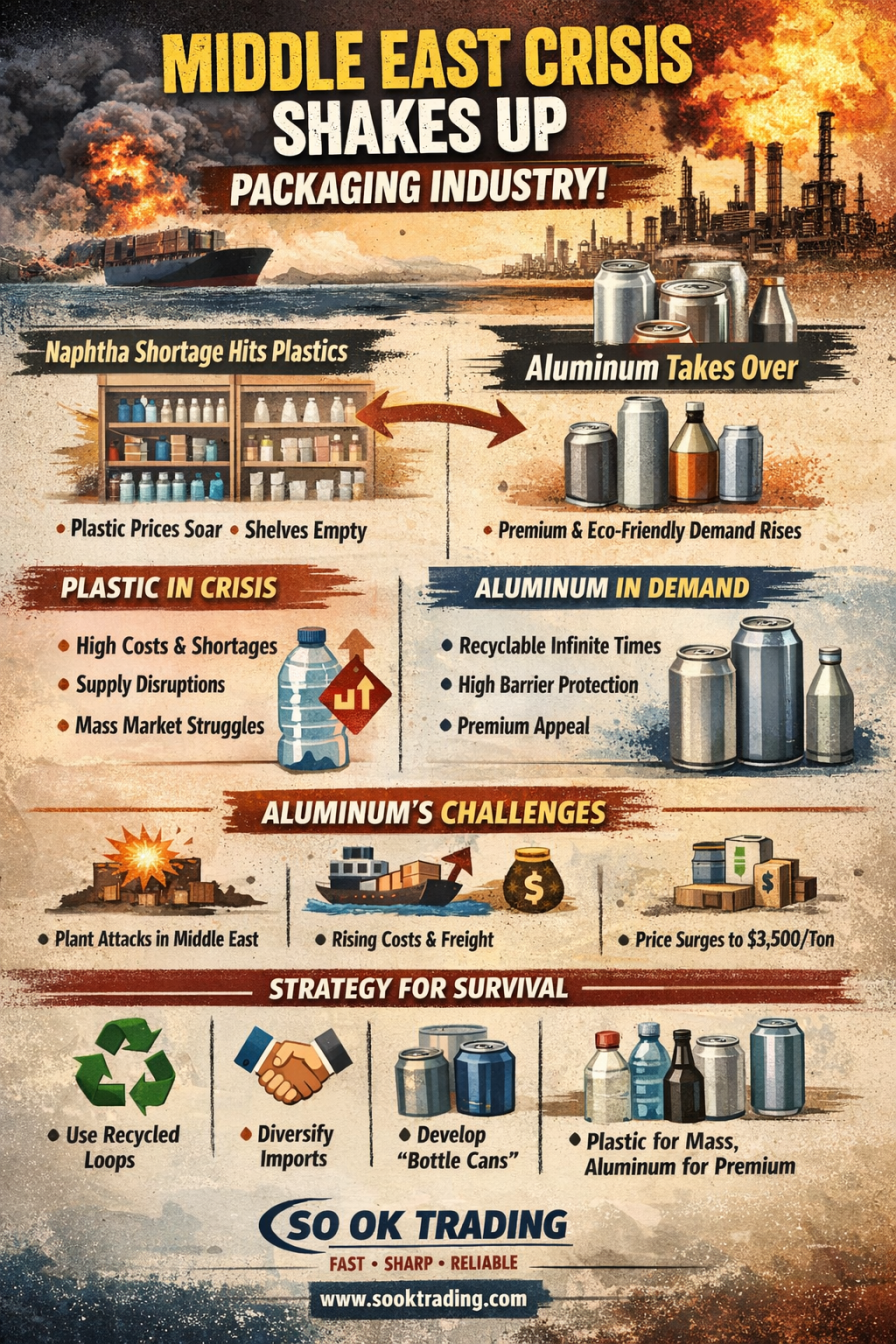
Imagine walking into a convenience store in 2026 and finding that half the plastic water bottles once lining the shelves are gone. Many plastic factories have halted operations due to a shortage of Naphtha, the critical raw material for producing plastic resins worldwide. As Naphtha supplies dry up, plastic prices surge uncontrollably, leaving manufacturers unable to manage costs. Everyday items — from instant noodle wrappers and shampoo bottles to stretch films and clear bags — are disappearing from the market.
In this turmoil, a material once considered more expensive — Aluminum — has suddenly become the hero. Brands are turning to it for its premium image, long-term stability, and the ability to be infinitely recycled without loss of quality.
Plastic: Once Cheap, Now Shaken
Plastic was the answer for mass markets thanks to low costs, light weight, and versatile molding. But with Naphtha shortages, prices fluctuate wildly, making business planning nearly impossible. Many producers have stopped accepting new orders, uncertain about raw material costs. This marks a turning point where both manufacturers and consumers begin to seek alternatives.
Aluminum: The Sudden Substitute
Although more costly, aluminum offers clear advantages:
Eco-friendly premium appeal: Aluminum cans and bottles elevate product value, and consumers are willing to pay more.
Superior technical properties: 100% light barrier, oxygen and heat resistance — ideal for craft beer, cold brew coffee, and premium skincare.
Infinite recyclability: Aluminum can be reused endlessly without degrading in quality, unlike plastics with limited recycling cycles.
Challenges Facing Aluminum
Aluminum is not immune to the Middle East conflict. Smelters in the region have been attacked, cutting production capacity nearly in half. Global market prices have spiked to $3,500 per ton, while rising energy and freight costs further inflate packaging expenses.
Strategies in a Dual Shortage
Use plastic for fast-moving mass products — if supply remains available.
Use aluminum for premium products to add value and meet sustainability demands.
Invest in closed-loop recycling systems, such as collecting cans at cafés or events, to reduce long-term costs and prepare for carbon taxes.
Diversify imports, sourcing from China or the U.S. to reduce reliance on the Middle East.
Develop innovative packaging like “Bottle Cans” — aluminum bottles with screw caps that combine the benefits of both plastic and aluminum.
Competing on Sustainability
Plastic will continue to dominate mass markets, but must evolve into bio-based plastics and designs that are easier to recycle. Aluminum, meanwhile, is rising as the “King of Recycling”, leading the premium and eco-conscious segments.
In an era of Naphtha shortages and soaring energy costs, competition is no longer measured by price alone, but by sustainability and material innovation — the true deciding factors for which brands will survive and thrive in a volatile global market.
SO OK TRADING: Your Business Partner SO OK TRADING – FAST • SHARP • RELIABLE VISIT US AT: www.sooktrading.com