“Thai Natural Rubber: The Soft Power Driving the World – A Strategic Commodity of the New Century in the EV and BCG Era. Thai Rubber: The Essential Resource Demanded by Global Industries” Article by SO OK TRADING | March 26, 2026
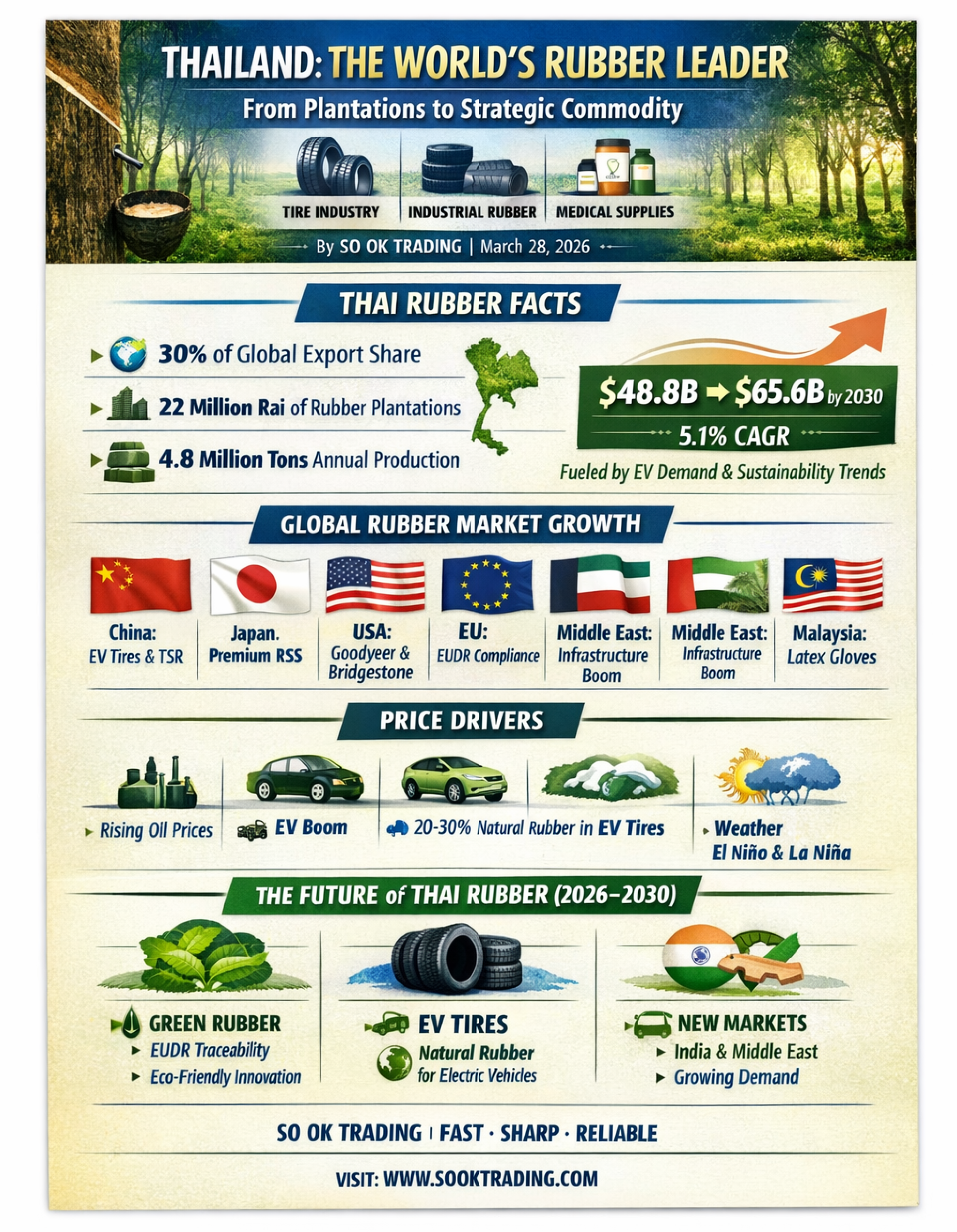
Thai Natural Rubber: From Plantations to Global Strategic Commodity
Automotive Tires · Industrial Rubber · Medical Supplies
Article by SO OK TRADING | March 28, 2026
Thailand as a Global Leader
Thailand is not just a rubber producer—it is the world’s leading exporter, holding more than 30% of global natural rubber exports. With over 22 million rai of plantations and an annual output of around 4.8 million tons, Thai rubber has become the backbone of the global automotive, medical, and construction industries.
Strengths Behind Thailand’s Leadership
Ideal Climate: Heavy rainfall in the South ensures high productivity.
Skilled Farmers: Expertise in tapping delivers latex quality trusted worldwide.
Integrated Industry: From plantations to tires, gloves, and medical supplies.
Global Market & Growth
The combined market for natural and synthetic rubber was valued at USD 48.8 billion in 2024, and is projected to reach USD 65.6 billion by 2030, with a CAGR of 5.1%. Natural rubber is expected to grow faster than synthetic rubber, driven by the EV industry, where higher proportions of natural rubber are required due to battery weight and torque.
Key Markets & Applications
China: The largest market, consuming TSR and compounds, especially for EV tires.
Japan: Prefers high-quality RSS for premium tires and engineering components.
USA: Major TSR demand, supplying brands like Goodyear, Bridgestone, and Continental.
South Korea: TSR and tires supporting Hyundai and Kia.
EU: Requires high-quality, eco-friendly rubber; strict EUDR compliance.
Middle East: Rising demand from infrastructure and transport expansion.
Malaysia: Imports concentrated latex for glove production and re-export.
Australia: Uses rubber for mining machinery and heavy trucks.
Price Drivers
Crude Oil Prices: Higher oil → costlier synthetic rubber → stronger demand for natural rubber.
EV Boom: EV tires use 20–30% more natural rubber.
Climate Factors: El Niño / La Niña directly impact yields and prices.
Future Outlook (2026–2030)
Green Rubber Era
EUDR regulations demand traceability; Thailand has an advantage with its farmer registration system.
EV Tires as a Golden Opportunity
Rising EV demand boosts exports of high-quality sheets and TSR.
BCG Economy
Expansion into eco-friendly products such as rubberized asphalt roads and shock-absorbing playgrounds.
New Market Expansion
India: Rapid automotive growth, insufficient domestic supply.
Middle East & ASEAN: Strong demand, but competition from Vietnam and Indonesia.
✨ Conclusion
Thai natural rubber is evolving from a “commodity” into a high-value strategic product. By adapting to global standards and seizing opportunities in the EV era, Thailand will not only maintain its leadership but also establish Thai Rubber as a global symbol of quality, sustainability, and innovation.
SO OK TRADING – FAST • SHARP • RELIABLE
Your trusted partner in the global rubber market
Visit us at: www.sooktrading.com
For inquiries or orders of Thai rubber—TSR20, compound rubber, or synthetic rubber for industrial use—please submit your request via the Give Inquiry section on our homepage or email us at sooktrading@outlook.com.