Share

“War Shakes the Global Packaging Industry: Supply Chain Disruption, Plastic Shortage & Aluminum Squeeze – From Crisis to New Business Opportunities” Article by SO OK TRADING | March 26, 2026
Last updated: 26 Mar 2026
2201 Views

ได้เลยครับ Mongkol — ผมช่วยแปลบทความนี้เป็นภาษาอังกฤษให้ครบถ้วนและยังคงโทนทางการตลาดที่ทรงพลังดังนี้ครับ:

 “War Reshapes the Packaging Industry – Plastic Stumbles, Aluminum Faces Shortages”
The Middle East conflict has triggered a petrochemical crisis that continues to ripple into the global packaging industry. Supply chain disruption is no longer distant—it is becoming a reality that must be closely monitored.
Article by SO OK TRADING | March 26, 2026


⚔️ War and Its Impact on Plastic

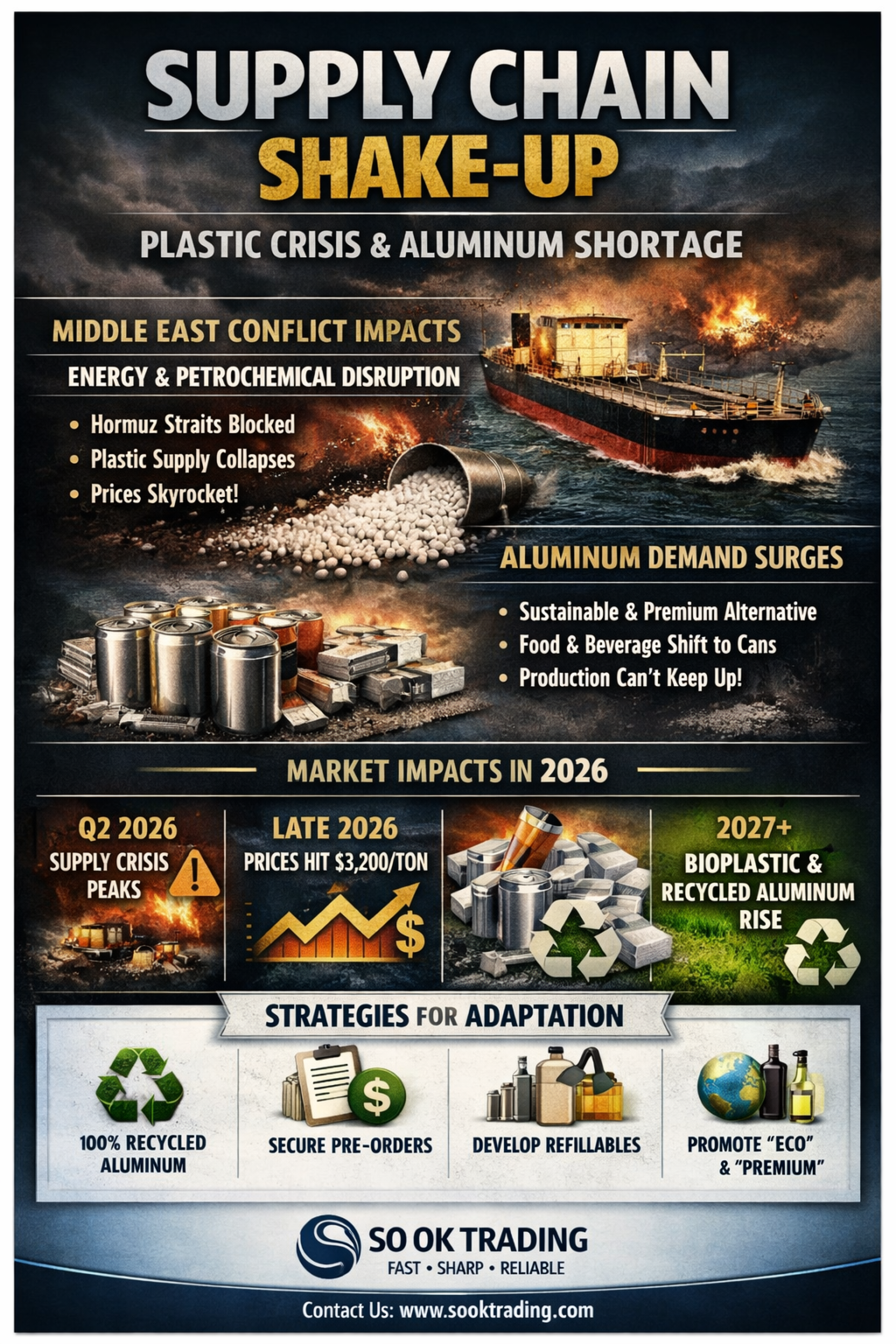
Hormuz Strait Blocked: Oil and petrochemical shipments halted, forcing many factories to suspend plastic resin production.
Rapid Stock Decline: In Thailand and Southeast Asia, plastic resin stockpiles are only sufficient until April–May 2026.
“Money Can’t Buy It”: Even with buyers willing to pay, supply cannot reach the market, creating a severe packaging plastic shortage.
 

Aluminum Packaging as the Alternative

100% Recyclable: Fully reusable, meeting ESG and Net Zero requirements.
Premium Image: Aluminum cans and packaging are perceived as more eco-friendly and upscale than plastic bottles.
Demand Surge: Food, beverage, and cosmetics industries are rapidly shifting to aluminum.
 

Aluminum Packaging Shortage Emerges

Transport Disruptions: Aluminum shipments from the Middle East face the same bottlenecks as plastics.
Production Capacity Shortfall: Middle Eastern smelters partially offline, reducing supply.
High Energy Costs: Aluminum smelting consumes vast electricity; European and Asian plants cut output.
Price Spike: Aluminum prices hit $3,200 per ton, the highest in years, burdening packaging producers.
 

Market Outlook 2026

Q2 2026: Peak supply crunch—both plastic and aluminum in shortage simultaneously.
Late 2026: Some stabilization, but prices remain higher than the previous year.
2027+: Market enters a “new balance” with recycled aluminum and bioplastics taking permanent market share.
 

Opportunities for Producers and Users

Shift to Green Packaging: Use recycled aluminum to differentiate and mitigate cost risks.
Secure Forward Contracts: Lock in prices and supply to hedge against volatility.
Develop Refillable Packaging: Enhance sustainability and reduce reliance on virgin materials.
Positive Consumer Communication: Turn crisis into opportunity by promoting “Eco-Friendly” and “Premium” packaging with NEO (Natural Plastic) or 100% recycled aluminum.
 

✨ Conclusion

This war has not eliminated plastic, but transport and energy costs have become major obstacles, pushing industries toward aluminum. Yet as demand outpaces supply, aluminum itself faces shortages.

This is a golden opportunity to pivot toward recycled packaging and innovation. In a world where supply chain disruption is the new normal, sustainable and circular materials will be the key to survival for the packaging industry.

 
SO OK TRADING: Your Trusted Business Partner
FAST • SHARP • RELIABLE
www.sooktrading.com


Related Content
ALUMINUM PRICE TREND 2026
An analysis of the aluminum market in 2026 indicates a likely continued market deficit and upward price pressure, driven by constrained supply and resilient demand from green energy sectors. However, significant volatility is expected due to policy uncertainties and the potential for new Indonesian supply to eventually balance the market. Key Drivers and Projections for 2026 Supply Side Analysis Capacity Constraints: China's primary aluminum output is approaching its self-imposed 45 million-tonne capacity cap, limiting global supply growth. Power Challenges: Smelters outside of China face intense competition for power from energy-intensive sectors like AI data centers, which are willing to pay higher prices for long-term contracts. This has kept significant capacity offline in Europe and the US. Production Disruptions: Outages and potential shutdowns at existing smelters in Iceland and Mozambique further tighten the market. Scrap Supply Pressure: The EU's planned implementation of the Carbon Border Adjustment Mechanism (CBAM) and potential scrap export tariffs in spring 2026 are expected to impact global scrap flows, creating regional shortages and price volatility. New Capacity: Indonesia is a key source of new supply, with several projects in the pipeline. However, analysts suggest the pace of the ramp-up may be slower than expected due to infrastructure and policy challenges, meaning it is unlikely to fully offset near-term tightness. Demand Side Analysis Green Transition Demand: Demand from "green" sectors such as solar panels, new energy vehicles, and energy transition infrastructure remains strong, providing fundamental support for the market. Substitution Effect: Aluminum's wide price discount relative to copper has encouraged substitution in electrical applications, acting as a tailwind for demand and prices. Construction and Automotive: The construction and automotive industries continue to be major consumers, with growing demand for lightweight, low-carbon aluminum products. Price Forecasts and Volatility The market is expected to remain in a deficit in 2026, with estimates ranging from 200,000 to 600,000 tonnes. This structural tightness is leading most analysts to forecast sustained or rising prices. Bullish Views: Analysts at Bank of America project prices of $3,000/tonne as early as 2026. J.P. Morgan also expects prices to approach $3,000/tonne in Q1 2026. ING forecasts an average price of $2,900/tonne for the year. Bearish/Conservative Views: Goldman Sachs is an outlier, forecasting prices to decline to $2,350/tonne by Q4 2026, anticipating a market surplus later in the year. SMM forecasts a "high first, then lower" pattern, with prices finding equilibrium in the $2,700–$2,800/tonne range by year-end. Premiums: Regional premiums, particularly the US Midwest premium, are expected to remain high and volatile due to tariffs and regional supply dynamics, creating a disconnect from the LME benchmark price. In essence, 2026 is projected to be a year of high volatility where participants need to focus on scenario readiness rather than relying on a single price forecast, as geopolitical and energy policies significantly influence regional supply and costs
31 Dec 2025
“Recycled Lead Ingot: From Scrap Batteries to Clean Energy — The Pillar of Circular Economy and the Power of a Sustainable Future” Article by SO OK TRADING – March 14, 2026
♻️ Recycled Lead Ingot: The Circular Metal the World Still Relies On Often seen as an “old metal,” recycled lead ingot is in fact becoming the backbone of the circular economy, powering industries from batteries and automobiles to data centers and renewable energy worldwide.
14 Mar 2026
“UAE Exits OPEC — A Global Energy Turning Point, Oil Market Shaken, A New Game Begins” SO OK TRADING : April 29, 2026
UAE Exits OPEC — A Historic Turning Point in the Global Oil Market On April 28, 2026, the United Arab Emirates (UAE) officially announced its withdrawal from OPEC and OPEC+, effective May 1, 2026, ending nearly 60 years of membership. This decision is not just a “big headline” in the energy world — it marks a structural shift in the global oil market, as one of the world’s major producers seeks full independence in production and a new strategy to safeguard national interests. ⏳ Impact on Oil Prices Short-Term: Prices remain high at $110–111 per barrel Hormuz Strait blocked by conflict with Iran Geopolitical risks and Middle East tensions keep oil prices elevated Mid to Long-Term: UAE plans to boost output from 3.2 → 5 million barrels/day by 2027 Oversupply may trigger a price war among major producers OPEC’s control weakens, pushing global oil prices downward
29 Apr 2026
This website uses cookies for best user experience, to find out more you can go to our Privacy Policy and Cookies Policy
Powered By MakeWebEasy Logo MakeWebEasy