Share

“War Shakes the Global Packaging Industry: Supply Chain Disruption, Plastic Shortage & Aluminum Squeeze – From Crisis to New Business Opportunities” Article by SO OK TRADING | March 26, 2026
Last updated: 26 Mar 2026
502 Views

ได้เลยครับ Mongkol — ผมช่วยแปลบทความนี้เป็นภาษาอังกฤษให้ครบถ้วนและยังคงโทนทางการตลาดที่ทรงพลังดังนี้ครับ:

 “War Reshapes the Packaging Industry – Plastic Stumbles, Aluminum Faces Shortages”
The Middle East conflict has triggered a petrochemical crisis that continues to ripple into the global packaging industry. Supply chain disruption is no longer distant—it is becoming a reality that must be closely monitored.
Article by SO OK TRADING | March 26, 2026


⚔️ War and Its Impact on Plastic

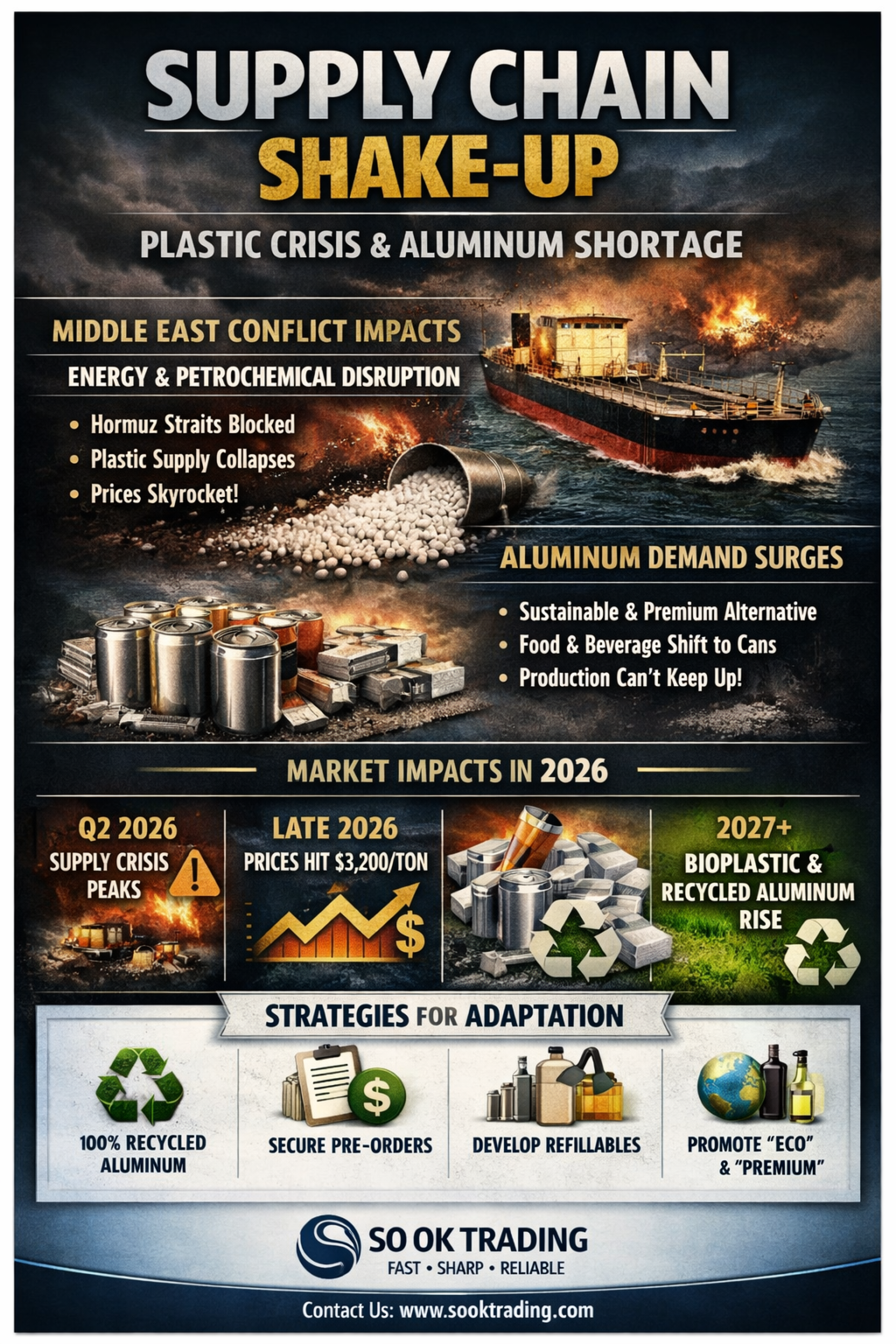
Hormuz Strait Blocked: Oil and petrochemical shipments halted, forcing many factories to suspend plastic resin production.
Rapid Stock Decline: In Thailand and Southeast Asia, plastic resin stockpiles are only sufficient until April–May 2026.
“Money Can’t Buy It”: Even with buyers willing to pay, supply cannot reach the market, creating a severe packaging plastic shortage.
 

Aluminum Packaging as the Alternative

100% Recyclable: Fully reusable, meeting ESG and Net Zero requirements.
Premium Image: Aluminum cans and packaging are perceived as more eco-friendly and upscale than plastic bottles.
Demand Surge: Food, beverage, and cosmetics industries are rapidly shifting to aluminum.
 

Aluminum Packaging Shortage Emerges

Transport Disruptions: Aluminum shipments from the Middle East face the same bottlenecks as plastics.
Production Capacity Shortfall: Middle Eastern smelters partially offline, reducing supply.
High Energy Costs: Aluminum smelting consumes vast electricity; European and Asian plants cut output.
Price Spike: Aluminum prices hit $3,200 per ton, the highest in years, burdening packaging producers.
 

Market Outlook 2026

Q2 2026: Peak supply crunch—both plastic and aluminum in shortage simultaneously.
Late 2026: Some stabilization, but prices remain higher than the previous year.
2027+: Market enters a “new balance” with recycled aluminum and bioplastics taking permanent market share.
 

Opportunities for Producers and Users

Shift to Green Packaging: Use recycled aluminum to differentiate and mitigate cost risks.
Secure Forward Contracts: Lock in prices and supply to hedge against volatility.
Develop Refillable Packaging: Enhance sustainability and reduce reliance on virgin materials.
Positive Consumer Communication: Turn crisis into opportunity by promoting “Eco-Friendly” and “Premium” packaging with NEO (Natural Plastic) or 100% recycled aluminum.
 

✨ Conclusion

This war has not eliminated plastic, but transport and energy costs have become major obstacles, pushing industries toward aluminum. Yet as demand outpaces supply, aluminum itself faces shortages.

This is a golden opportunity to pivot toward recycled packaging and innovation. In a world where supply chain disruption is the new normal, sustainable and circular materials will be the key to survival for the packaging industry.

 
SO OK TRADING: Your Trusted Business Partner
FAST • SHARP • RELIABLE
www.sooktrading.com


Related Content
Experience the King of Fruits – Premium Thai Durian from SO OK TRADING Sweet and creamy flavor, guaranteed ripeness, direct from farm to your hands worldwide.
Experience the luxury of the “King of Fruits” that captivates the global market! SO OK TRADING proudly presents Premium Thai Durian – sweet and creamy flavor, silky smooth texture, guaranteed ripeness, delivered fresh from the farm to your hands within 48 hours.
23 Jan 2026
ADC 12: ALUMINUM INGOT ตัวรับจบสำหรับการขึ้นรูปอลูมิเนียม
อลูมิเนียมอัลลอยด์ ADC 12 นิยมใช้ในการผลิตชิ้นส่วนยานยนต์, อุปกรณ์อิเล็กทรอนิกส์ และเครื่องใช้ไฟฟ้า เนื่องจากมีคุณสมบัติที่ดีในการหล่อขึ้นรูป, ทนทาน, และกระจายความร้อนได้ดี. การใช้งานหลักๆ เช่น การผลิตฝาสูบรถยนต์, แผงระบายความร้อนสำหรับแล็ปท็อป, และชิ้นส่วนภายในอื่นๆ ที่ต้องการความแม่นยำ. การใช้งานในอุตสาหกรรมต่างๆ ยานยนต์: ใช้ทำฝาสูบ, บล็อกกระบอก, และชิ้นส่วนภายในอื่นๆ ที่ต้องการความแข็งแรงและทนทาน. อิเล็กทรอนิกส์และเครื่องใช้ไฟฟ้า: ส่วนห่อหุ้มและแผงระบายความร้อน: ใช้ผลิตเปลือกหุ้มและแผงระบายความร้อนสำหรับอุปกรณ์ต่างๆ เช่น แล็ปท็อป, สมาร์ทโฟน, และแท็บเล็ต เพื่อกระจายความร้อนและรักษาอุณหภูมิการทำงานให้ปลอดภัย. ชิ้นส่วนภายใน: ใช้ทำตัวเชื่อมต่อและส่วนประกอบภายในที่ต้องการความแม่นยำและความทนทานสูง. อื่นๆ: ใช้ทำชิ้นส่วนที่ต้องการความสมดุลของคุณสมบัติการตัดเฉือน, การฉีดขึ้นรูป, และความแข็งแรง. คุณสมบัติที่ทำให้เหมาะสมกับการใช้งาน หล่อขึ้นรูปได้ดี: มีความสมดุลที่ดีในคุณสมบัติการแมชชีนนิ่งและประสิทธิภาพการฉีดขึ้นรูป. กระจายความร้อนได้ดี: มีความสามารถในการนำความร้อนสูง ช่วยให้ชิ้นส่วนไม่ร้อนเกินไป. ทนทานต่อการกัดกร่อน: มีความต้านทานต่อการกัดกร่อนได้ดี เหมาะสำหรับใช้งานในสภาพแวดล้อมที่หลากหลาย. แข็งแรง: มีความแข็งและความแข็งแกร่ง เหมาะสำหรับงานที่ต้องทนแรงอัดสูง. ชุบผิวได้ดี: สามารถชุบ Anodize และเคลือบผิวด้วยไฟฟ้าได้ดี.
19 Nov 2025
ทิศทางการใช้ อลูมิเนียมในอนาคต (ปี2026) , ทิศทางราคาอลูมิเนียม และ สถานะการณ์ Carbon Footprint
ทิศทางในอนาคตของอลูมิเนียมไทยมุ่งเน้น ความยั่งยืน (Sustainability) และ เทคโนโลยีขั้นสูง (Advanced Technology) โดยจะเน้น อลูมิเนียมคาร์บอนต่ำ และ อลูมิเนียมรีไซเคิล เพื่อตอบโจทย์อุตสาหกรรมยานยนต์ไฟฟ้า (EV) และการก่อสร้างที่เป็นมิตรต่อสิ่งแวดล้อม พร้อมพัฒนา การเคลือบผิวใหม่ๆ และระบบเศรษฐกิจหมุนเวียน (Circular Economy) เช่น โครงการ Aluminium Loop เพื่อลดต้นทุน เพิ่มมูลค่า และรักษาความสามารถในการแข่งขันในตลาดโลก. แนวโน้มสำคัญ: การเติบโตในอุตสาหกรรมยานยนต์ไฟฟ้า (EV): รถ EV ต้องการใช้อลูมิเนียมเพิ่มขึ้นมากเพื่อลดน้ำหนัก ช่วยประหยัดพลังงานและเพิ่มระยะทางวิ่ง. ความต้องการอลูมิเนียมคาร์บอนต่ำ (Low-Carbon Aluminium): ตอบสนองมาตรการสิ่งแวดล้อมทั่วโลก (เช่น EU CBAM) โดยเฉพาะการใช้อลูมิเนียมรีไซเคิลสูง ซึ่งลดการปล่อยคาร์บอนได้มาก. เศรษฐกิจหมุนเวียน (Circular Economy): โครงการอย่าง "Aluminium Loop" ขับเคลื่อนการรีไซเคิลบรรจุภัณฑ์อลูมิเนียมครบวงจร เพื่อลดขยะและสร้างมูลค่า. นวัตกรรมการเคลือบผิว (Coating Innovations): การเคลือบผิวแบบใหม่ๆ เพื่อเพิ่มฟังก์ชัน เช่น ป้องกันแบคทีเรีย (Anti-microbial) ทำความสะอาดง่าย (Easy-to-clean) สร้างผิวสัมผัสใหม่. การก่อสร้างแบบสำเร็จรูปและโมดูลาร์ (Modular Construction): ใช้อลูมิเนียมมากขึ้นในการผลิตชิ้นส่วนสำเร็จรูปนอกสถานที่ เพื่อความแม่นยำและลดของเสีย. การบูรณาการพลังงานหมุนเวียน (Renewable Energy): ใช้อลูมิเนียมในโครงสร้างรองรับแผงโซลาร์เซลล์ และระบบพลังงานสะอาดอื่นๆ. ความท้าทาย: ต้นทุนพลังงาน & ห่วงโซ่อุปทาน: ความผันผวนของราคาพลังงานและความท้าทายในห่วงโซ่อุปทาน. การแข่งขัน: ประเทศคู่แข่งเร่งพัฒนาเทคโนโลยีรีไซเคิล ทำให้ไทยต้องพัฒนาต่อเนื่องเพื่อรักษาผู้นำ. โอกาส: ไทยมีศักยภาพด้านแรงงานฝีมือ และอุตสาหกรรมต้นน้ำ-กลางน้ำ-ปลายน้ำที่ครบวงจร. การปรับตัวสู่การผลิตคาร์บอนต่ำสร้างโอกาสทางธุรกิจใหม่ๆ โดยเฉพาะการเป็นผู้นำด้านอลูมิเนียมรีไซเคิล. สรุป: อลูมิเนียมไทยจะก้าวสู่ยุคใหม่ที่เน้น "เขียว" (Green) และ "ฉลาด" (Smart) โดยการรีไซเคิลและเทคโนโลยีจะเป็นหัวใจสำคัญในการสร้างการเติบโตและความยั่งยืน.
16 Dec 2025
This website uses cookies for best user experience, to find out more you can go to our Privacy Policy and Cookies Policy
Compare product
0/4
Remove all
Compare
Powered By MakeWebEasy Logo MakeWebEasy