“Land of Tropical Fruits: Thai Fruits Rising as Global Brands — From Orchards to Luxury Markets, Winning Hearts Worldwide with Durian, Mangosteen, and Mango, the Global Stars of 2026” Article by SO OK TRADING · March 11, 2026
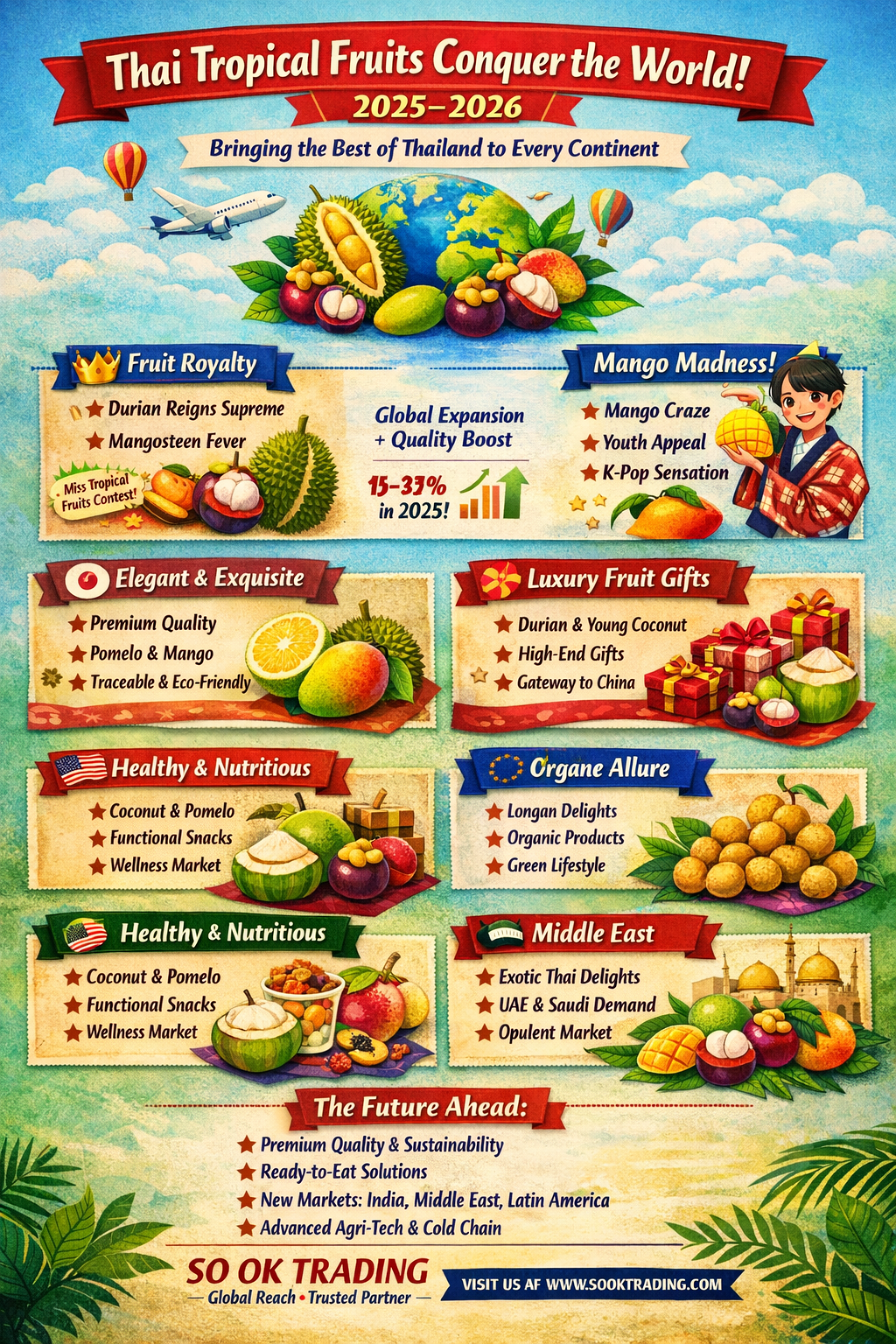
Thai Fruit Trends 2025–2026: Entering a New Era of Exciting Global Opportunities!
SO OK TRADING presents a comprehensive overview of Thailand’s rapidly expanding fruit export market, where both production and quality are rising. Durian, mangosteen, and Nam Dok Mai mango have become the “superstars” across continents. In 2025, Thai fruit production increased by 15–21%
China remains the leading market, but new destinations such as the UAE, India, and Europe are opening golden opportunities
Key trends: Ready-to-eat fruits, organic produce, and low-carbon production
The government is investing in Cold Chain systems and new logistics routes, such as the China–Laos railway, to expand deeper into international markets
Market Highlights by Country:
China: Durian and mangosteen are the “King and Queen of Fruits,” requiring strict food safety and zero pesticide residue
South Korea: Nam Dok Mai mango has become the “fruit idol” among younger consumers
Japan: A premium market emphasizing safety, traceability, and eco-friendly packaging
Singapore: Ready-to-eat fruits perfectly fit the fast-paced lifestyle
United States: Thai fruits align with health trends and functional food demand
Europe: Longan and organic fruits are rising stars among health-conscious consumers
Middle East: Durian, mangosteen, and mango are seen as “luxury indulgences” in high-end hotels and restaurants
Outlook 2026–2030:
From quantity to quality: Premium grade, organic, low-carbon
From fresh to ready-to-eat: Functional foods and convenience products
Expanding beyond traditional markets: India, Middle East, Latin America
AgriTech & Cold Chain: AI-driven production forecasts, freshness preservation, and traceability for premium markets like Japan
Conclusion: Thai fruits are evolving from “ordinary export products” into “global brands” that tell stories of quality, sustainability, and innovation. While China remains the main stage, new markets such as the UAE, India, and Europe are opening golden opportunities for Thai fruits to shine worldwide.
SO OK TRADING: Your Business Partner
SO OK TRADING: The Trusted Companion of Thai Farmers
SO OK TRADING: FAST • SHARP • RELIABLE
VISIT US AT: WWW.SOOKTRADING.COM
Would you like me to also craft a short, catchy English caption for social media posts to pair with this article? That way you’ll have both the long-form and quick-share versions ready to go.