Share

War Drives Metal Prices Skyrocketing! Aluminum 2026 – A Strategic Metal Breaking the Ceiling as Energy Shortages, the Closure of the Strait of Hormuz, and Global Raw Material Battles Define the Year: An Article by SO OK TRADING
Last updated: 9 Mar 2026
1083 Views

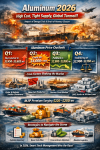
Aluminum 2026 – Hot Metal, High Cost, Scarce Resource
Impact of the Energy Crisis from War and the Closure of the Strait of Hormuz in the Middle East

This year, the global metals market is facing the most severe “supply crunch crisis” in years. The war in the Middle East has become a key driver, pushing prices sharply higher and creating pressure across all industries that rely on aluminum as a core raw material.


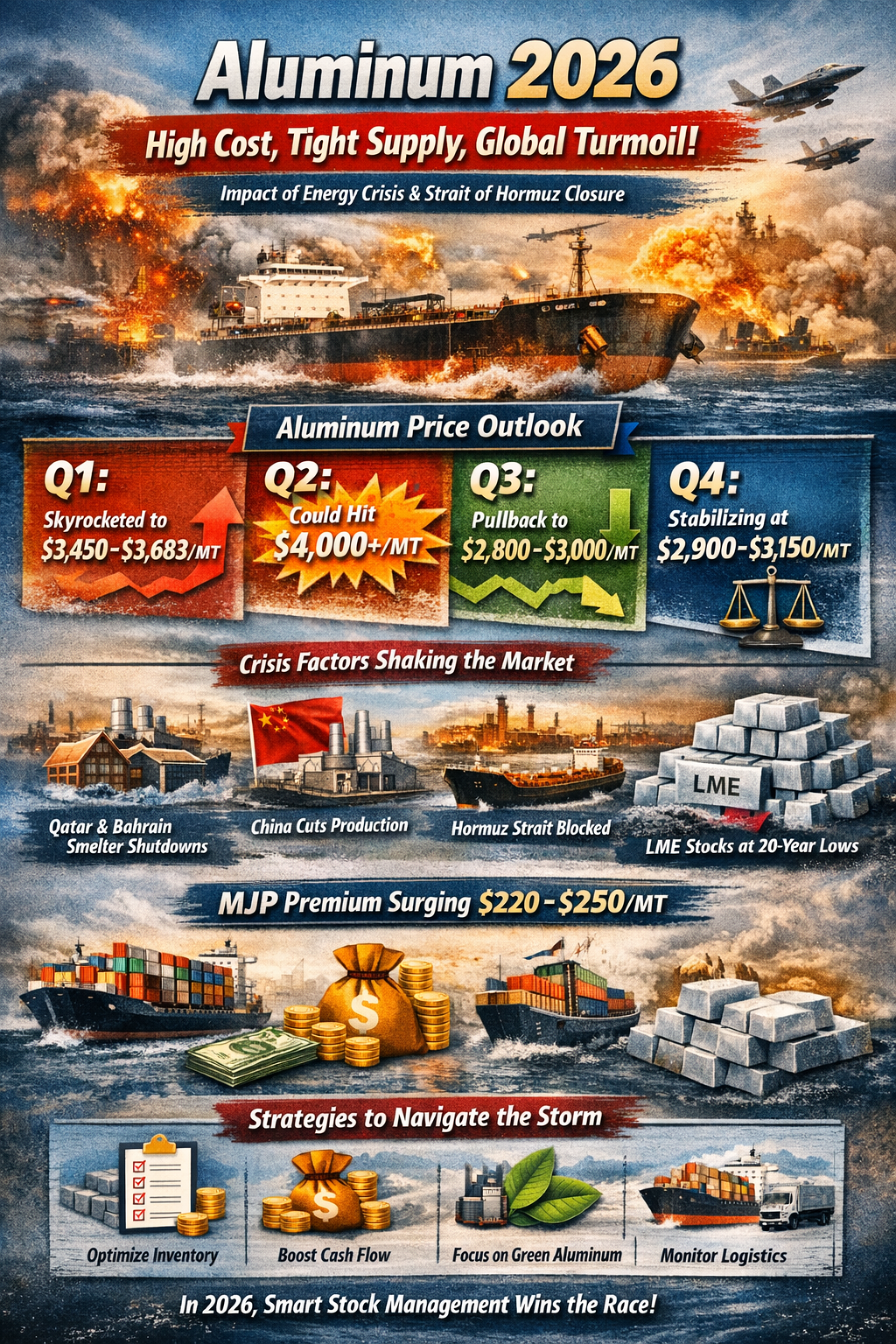
Aluminum Price Situation by Quarter & Future Outlook

2025: Aluminum prices were relatively stable, with the annual average on the London Metal Exchange (LME) at 2,750 USD/MT. Prices only began to climb toward 3,000 USD/MT in Q4.

Q1 (Jan–Mar 2026):
Prices broke through key resistance, rising from 3,150 USD/MT in January to 3,450–3,683 USD/MT in March — the highest in four years.

Smelters Qatalum (Qatar) and Alba (Bahrain) halted production due to energy shortages and war.
China, the world’s largest producer, has reached its production ceiling of 45 million tons/year, unable to expand further.
LME stocks fell to just 375,525 tons, the lowest since September 2025, reflecting tight supply and urgent buying.
Q2 (Apr–Jun 2026):
The market remains extremely tight, with prices possibly testing 4,000 USD/MT if conflict drags on.

Demand from EVs and renewable energy sectors remains strong.
Physical premiums in Europe and North America surged as buyers worried about delivery.
Middle East production stoppages continue, reinforcing structural supply shortages.
Q3 (Jul–Sep 2026):
Prices may correct to 2,800–3,000 USD/MT if war eases or Indonesia adds new supply.

Stockpiling in Japan and Asia may taper off, reducing buying pressure.
If war persists, prices could remain elevated above average.
Q4 (Oct–Dec 2026):
Prices likely stabilize in the 2,900–3,150 USD/MT range, still 10–20% higher than 2025 averages.

The global aluminum market is expected to run a deficit of 1.5–2 million tons for the year.
Europe’s CBAM carbon tax raises import costs, pressuring non–Green Metal producers.
 

Mid-west Japan Premium (MJP) – Premiums Rising Alongside Prices

Q1: Settled at 195 USD/MT, up 127% from Q4/2025.
Q2: Producers offered 220–250 USD/MT.
H2: Expected to move within 85–200 USD/MT if Indonesia adds supply.
Full-year average projected at 180–230 USD/MT, the highest in years.
 

War Impact – Aluminum Becomes an Economic Weapon

Middle East smelters halted → Supply vanished instantly.
China cannot expand production → Structural global shortage.
Hormuz Strait closure → Logistics costs surged.
Europe & US stockpiling → Asia forced to compete at higher premiums.
 

Strategies for Managing Aluminum in a Volatile, High-Cost Market

Accurate stock management – Buy during price dips to hedge risk.
Strengthen cash flow – Prepare for high and volatile costs.
Focus on Green Metal – CBAM tax and EV demand push low-carbon aluminum prices higher.
Monitor logistics risks – Global shipping routes remain vulnerable.
 

✨ Conclusion:
Following the USA–Iran war in the Middle East, 2026 is the year aluminum becomes “hot metal, high cost, scarce resource.”
Those with sharp foresight and strong inventory management will emerge as winners in the fierce competition of the global metals market.


Related Content
“Silicon: Powering the Future – The Lifeblood of Digital and Clean Economy, from AI Chips to EV Batteries”
Silicon is not just an element — it is the beating heart of the digital world and the clean energy era. From AI chips and EV batteries to solar panels and lightweight alloys, silicon is the material driving the future of technology, mobility, and sustainability.
6 Mar 2026
 Base Metals Market February 2026: When Volatility Turns into Opportunity - From Volatility to Opportunity: SO OK TRADING ’s In-Depth Analysis of the Base Metals Market: Aluminum, Copper, Zinc, Tin, Lead — The Latest Trends Investors Must Watch
Volatility is back—and base metals are in the spotlight. As February 2026 unfolds, global prices for copper, tin, aluminum, zinc, and lead are showing mixed signals. From clean energy demand to supply disruptions and monetary tightening, the forces shaping this market are anything but simple. At SO OK TRADING, we decode the noise and deliver clarity. This infographic reveals key price ranges, expert forecasts, and strategic insights to help investors navigate the turbulence—and spot the opportunities before they go mainstream.
3 Feb 2026
Steel Industry Outlook 2026: Gradual Recovery with Rising Price Potential BY SOOK TRADING
Steel Industry Outlook 2026: Gradual Recovery with Rising Price Potential The year 2026 marks a turning point for the global steel industry. After hitting its lowest point in 2025, the market is entering a “new equilibrium,” with demand gradually recovering and prices showing signs of stable upward movement. Global steel demand is forecast to grow 1.3%, reaching 1,773 million tons. India will be the main driver, with growth of 9% fueled by infrastructure investments in roads, railways, and energy. The United States and Europe are also expected to recover steadily, supported by interest rate cuts, clean energy projects, and the automotive sector—1.8% growth in the US and 3.2% in the EU. China, while still facing a slowdown in real estate, will see demand decline ease to -1%, supported by infrastructure projects and steel exports. Meanwhile, Southeast Asia and the Middle East are expected to contribute to diversified demand growth through infrastructure and energy investments. On the pricing side, steel bars (Rebar) are expected to average 16,000–17,000 THB/ton (450–530 USD/MT). Iron ore costs are projected at 83–95 USD/ton, with new supply from Guinea and Australia helping to stabilize input costs. Although trade barriers in the US and EU may keep domestic prices above global levels, the market is moving toward a more stable balance. In Thailand, steel demand is expected to grow modestly, driven by construction and automotive industries, with a base of 16.2 million tons in 2025. However, cheap Chinese steel could account for up to 50% of the market, putting pressure on local producers. Thai businesses must adapt by developing value-added specialty products, enhancing quality standards, and targeting premium and niche export markets such as ASEAN, the Middle East, and Africa. SO OK Trading: Partnering Thai Steel with Global Markets SO OK Trading supports Thai steel producers with comprehensive solutions: - Market Connectivity: Linking Thai producers with buyers in China and East Asia through an extensive partner network and integrated rail–sea–road logistics. - Market Analysis & Pricing Strategy: Providing insights into steel and iron ore price trends, with index-linked pricing recommendations to reduce volatility. - Stable Contracts & Compliance: Assisting in contract structuring, export documentation, standards, and certifications to ensure reliable trade. - Customer Development: Delivering tailored technical and commercial proposals to meet the needs of Chinese buyers seeking specialty steel. SO OK Trading is more than an exporter—it is a trusted business partner, helping Thai steel enterprises compete with stability and sustainability in the global steel market.
15 Jan 2026
This website uses cookies for best user experience, to find out more you can go to our Privacy Policy and Cookies Policy
Compare product
0/4
Remove all
Compare
Powered By MakeWebEasy Logo MakeWebEasy